
 English
 Español


Canton Fair 2026: What Buyers Told Us About Paper Napkins, Airlaid and Lead Times
Content
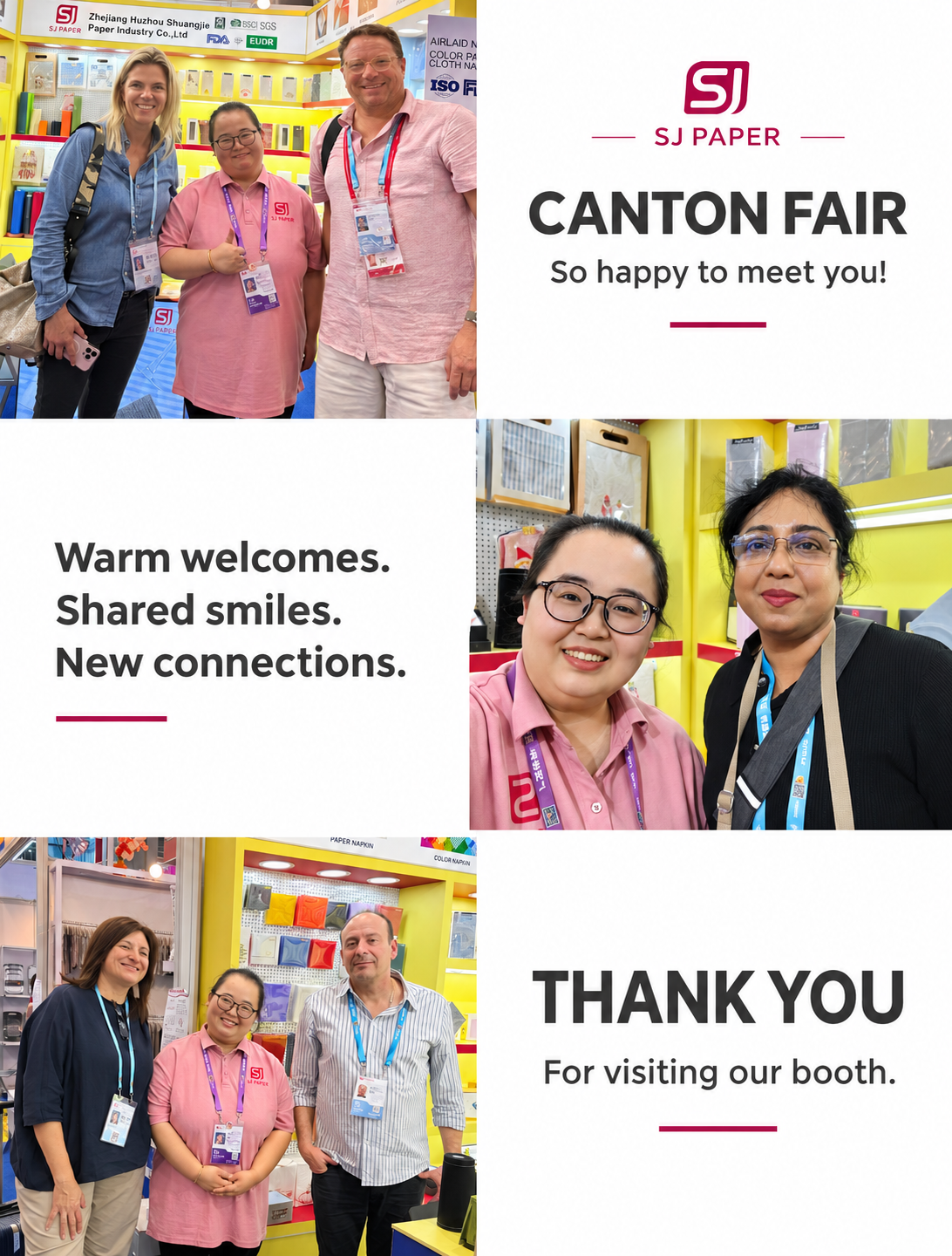
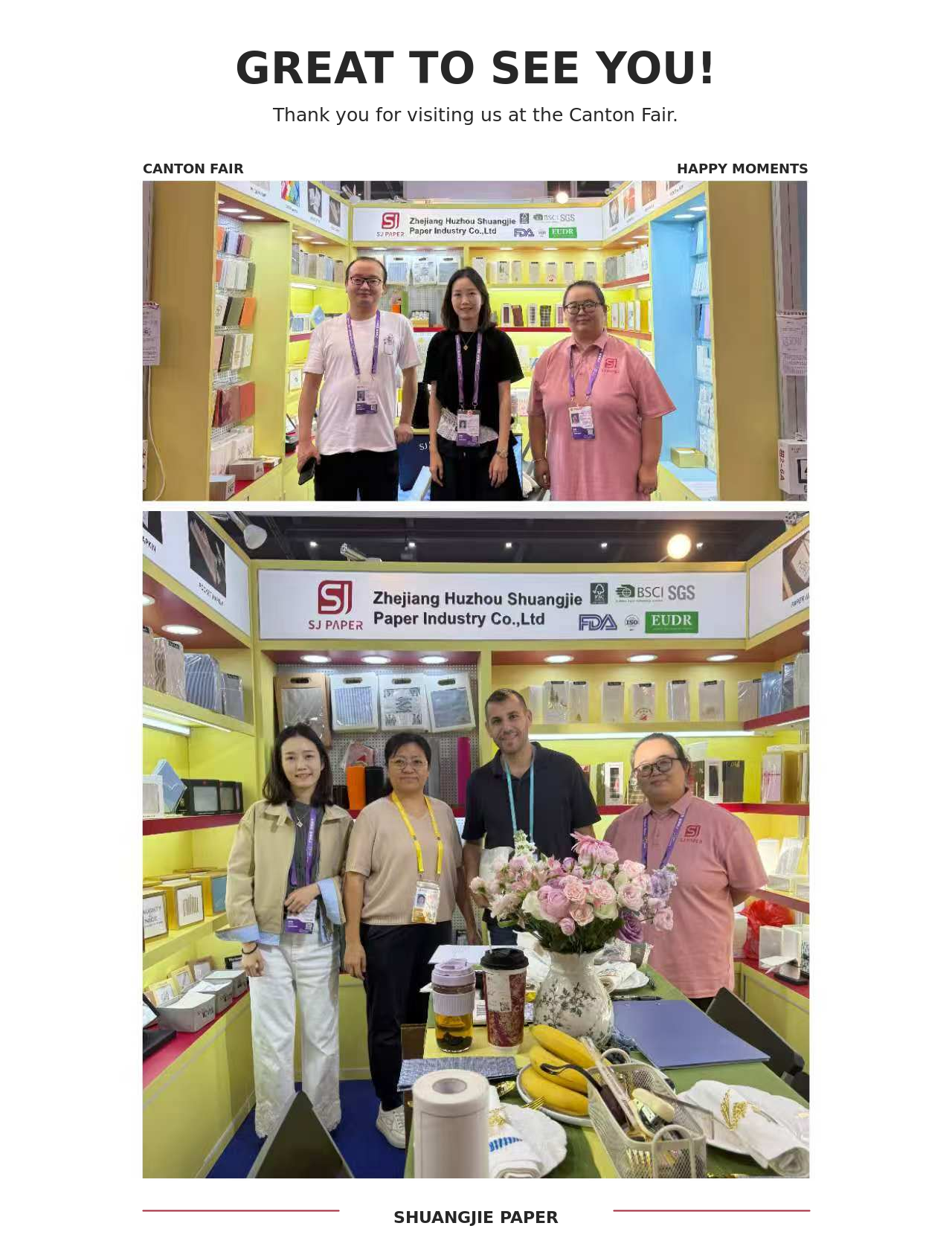
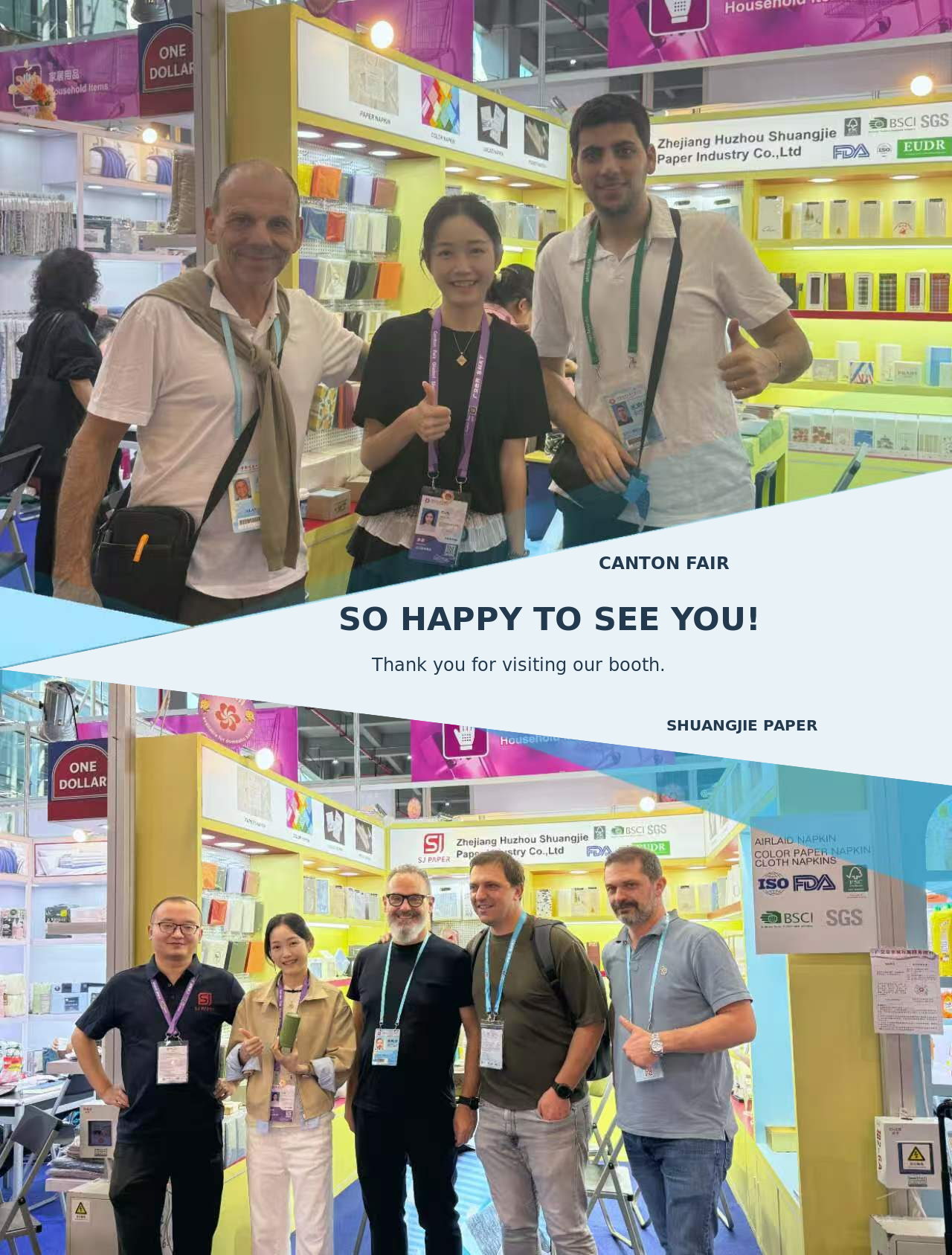
The 140th Canton Fair closed on 4 November, and our team came home with specifications rather than souvenirs. Running from 15 October to 4 November and marking the fair's seventieth anniversary, this session brought around 32,000 exhibitors and an estimated 340,000 overseas buyers to Guangzhou — for a paper napkin manufacturer, that is a compressed version of the entire global tabletop market walking past the booth.
We met roughly the same number of buyers as in April. What changed was the nature of the conversation.
Same number of conversations, a different kind of conversation
In April, plenty of visitors stopped because a printed napkin looked good on a table. In October, far more stopped because they already knew what they wanted: a two-ply or three-ply tissue napkin in a particular size, an airlaid napkin for a restaurant group, a seasonal print for a party range, or a cutlery pouch to complete an existing line.
That changes the work. A browser wants a catalogue; a buyer with a specification wants to talk about ply, folded size, print coverage, packing, and the date the container has to leave. We spent longer at the table and handed out fewer brochures, and both sides got more out of it.
April's introductions became October's projects
The most valuable traffic of the week was returning traffic. Several buyers we first met in April made our booth a deliberate stop. Others had been in email contact for months without ever seeing the product in person; inviting them to Guangzhou turned a long thread of quotations into a face-to-face conversation about the next order. The napkin paper project first quoted in April was taken up again in person.
This is the part of a trade fair that no catalogue reproduces. Email can carry a price, but it cannot carry the moment when a buyer picks up a napkin, folds it, holds it against the sample in the other hand and accepts that the two are the same product. Trust formed in that moment is what turns a quotation into a purchase order.
Why a sample in the hand still beats a photograph
The economics are simple. To judge a paper napkin at a distance, a buyer needs photographs, a video, and eventually a sample flown across the world. Air freight is slow and expensive, and it often costs more than the napkins inside the carton. Each sample round takes weeks, and most buyers can afford only one or two before a season closes.
At the fair that cycle collapses into ten minutes. A buyer can feel the difference between tissue and airlaid, see how a foil-stamped design catches the light, judge whether an embossed logo is deep enough to survive folding, and compare two-ply against three-ply without waiting for a courier. The same ten minutes tells us which market and channel the buyer serves, what the table setting looks like, and what the guest is meant to feel.
A booth also shows range, not a single item. A buyer who has seen one napkin in a photograph cannot tell whether the same supplier can deliver a matching placemat, cutlery pouch and coaster set in the same colour. Standing at the table, the answer is visible at a glance — and that is often the difference between a supplier and a partner.
That is the real function of Canton Fair: it shortens the distance between a factory floor and a laid table. Buyers gain something less visible too — the chance to state their actual requirement in person, including purchasing intention, target quantity, shipment schedule and the season the product has to be on shelf for. A supplier who hears those details quotes accurately instead of optimistically.
Buyers who arrived with a list
Compared with April, October's visitors clustered differently. Many were first-time buyers in China, sourcing for packaging, party supplies and disposable tableware ranges rather than for a single venue. Others came from the wider disposable goods trade, adding paper to a portfolio that already carried plastic and foil.
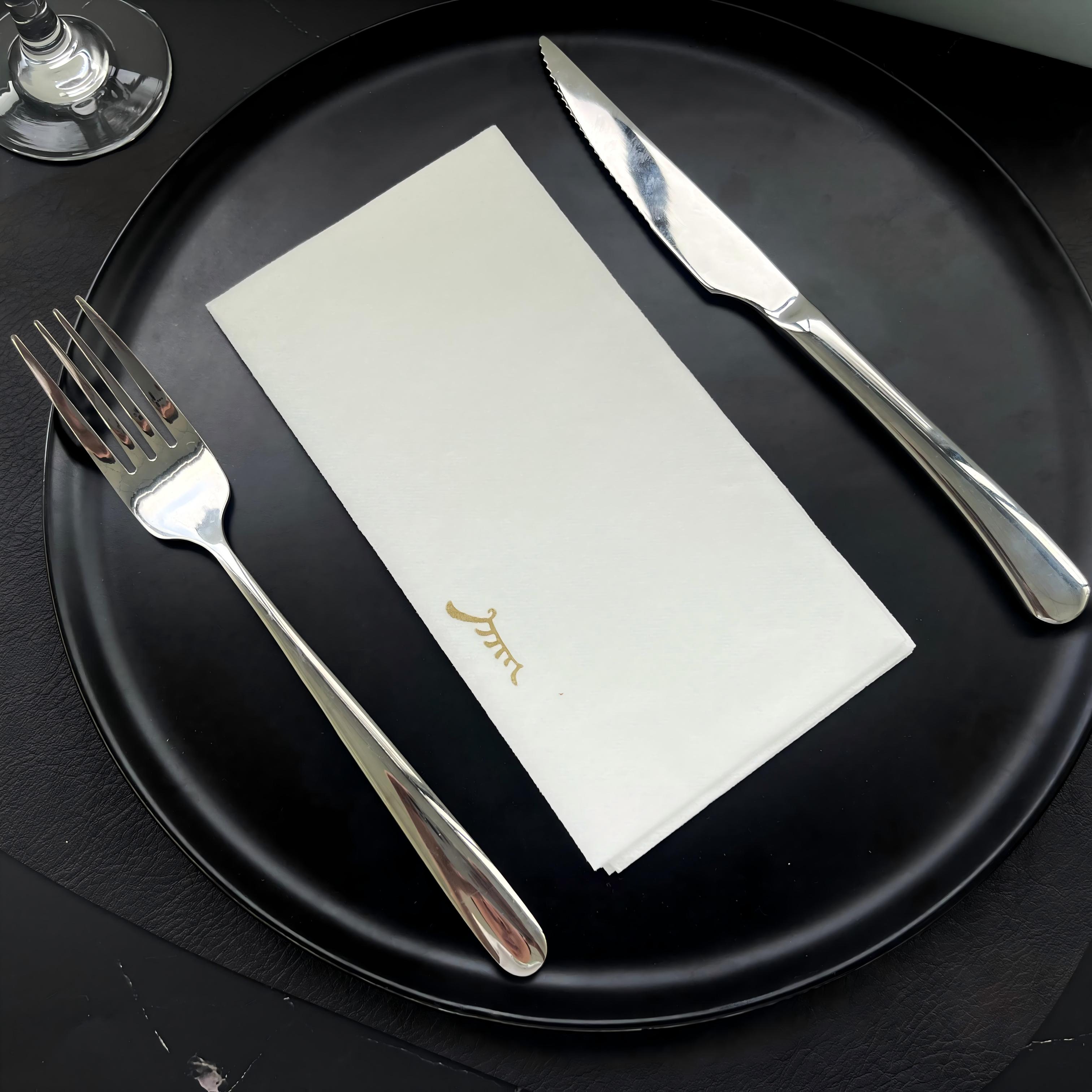
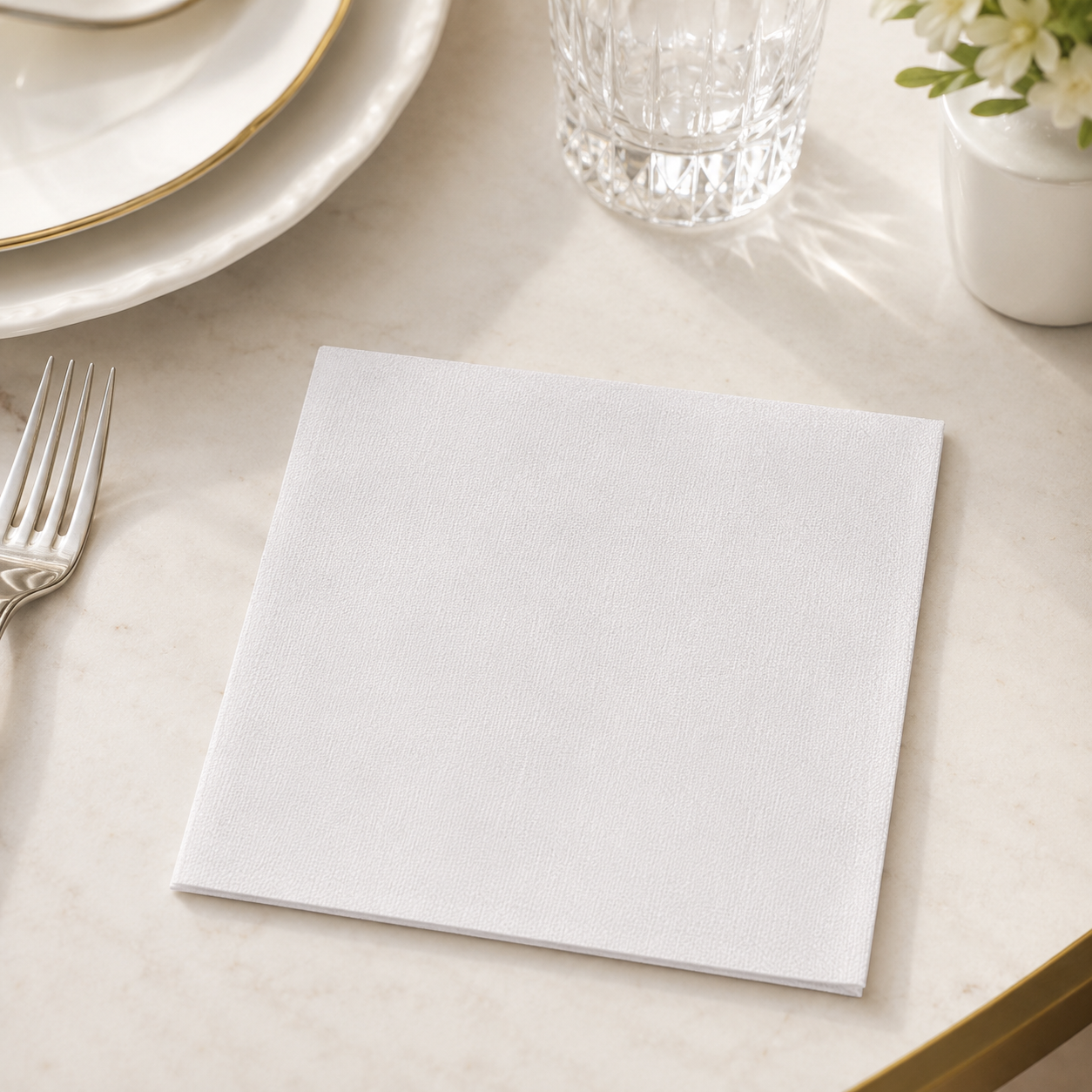
The products that held attention were consistent: airlaid napkins, tissue napkins, printed paper napkins, and cloth coasters and placemats. Interest in cloth coasters was usually about completing a tabletop set rather than replacing paper; in most catalogues the two sit side by side.
What differed was intent. More visitors named napkins or airlaid as the reason they came, stayed longer at the booth, and asked specific questions about minimum order quantity, print set-up, packing configuration and delivery windows. Several said openly that they were comparing two or three suppliers before placing a trial order — a shorter list than a year ago, and a more serious conversation for everyone on it.
From booth to sample
The fair closed on 4 November. Sample requests began arriving before the halls were dismantled.
That is where the work stands now: confirming specifications, preparing printed and embossed samples, and agreeing quantities and shipment dates with buyers who intend to place a first order. For custom paper napkins the sequence matters — artwork review, proofing, sample approval, bulk production, pre-shipment inspection. Buyers who bring artwork and volume to the first conversation usually remove weeks from that path.
For anyone who visited and has not yet followed up, or who could not attend this session, the invitation stands. Send size, ply, material, print requirement and estimated quantity, and we will reply with a quotation and a sample plan.
FAQ
Q1: What napkin products did Shuangjie Paper present at the 140th Canton Fair?
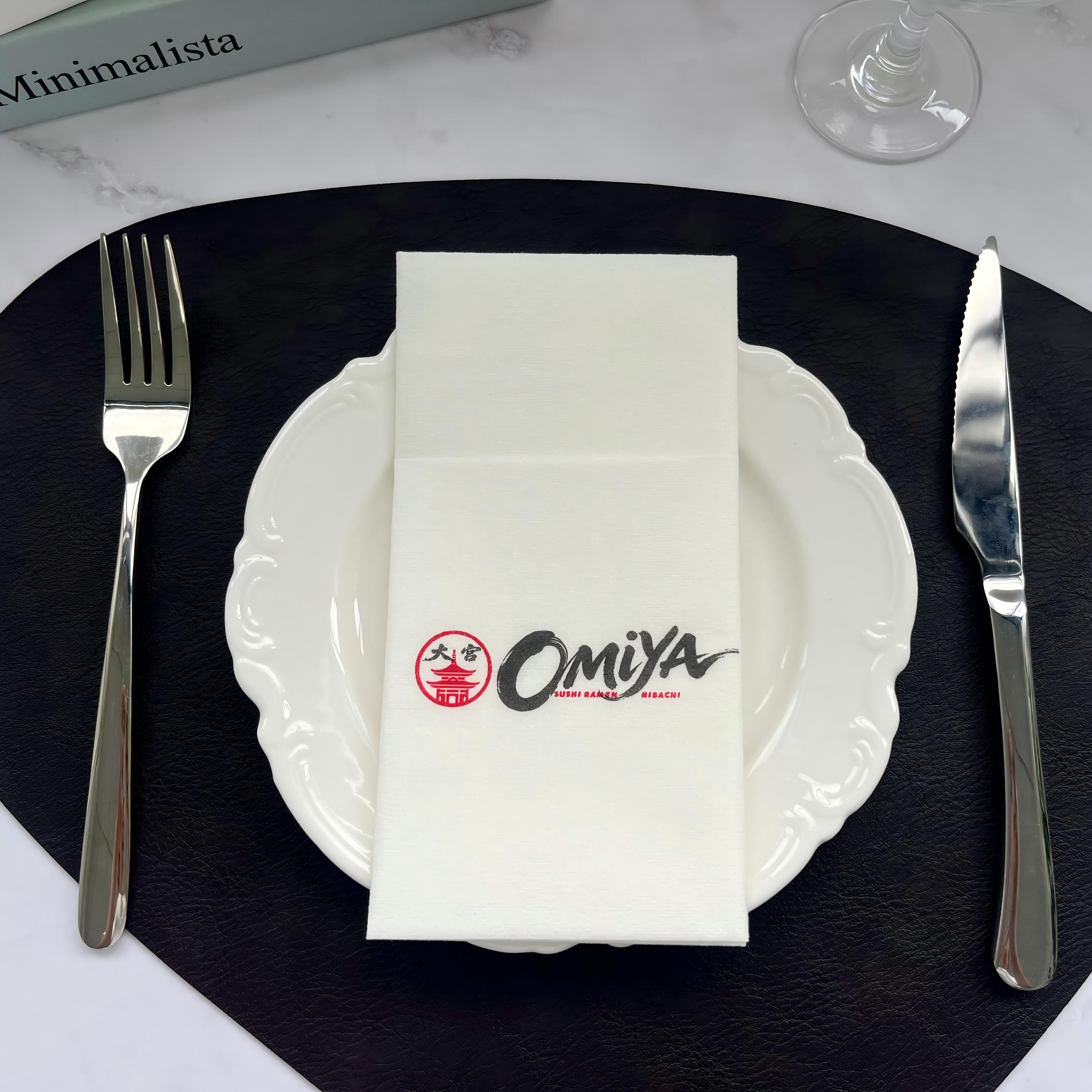
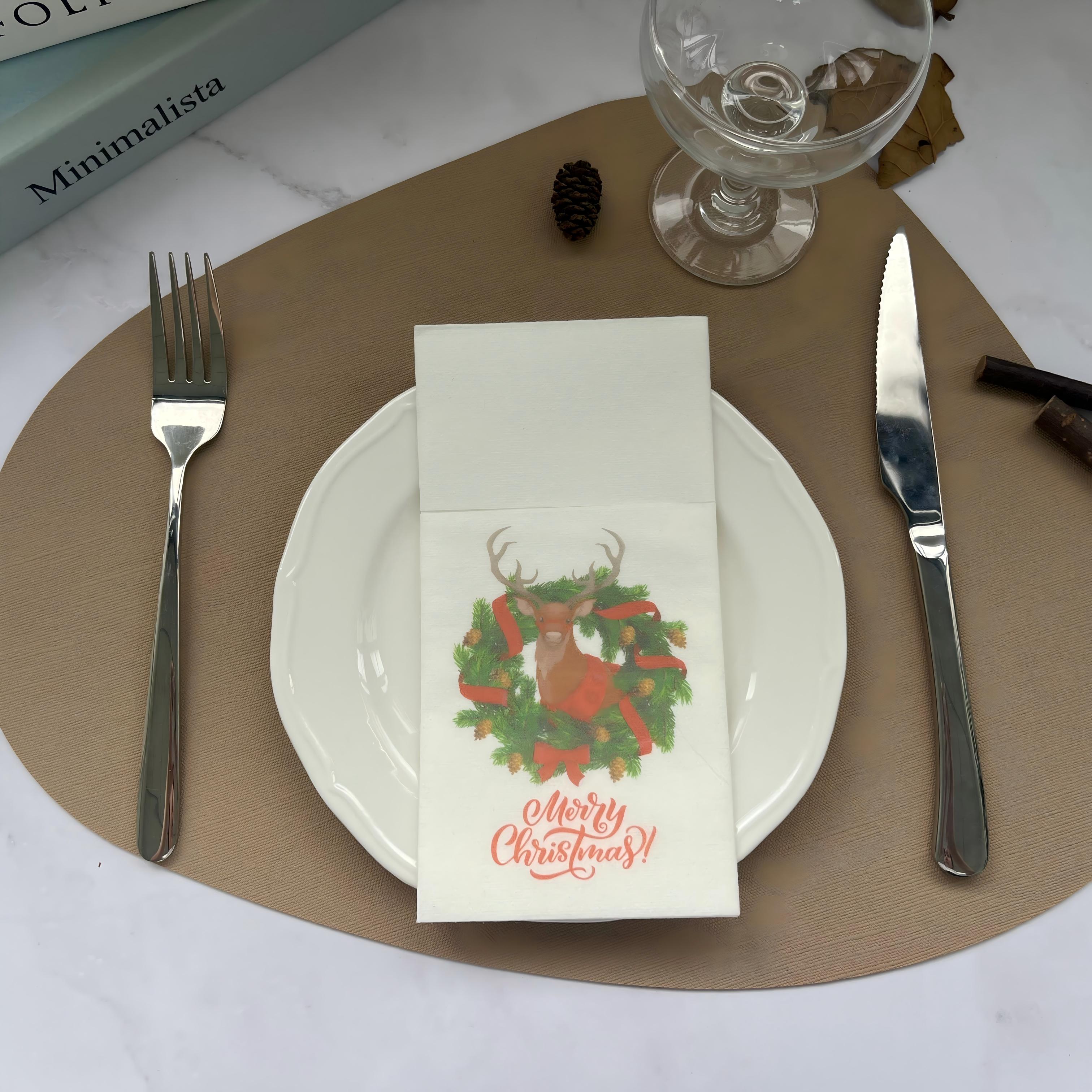
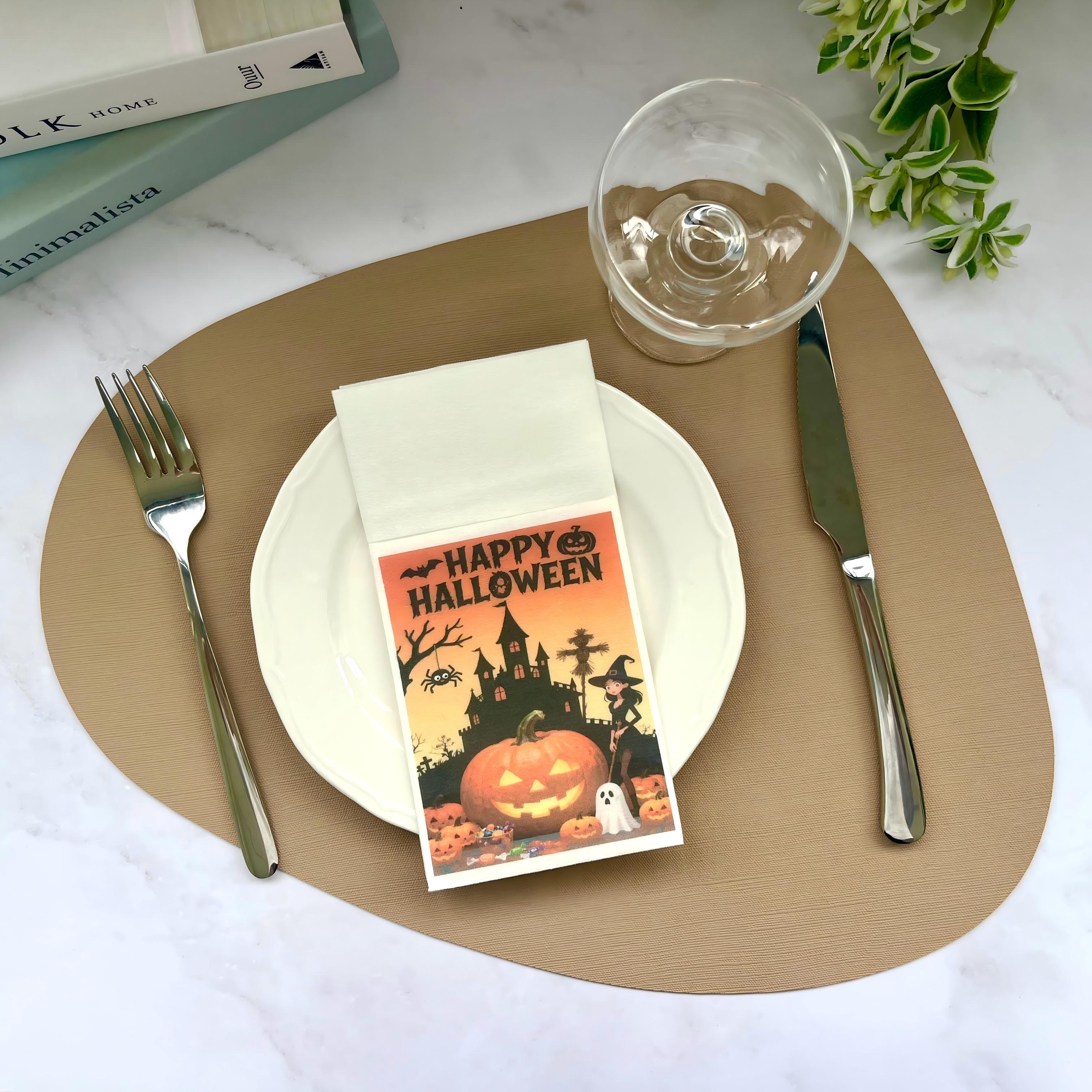
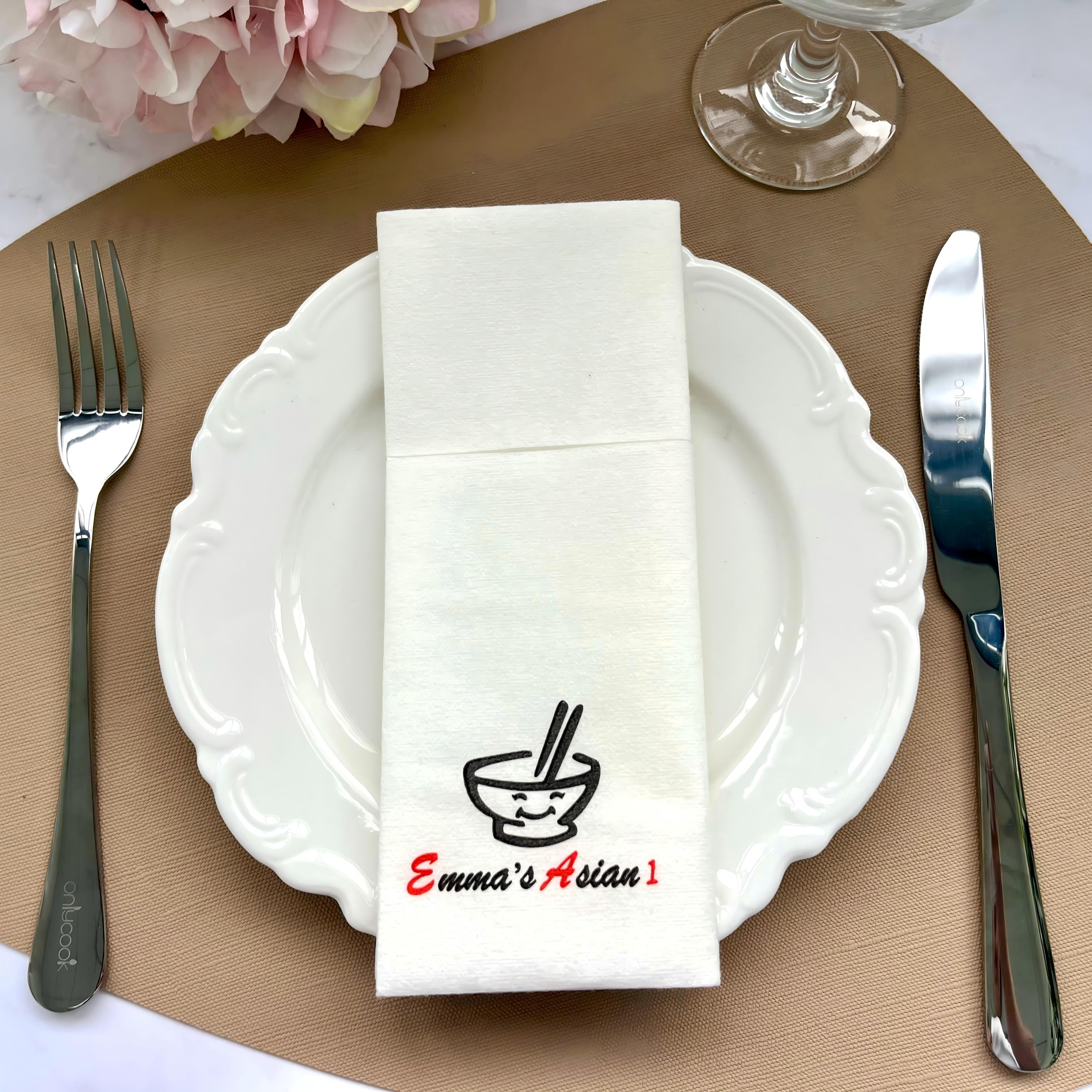
A: Printed paper napkins, airlaid napkins and cloth napkins in multiple plies and sizes, together with paper cutlery packs, paper placemats and cloth coasters. All are offered as custom programmes rather than as fixed stock items.
Q2: How did the October 2026 fair differ from April?
A: The visiting quantity of buyers was similar, but intent was sharper. More visitors arrived looking specifically for napkins or airlaid material, asked detailed questions about specification and scheduling, and stated clear purchasing intentions.
Q3: Can a buyer evaluate airlaid napkins without travelling to China?
A: Partly. Photographs and video show design and dimension, but hand feel, emboss depth and fold behaviour are hard to judge remotely. We send samples by courier on request; the trade fair simply removes the waiting and the freight cost.
Q4: What should a buyer prepare for a first quotation?
A: Size and ply, material (tissue or airlaid), print or finishing requirement, packing format, estimated annual or first-order quantity, destination port and required delivery window.
Q5: What are the next steps after the fair?
A: Sample requests are being processed now. Once a sample and specification are approved, we confirm the production schedule and ship against the agreed delivery window.
About Shuangjie Paper
Zhejiang Huzhou Shuangjie Paper Co., Ltd manufactures custom disposable table paper products, supplying printed paper napkins, airlaid napkins, paper cutlery packs and paper placemats to hospitality, catering and party supply customers worldwide. The company combines automated production with manual quality checking, and handles artwork development, proofing, sampling and bulk production in house.
RECOMMENDED PRODUCTS
Featured Products
Message Us Right Now!

Address: Tianyuan Road 18, Baishuiwan Industry Park, Tianhuangping Town,
Anji County,Zhejiang Province
- Contact
-
+86-18205820793lydia@shuangjiepaper.comPhone
- Get Connected

