
 English
  Español


How Are Airlaid Napkins Made and Why They Outperform Regular Paper Napkins
Content
- 1 1. Direct Answer: How Are Airlaid Napkins Made & Why They Outperform Regular Paper
- 2 2. The Airlaid Manufacturing Process — Step by Step
- 3 3. Why Airlaid Napkins Outperform Regular Paper — Side‑by‑Side Comparison
- 4 4. Key Benefits That Drive Performance
- 5 5. Eco‑Advantages — Biodegradability & Sustainable Sourcing
- 6 6. Practical Selection Guide — How to Choose the Right Airlaid Napkin
- 7 7. Process Flow — From Pulp to Premium Napkin
- 8 8. Frequently Asked Questions (FAQ)
1. Direct Answer: How Are Airlaid Napkins Made & Why They Outperform Regular Paper
Airlaid napkins are manufactured through a water‑free, air‑laid forming process that blends wood pulp with synthetic fibres, then uses high‑pressure air to create a uniform, felt‑like web. This structure is bonded thermally or with natural adhesives, resulting in a disposable napkin that is 3‑5× more absorbent, 2× stronger when wet, and has a true cloth‑like feel — outperforming regular paper napkins in every meaningful metric for premium dining and hospitality.
2. The Airlaid Manufacturing Process — Step by Step
2.1 Fibre Blending & Defibration
High‑quality cellulose wood pulp is first defibrated into individual fibres. Optional synthetic fibres (e.g., bicomponent or PET) are added at this stage to enhance tensile strength and softness. The ratio is typically 70‑90% pulp : 10‑30% synthetics, depending on the desired durability and biodegradability profile.
2.2 Air‑Forming — No Water, No Waste
The blended fibres are suspended in a high‑velocity air stream and deposited evenly onto a moving porous screen. This dry‑laid technique consumes up to 90% less water than conventional wet‑laid papermaking, and the uniform fibre orientation gives airlaid its signature isotropic strength — meaning it resists tearing equally in all directions.
2.3 Bonding — Thermal or Latex
The loose web is bonded using one of two methods:
- Thermal bonding — applying heat to melt synthetic binder fibres, creating a strong, soft network without chemicals.
- Latex (chemical) bonding — spraying a small amount of acrylic or vinyl adhesive for extra wet‑resistance.
Over 85% of premium airlaid napkins use thermal bonding to maintain a biodegradable base while achieving exceptional softness.
2.4 Finishing — Embossing, Cutting & Folding
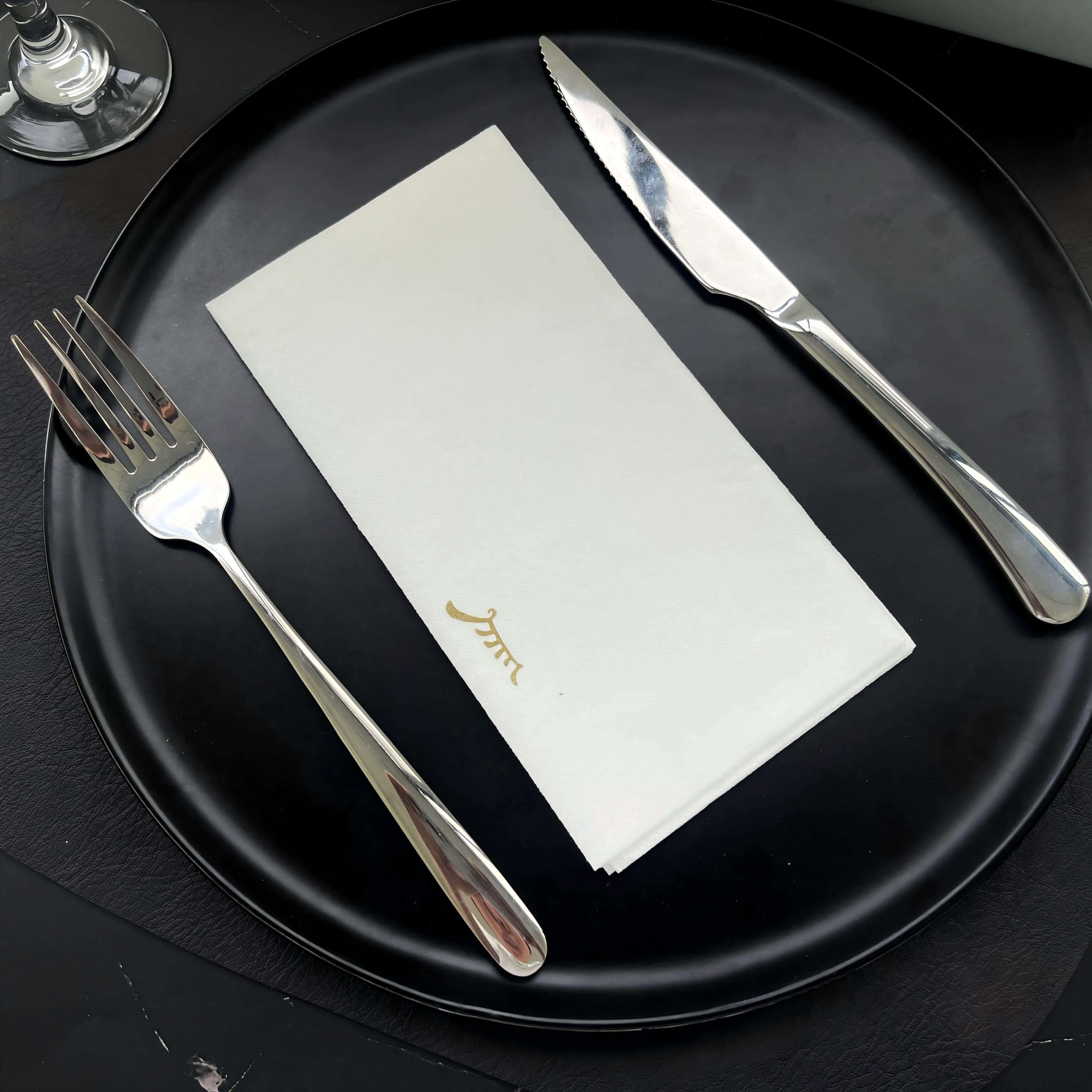
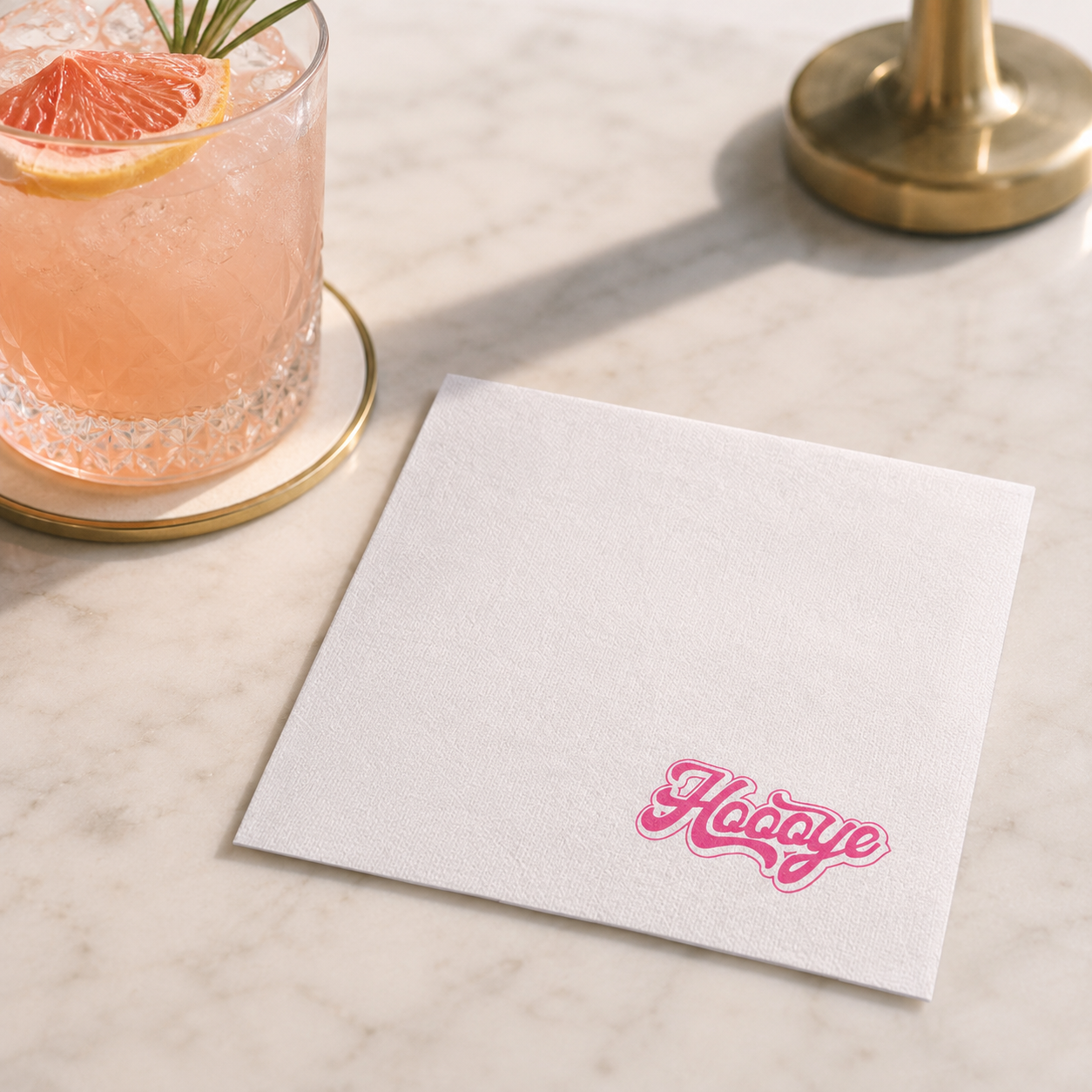
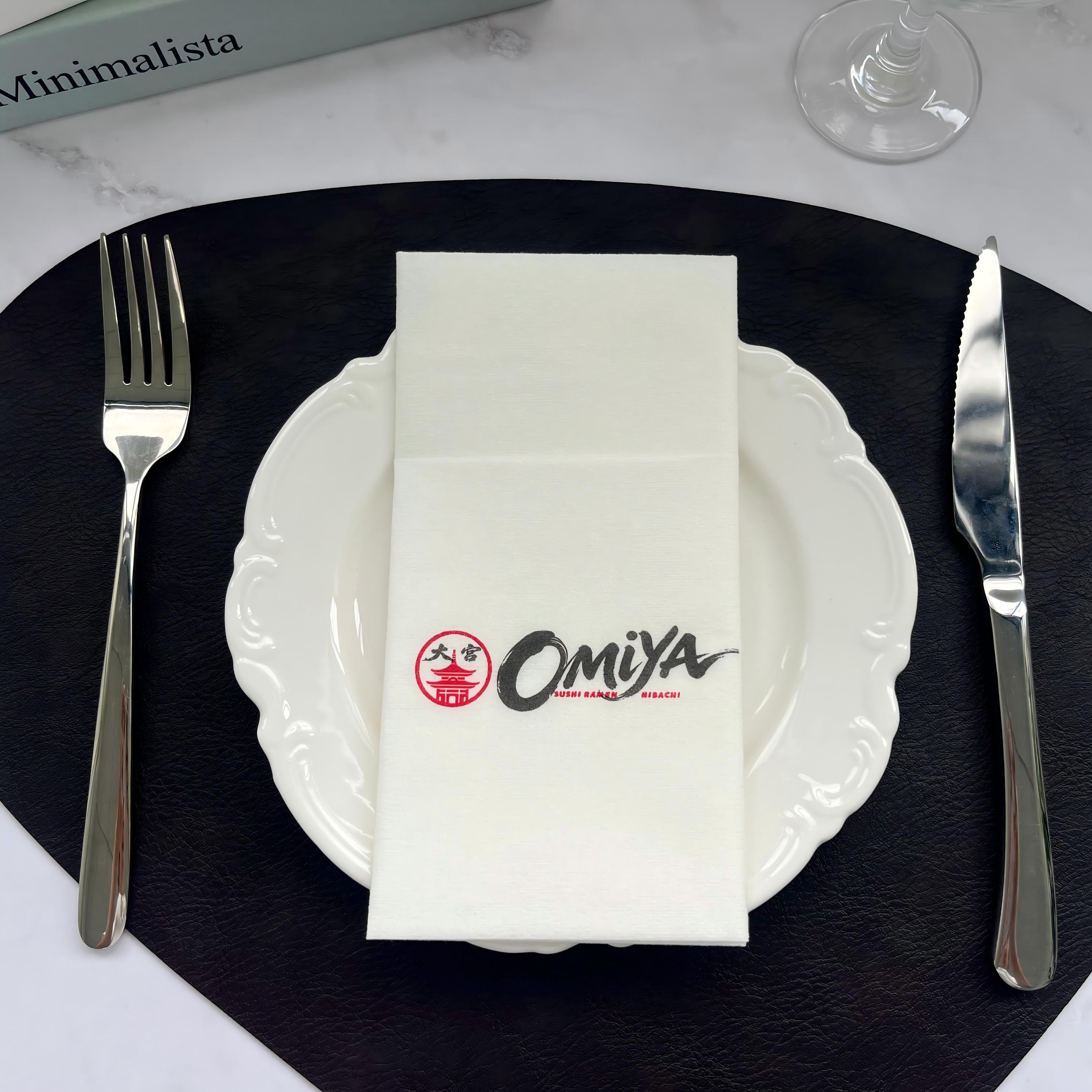
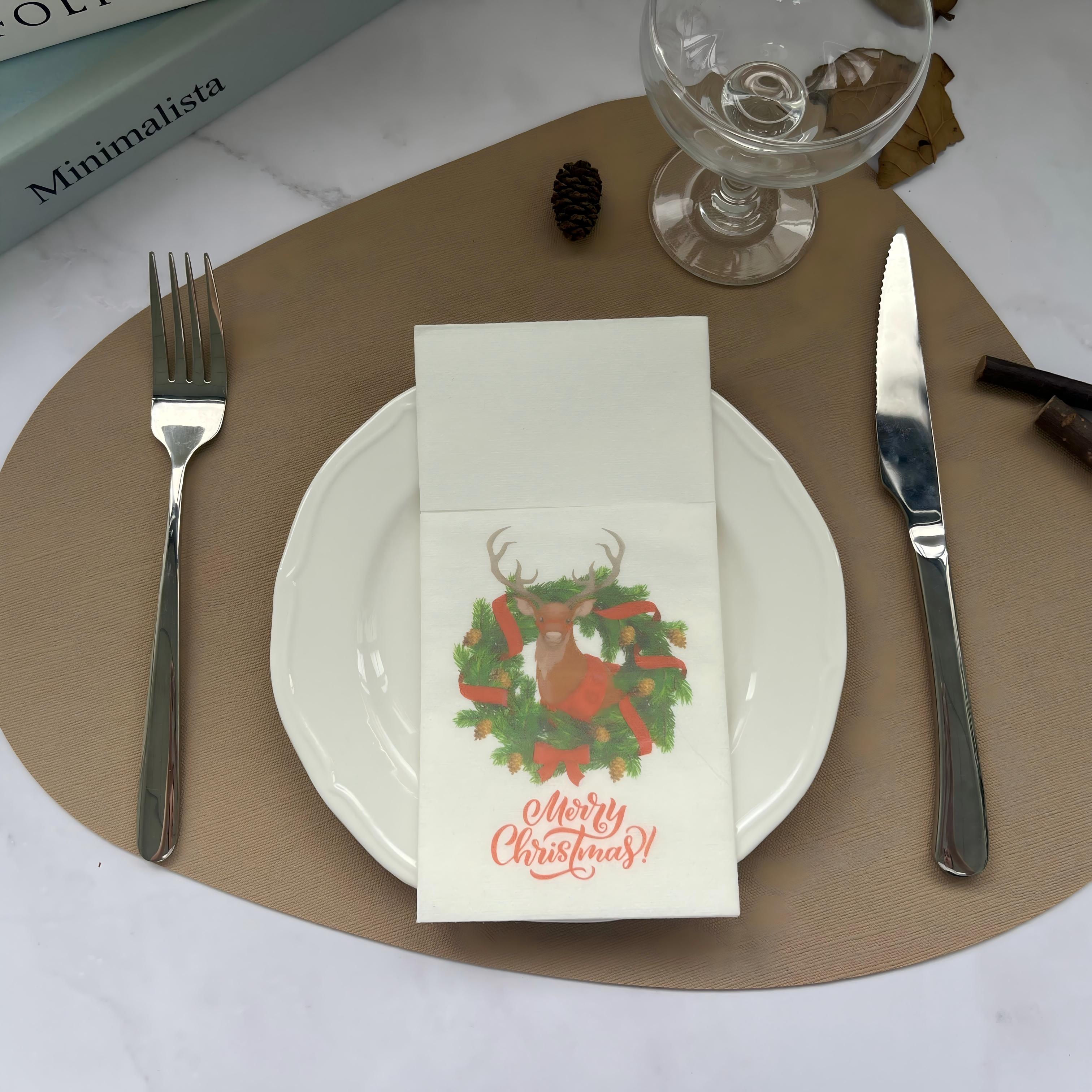
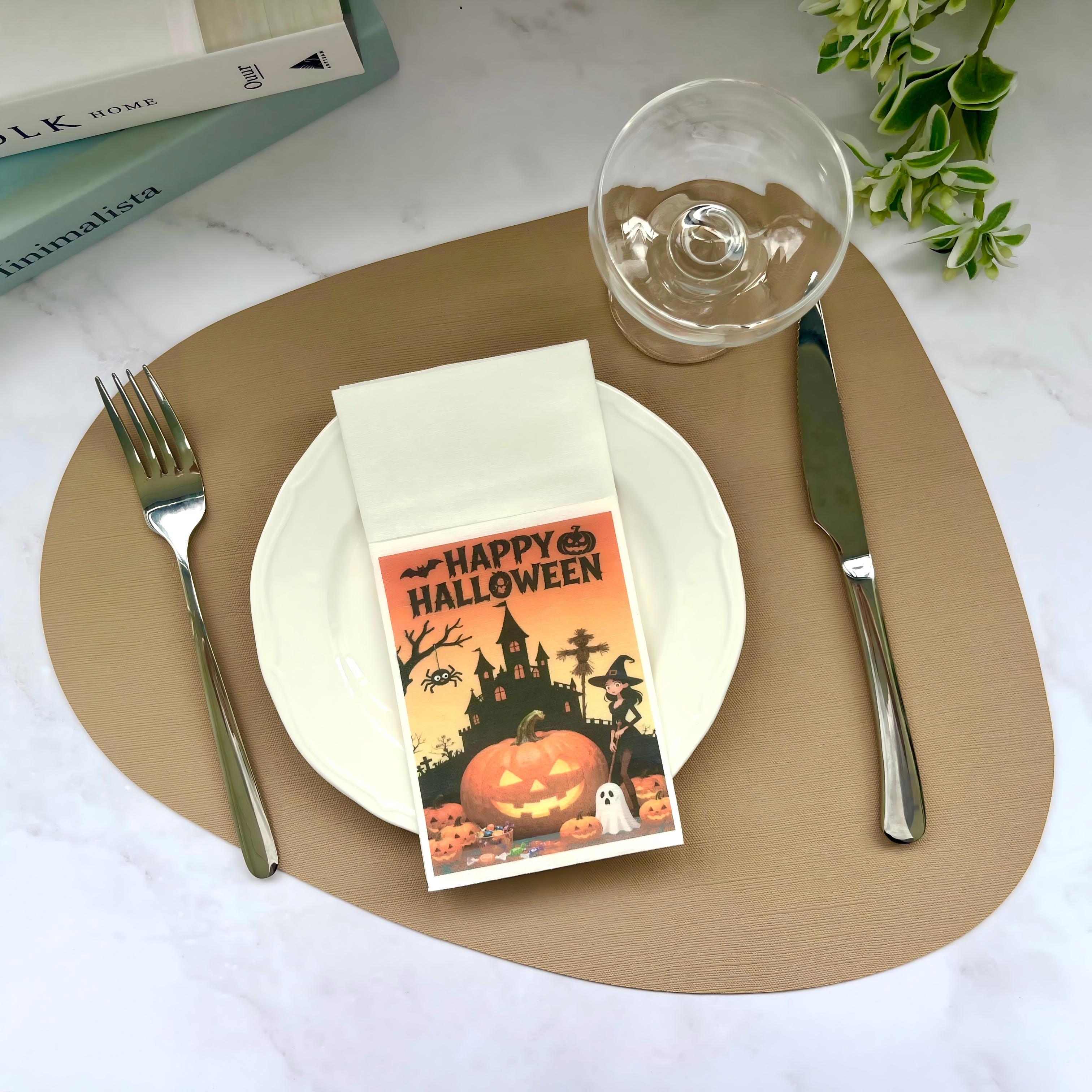
The bonded sheet is passed through embossing rollers for decorative patterns or logos, then precision‑cut into cocktail (5″), lunch (10″), or dinner (15‑20″) sizes. Advanced folding lines achieve up to 1/4‑fold, 1/6‑fold, or speciality folds that maintain a crisp presentation in any dispenser or table setting.
3. Why Airlaid Napkins Outperform Regular Paper — Side‑by‑Side Comparison
Regular paper napkins are wet‑laid, meaning fibres are suspended in water, pressed, and dried — resulting in a flat, brittle sheet with low bulk. The table below quantifies the performance gap:
| Property | Airlaid Napkin | Regular Paper Napkin |
|---|---|---|
| Absorbency (g water / g fibre) | 6‑8 g/g — rapid capillary uptake | 2‑3 g/g — slow, surface wetting |
| Wet Tensile Strength (kN/m) | 0.8‑1.2 — retains integrity even when soaked | 0.2‑0.4 — disintegrates easily |
| Bulk / Thickness (µm) | 450‑600 — plush, cloth‑like feel | 150‑250 — thin, papery |
| Water Consumption (production) | ~5 L / kg (air‑laid, no water in forming) | ~50‑80 L / kg (wet‑laid) |
| Biodegradability | 100% pulp versions compostable in 45‑60 days | Typically 100% pulp, but slower breakdown due to denser structure |
Conclusion: Airlaid napkins deliver 2‑3× the absorbency and 4‑6× the wet strength of regular paper, making them the only disposable option that truly rivals reusable cloth for fine dining and catering.
4. Key Benefits That Drive Performance
4.1 Unmatched Absorbency & Spill Control
The three‑dimensional fibre network creates millions of micro‑capillaries that pull liquids in under 2 seconds — faster than any wet‑laid paper. In practical terms, a single airlaid dinner napkin can absorb up to 120 mL of liquid (equivalent to a full wine glass spill) without dripping or surface pooling.
4.2 Wet Strength — No Disintegration
Thanks to the thermal bonding and fibre orientation, airlaid napkins maintain >80% of their dry strength when fully saturated. This means they can be used to wipe greasy sauces, clean cutlery, or even as a temporary coaster — and they won’t shred or leave lint on glassware.
4.3 Cloth‑Like Luxury Without the Laundry
The combination of high bulk and soft fibre blend gives airlaid a drape and hand‑feel that is virtually indistinguishable from 100% cotton. Yet they remain single‑use, eliminating laundering costs and water waste — a critical factor for high‑volume restaurants and event venues.
5. Eco‑Advantages — Biodegradability & Sustainable Sourcing
Modern airlaid napkins are engineered with sustainability in mind:
- 100% wood‑pulp versions are certified home‑compostable and biodegrade in 45‑60 days in industrial facilities.
- The water‑free forming process reduces total water footprint by 70‑85% compared to conventional tissue production.
- FSC‑certified pulp is widely available, ensuring that virgin fibres come from responsibly managed forests.
- Even blend variants with synthetic fibres can be recycled in specialised streams, and many manufacturers now offer take‑back programmes.
Over 60% of premium airlaid napkins sold in Europe and North America now carry a “biodegradable” or “compostable” label, reflecting the industry’s shift toward circular economy principles.
6. Practical Selection Guide — How to Choose the Right Airlaid Napkin
6.1 Fibre Composition — Pure Pulp vs. Blend
100% wood pulp offers maximum biodegradability and a natural, soft touch — ideal for weddings and eco‑conscious brands. Pulp‑synthetic blends (10‑30% synthetics) provide extra wet strength and embossing definition, suited for heavy‑duty catering or outdoor events where durability is paramount.
6.2 Size & Fold — Match the Use Case
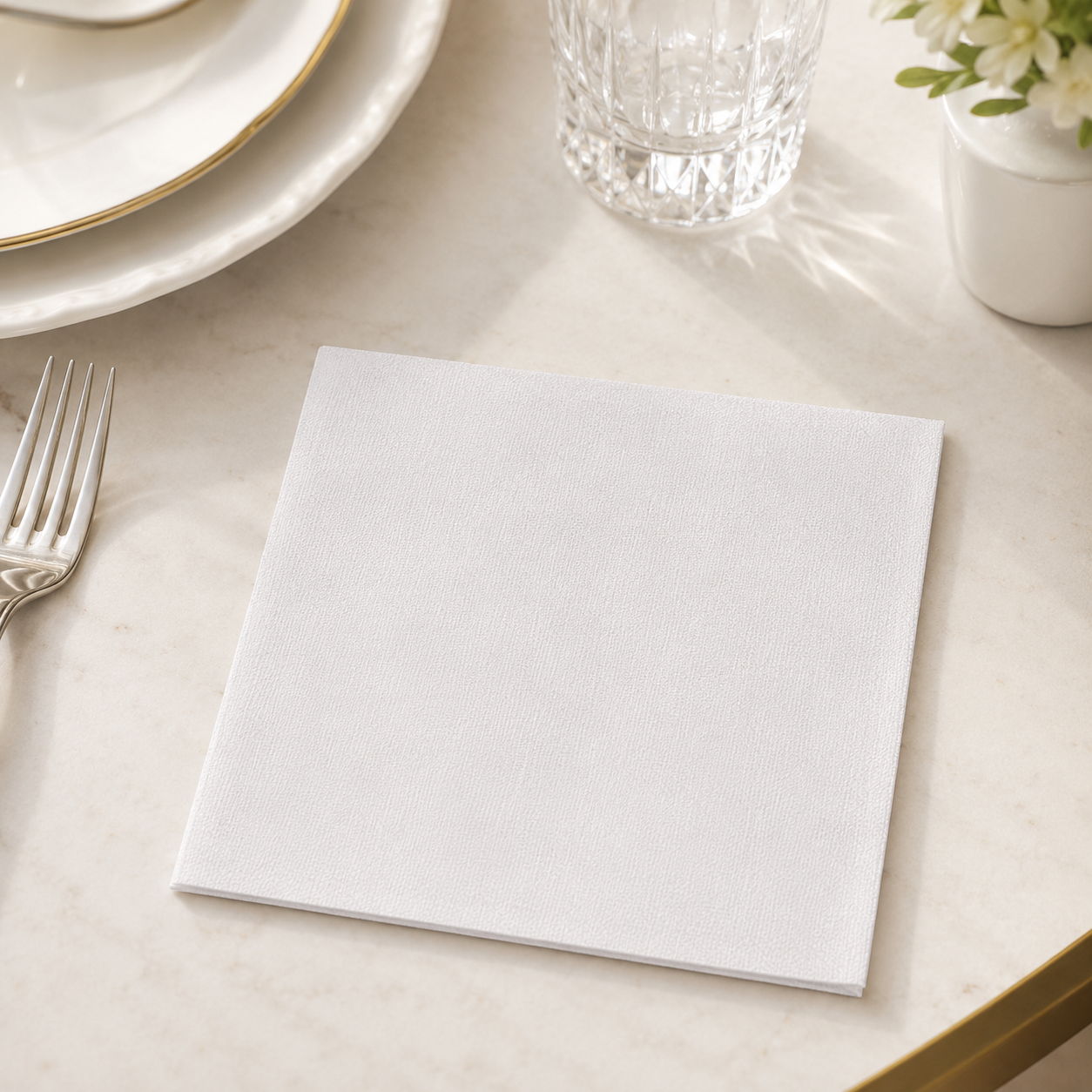
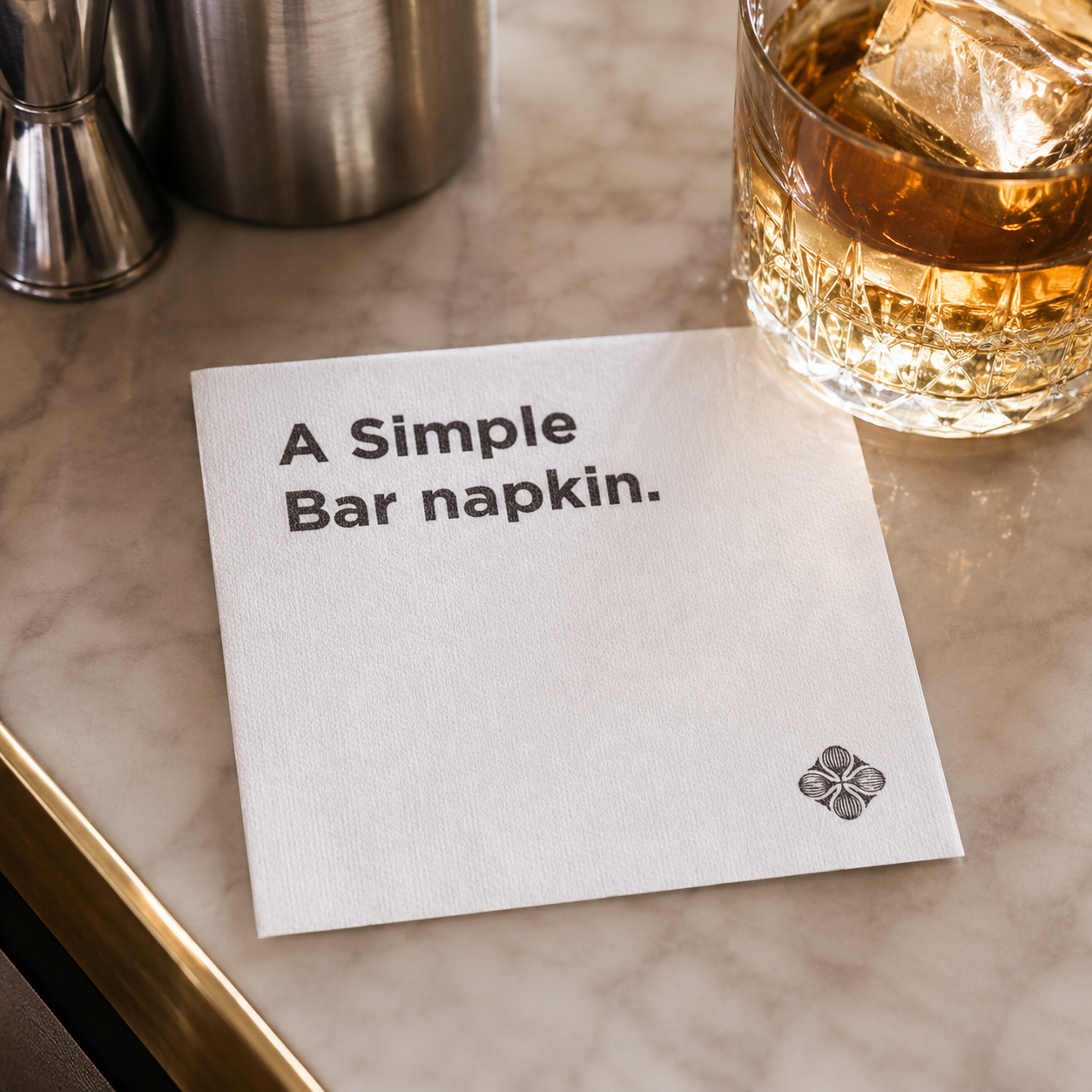
- Cocktail (5″ x 5″) — for drink coasters, appetisers, and bar service.
- Lunch (10″ x 10″) — casual dining, bistros, and café use.
- Dinner (15‑20″) — fine dining, banquet, and formal table settings.
Available in 1/4‑fold, 1/6‑fold, or flat‑stack configurations to suit different dispensers and presentation styles.
6.3 Design & Certifications
- Embossed patterns (diamond, floral, or custom logos) add visual elegance and improve surface texture.
- Look for FSC, OK Compost, or EU Ecolabel certifications to verify environmental claims.
- Colour options range from classic white to dyed pastels — ensure dyes are food‑contact safe and chlorine‑free.
7. Process Flow — From Pulp to Premium Napkin
The entire airlaid production chain in a single visual summary:
→ Air‑Forming (high‑pressure air, no water) → Thermal Bonding (heat set)
→ Embossing (patterns / logos) → Cutting & Folding → Quality Inspection → Packaging
Total cycle time from pulp to finished napkin: under 2 hours, making airlaid one of the most efficient non‑woven processes for tissue products.
8. Frequently Asked Questions (FAQ)
Are airlaid napkins more expensive than regular paper?
Yes, they are typically 2‑4× the cost per unit of standard paper napkins. However, the performance and guest experience justify the premium — users often use 50‑60% fewer airlaid napkins because they are more absorbent and durable, reducing overall consumption.
Can airlaid napkins be composted at home?
Only 100% wood‑pulp versions without synthetic binders or inks are home‑compostable. Always check the packaging for “home compostable” certification. Blend variants require industrial composting.
Do airlaid napkins contain plastic?
Some do — if they include synthetic fibres (bicomponent or PET). But many premium lines are 100% plastic‑free, using only cellulose and natural adhesives. Look for “plastic‑free” or “bio‑based” labels if this is a priority.
How do I store airlaid napkins to maintain quality?
Keep them in a cool, dry place away from direct sunlight. Ideal humidity is 40‑60%; excessive moisture can reduce tensile strength, while very dry conditions may increase static. Sealed packaging is recommended until use.

- Contact
-
+86-18205820793lydia@shuangjiepaper.comPhone
- Get Connected

