
 English
 Español


How Do Colored Airlaid Napkins Compare to Traditional Paper Napkins?
Content
- 1 What Exactly Makes Airlaid Different from Traditional Paper?
- 2 Side-by-Side Comparison: Colored Airlaid vs. Traditional Paper Napkins
- 3 Why Color Matters: From Decoration to Brand Identity
- 4 The Real Cost Comparison: Per-Use vs. Per-Impression
- 5 How to Choose the Right Colored Airlaid Napkin for Your Venue
- 6 FAQ: What Buyers Ask Before Ordering Colored Airlaid Napkins
- 7 Upgrade Your Table Service Today
What Exactly Makes Airlaid Different from Traditional Paper?
To understand performance disparities, buyers must first understand the foundational manufacturing methods. Standard paper napkins are produced via a wet-laid process where wood pulp fibers are suspended in large volumes of water, deposited onto a wire screen, and pressed thin. This creates a dense, cellulose-bound sheet that relies primarily on hydrogen bonding. When exposed to water, these bonds dissolve rapidly, causing the napkin to tear, pill, and disintegrate.
In contrast, airlaid uses air, not water, to bond wood pulp fibers, creating a fabric-like nonwoven structure. Fluff pulp fibers are dispersed in an air stream and deposited onto a forming wire to build a randomized three-dimensional web. Thermoplastic synthetic fibers or eco-friendly liquid binders are introduced, and heat bonding seals the web into an exceptionally bulky, resilient lattice.
The distinction extends directly to coloration engineering. Standard tissue products are typically surface-printed with water-based flexographic inks after paper formation. This surface coating easily bleeds when exposed to alcohol, grease, or water, transferring pigment onto guests' hands or attire. Premium colored airlaid paper napkins utilize mass-dyeing techniques where pigment is impregnated into the raw pulp matrix before bonding, or non-bleeding thermoset dye baths during post-processing. This guarantees total color saturation and high colorfastness during heavy dining use.
When selecting tableware supplies, professional buyers often evaluate linen-feel colored napkins to eliminate laundry overhead while maintaining an upscale ambience. The resulting material provides a soft hand-feel, rich drape, and impressive structural integrity that mirrors woven cloth.
Side-by-Side Comparison: Colored Airlaid vs. Traditional Paper Napkins
To assist procurement directors in evaluating material suitability, the following benchmark matrix contrasts performance across key operational metrics under commercial dining conditions.
| Performance Criteria | Traditional Paper Napkins | Colored Airlaid Napkins |
|---|---|---|
| Material Texture & Touch | Thin, crisp, paper-like stiffness (1-3 ply, 14-18 gsm per ply) | Soft, heavy cloth-like drape, matte linen finish (50-70 gsm) |
| Wet Tensile Strength | Fails rapidly; shreds easily when saturated | Retains up to 85% tensile strength when wet; tear-resistant |
| Absorbency Rate & Capacity | Low total capacity (approx. 2-3x dry weight); slow absorption | High volumetric capacity (approx. 6-9x dry weight); rapid wick rate |
| Colorfastness & Bleed Resistance | Surface ink bleeds with liquids, grease, or alcohol contact | Deep-dyed matrix; zero color transfer under wet rubbing tests |
| Linting & Dusting | High fiber shedding on clothing and dark tableware | Zero lint shedding due to thermal binder encapsulation |
| Target Application | Fast food, takeout, casual cafes, high-traffic drive-thrus | Hotels, fine dining, corporate banquets, weddings, catering |
| Per-Impression Cost Perception | Low initial cost; high guest consumption rate (3-5 per meal) | Moderate initial cost; single-napkin guest consumption rate |
For operators who care about table presentation, the colored airlaid option eliminates the need for linen rental while still delivering a visual upgrade.
Why Color Matters: From Decoration to Brand Identity
Tableware color choices directly impact guest perception, interior harmony, and brand positioning. Rather than treating napkins as mere utilitarian sanitation tools, contemporary dining venue design integrates napkin coloration as a core component of the visual landscape.
Weddings & Luxury Banquets
Replacing rental linen napkins with deep burgundy, navy, or champagne gold airlaid napkins eliminates laundry loss, stain reclamation fees, and sorting labor. The dense nonwoven structure holds sharp decorative folds (such as bishop's mitres or French fans) effortlessly throughout multi-course events.
Corporate & Branded Dining
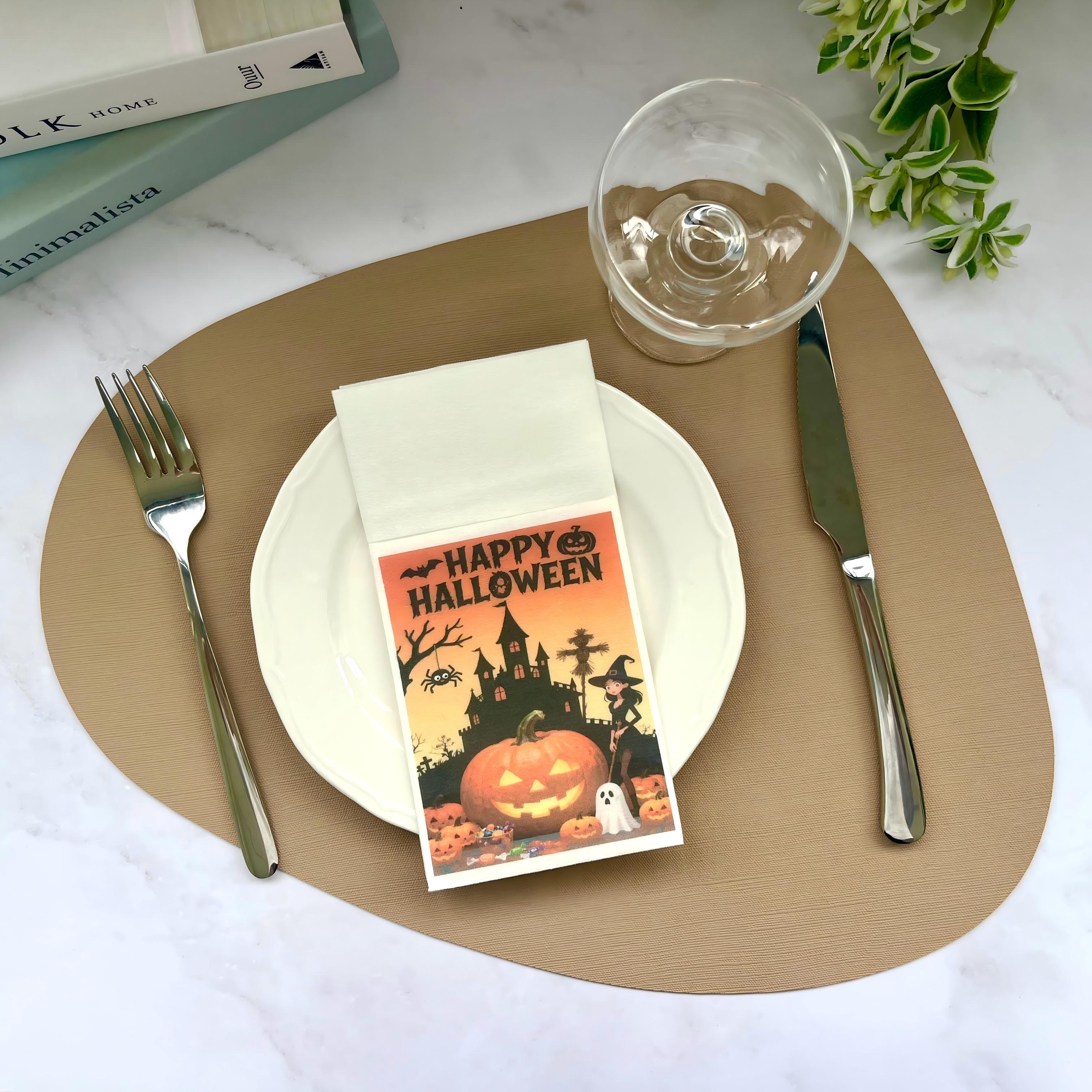
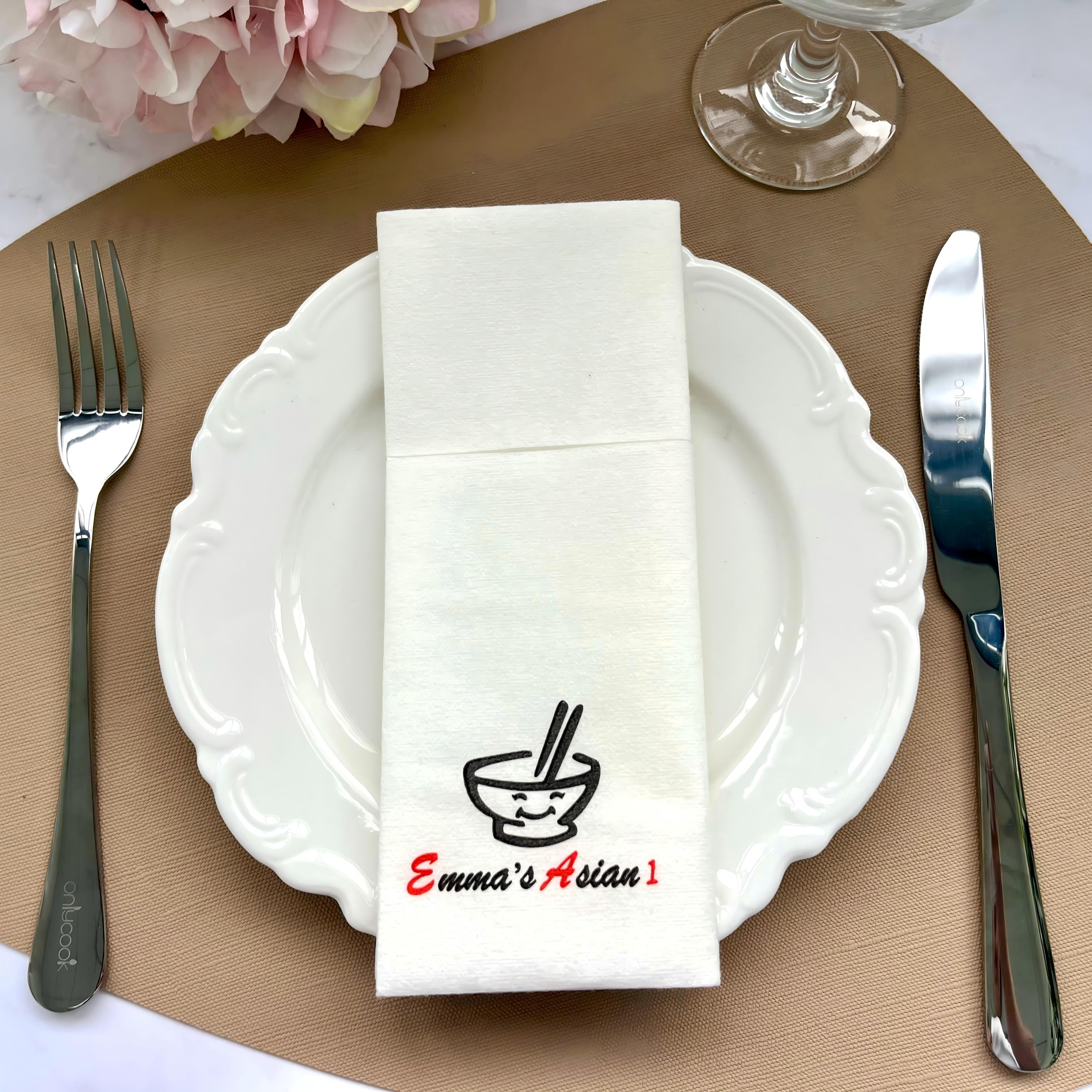
Custom-colored napkins matched precisely to brand color palettes unify corporate branding across conference dining rooms, VIP lounges, and catered galas. Precise color consistency across large batch orders ensures flawless visual alignment across hundreds of tables.
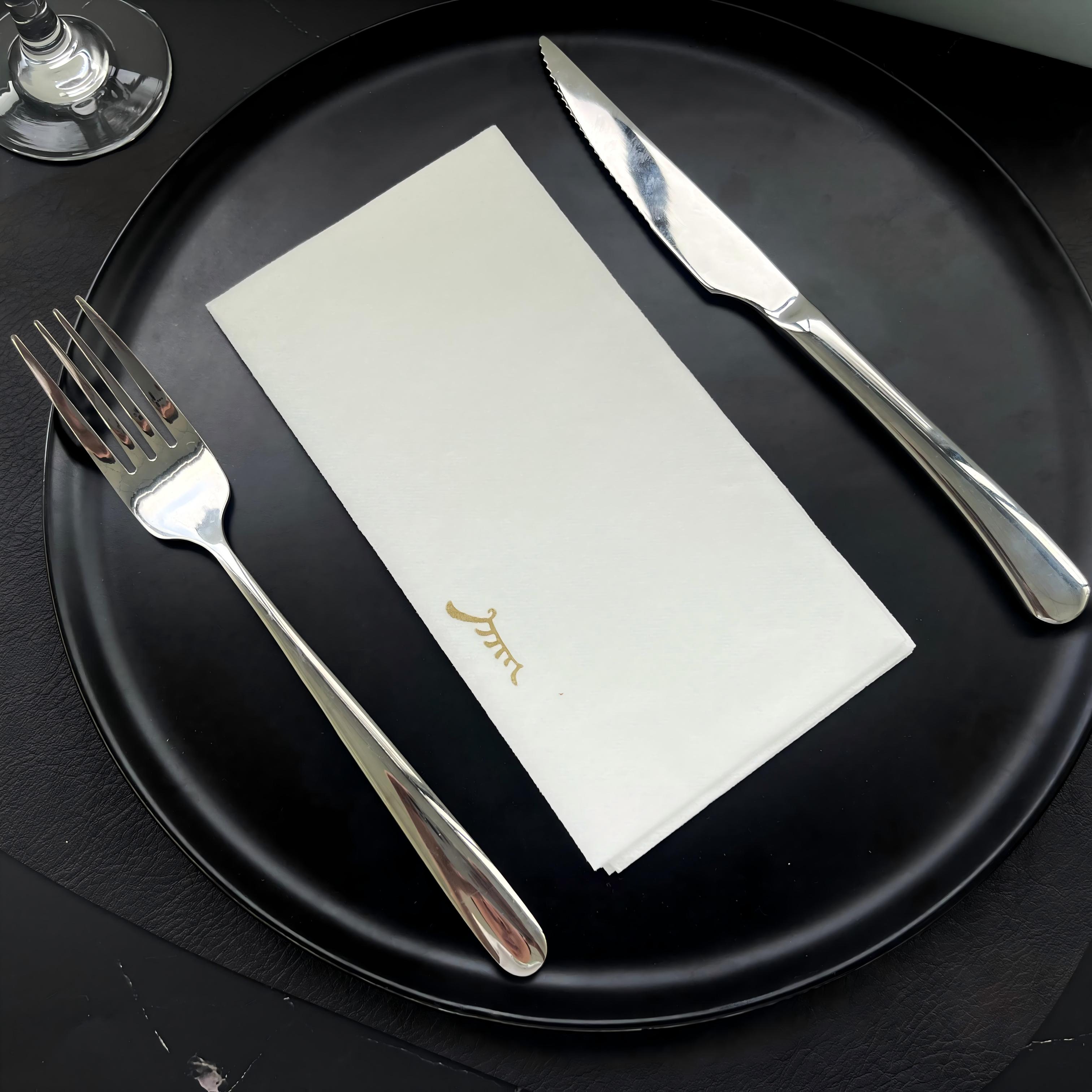
Customization options extend far beyond basic solid colors. Advanced conversion lines support high-speed rotary embossing, metallic gold or silver foil stamping, and deep blind debossing. Unlike traditional tissue paper which tears under heavy embossing dies, airlaid material handles high-pressure mechanical texture processing without fiber degradation.
The Real Cost Comparison: Per-Use vs. Per-Impression
Procurement departments often evaluate napkins solely on unit price per thousand pieces, missing the broader operational financial picture. A thorough financial assessment requires evaluating total napkin consumption per guest cover alongside overall guest perception metrics.
While a single standard 2-ply napkin may cost significantly less than an airlaid napkin, diners typically grab 3 to 5 paper napkins throughout a meal due to tearing, inadequate absorption, and thin construction. In contrast, a single 60 gsm colored airlaid napkin lasts an entire meal, eliminating table clutter and reducing total napkin count per table setting.
When compared to woven linen rentals, airlaid delivers savings of 40% to 60% after accounting for commercial laundering costs, replacement fees for permanently stained or lost linens, and sorting labor. Because pricing depends on GSM, fold, color customisation, and order volume, the fastest way to get an accurate quote is to send your specs directly.
How to Choose the Right Colored Airlaid Napkin for Your Venue
Selecting the optimal napkin configuration requires matching material specifications to venue operational demands. Consider the following industry guidelines when configuring bulk orders:
1. Hotel Dining & Fine Dining Restaurants
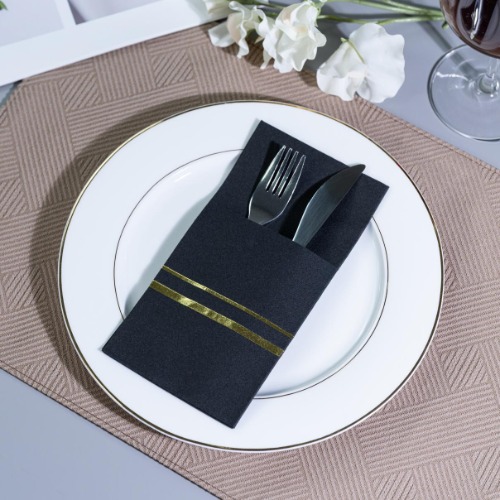
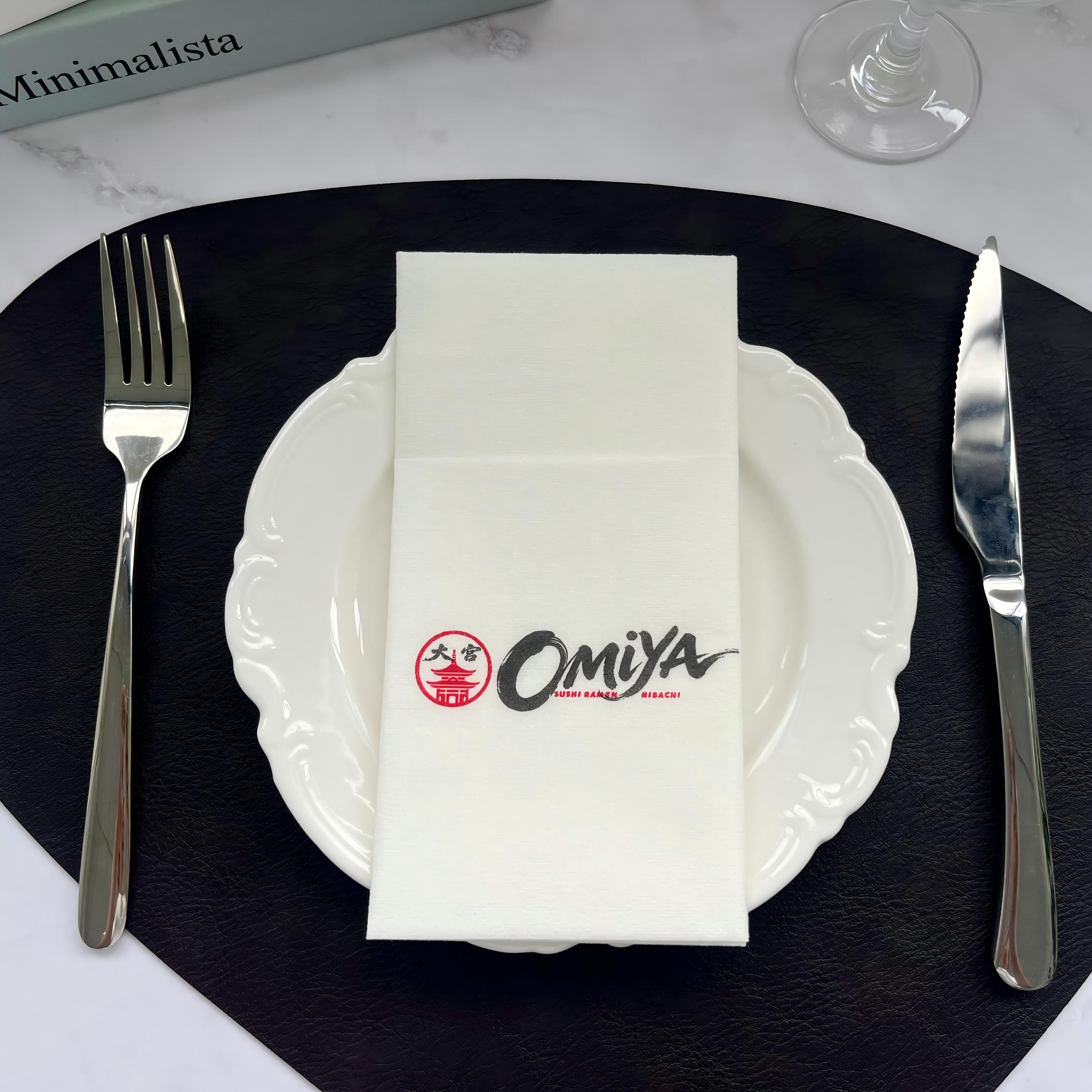
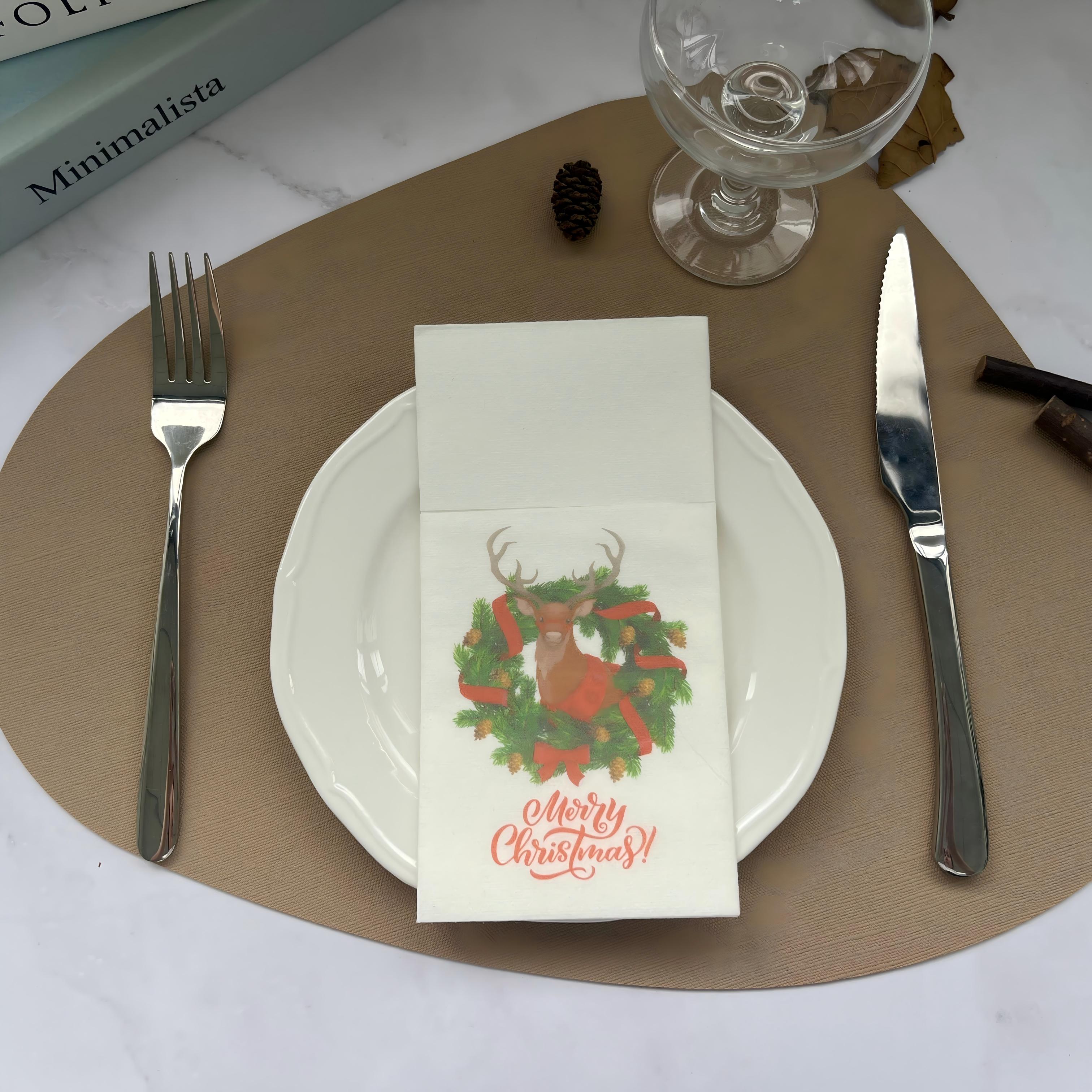
Select heavy 55 to 70 gsm airlaid stock with a classic 1/4 fold or pre-folded cutlery pocket layout. Choose rich, matte tones such as slate gray, deep navy, or warm cream. Avoid glossy binders that compromise the natural linen-like appearance.
2. Weddings, Galas & Event Catering
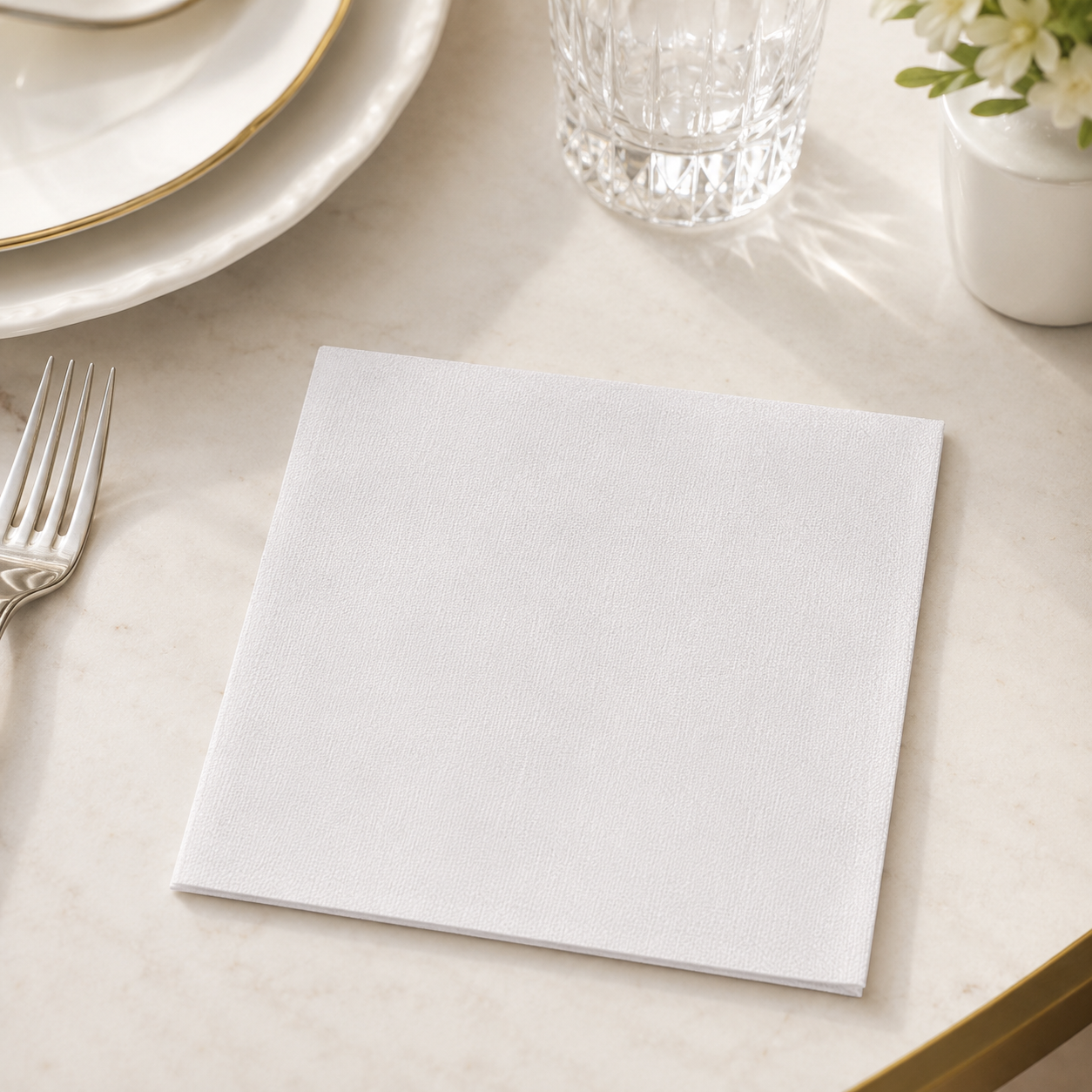
Choose 40x40 cm unfolded dimensions (or 1/8 book fold) with custom dyed shades matched to event color themes. Embossed borders add rigidity and elevate table settings alongside charger plates and floral arrangements.
3. Casual Dining & Premium Takeout Upgrades
Specify 45 to 50 gsm airlaid material in foundational brand colors. This weight delivers superior wet strength compared to standard tissue while keeping per-unit costs accessible for fast-casual operations.
Critical Verification Requirements for Buyers
Always verify compliance certifications prior to finalizing purchase orders:
- Colorfastness Test Reports: Ensure zero dye migration under wet rubbing tests (ISO 105-X12 or equivalent), particularly for deep pigments like crimson, black, and navy.
- Food Contact Safety: Confirm compliance with FDA 21 CFR or EU Regulation No 1935/2004 standards for direct food contact.
FAQ: What Buyers Ask Before Ordering Colored Airlaid Napkins
Q1: Are colored airlaid napkins safe for food contact?
Yes. Premium colored airlaid napkins are manufactured using food-grade dye formulations and non-toxic bonding agents that meet international food contact regulations (FDA 21 CFR 176.170 / EU 1935/2004). Always request regulatory compliance certificates from your manufacturer before issuing a purchase order.
Q2: Do the colors bleed when wet?
High-quality airlaid napkins utilize mass-dyed pulp or thermo-fixed pigments that lock color directly into the wood pulp matrix. Unlike surface-printed tissue paper, properly manufactured airlaid napkins show zero color transfer or bleeding during wet usage with water, oil, or alcohol.
Q3: What is the minimum order quantity (MOQ) for custom colors?
Standard stocked colors (black, burgundy, navy, cream, white) typically carry lower MOQs starting around 30,000 to 50,000 pieces per color. Custom Pantone-matched shades generally require larger production runs (typically 100,000+ pieces) due to master-batch ink formulation and line setup requirements.
Q4: Can I get samples before placing a bulk order?
Yes. Commercial suppliers provide sample swatches or complete sample packs containing various GSM weights, embossing patterns, and color options to evaluate texture, fold durability, and color accuracy in person before finalizing contracts.
Upgrade Your Table Service Today
Airlaid napkins provide the luxurious appearance and soft touch of textile linen alongside the hygienic convenience and cost efficiency of disposable tableware. Elevate your dining presentation, improve guest satisfaction, and lower laundry overhead.

- Contact
-
+86-18205820793lydia@shuangjiepaper.comPhone
- Get Connected

