
 English
 Español


How to Choose Paper Napkins: Types, Materials and Buying Tips for Restaurants and Events
Content
- 1 Why Paper Napkins Remain Essential for Dining and Events
- 2 Core Product Types: Ply Count, Size and Finish
- 3 Materials: Virgin Wood Pulp versus Recycled Fibers
- 4 Eco-Friendly Choices and Compostability
- 5 Everyday Uses Beyond the Dining Table
- 6 A Practical Buying Framework for Wholesale and Hospitality Buyers
- 7 Customization for Branding and Special Celebrations
- 8 Common Buying Mistakes and How to Avoid Them
- 9 Conclusion: Matching Napkins to Real Operating Needs
- 10 Frequently Asked Questions
- 10.0.1 Q1: How many plies should I choose for a restaurant?
- 10.0.2 Q2: Are cocktail napkins and dinner napkins interchangeable?
- 10.0.3 Q3: What is the difference between compostable and biodegradable napkins?
- 10.0.4 Q4: How far in advance should I order custom printed napkins?
- 10.0.5 Q5: Why do some napkins tear when they get damp?
Why Paper Napkins Remain Essential for Dining and Events
Few tabletop products are used as often as napkins, yet they are rarely specified with the same care as plates or glassware. For restaurant operators, catering companies, party suppliers and wholesale buyers, the choice of paper napkins affects hygiene, guest experience, operating cost and even brand perception. A napkin that tears when wet or feels rough against the skin will be remembered, just as a well-chosen one quietly supports the meal.
Paper napkins solve several practical problems at once. They are single-use, so they remove the need for laundering, ironing and storage of cloth stock. They can be printed, colored or embossed to match a theme. They are lightweight, which lowers shipping costs for bulk orders. And when they are made from the right fiber and ply count, they handle sauces, condensation and frequent wiping without falling apart.
Purchasing teams often compare napkins only by unit price. A more useful approach is to compare cost per usable event or cost per guest served. A cheap single-ply napkin that requires two sheets per guest can cost more over a banquet season than a well-engineered two-ply or three-ply product that works with one sheet. This guide explains the main categories, materials, uses and selection criteria so that buyers can match specifications to real operating needs.
Core Product Types: Ply Count, Size and Finish
Almost every paper napkin can be described by four variables: the number of plies, the physical size, the surface finish and the fiber source. Understanding how these variables interact is the foundation of good specification. Two napkins with the same size may perform very differently if one has a single layer and the other has three.
By Ply Count
Ply refers to the number of paper layers pressed together. Each additional layer generally improves absorbency, thickness and resistance to tearing, although the effect is not linear. Manufacturers balance ply count with cost, bulk and the feel of the finished product.
| Ply Count | Typical Feel | Best Suited For |
|---|---|---|
| 1-ply | Thin and light | Low-cost bulk use, buffet service, short meals |
| 2-ply | Balanced softness and strength | Casual parties, cafeterias, everyday hospitality |
| 3-ply | Thick, soft and absorbent | Restaurants, dinner events, premium catering |
For restaurants, three-ply products are often preferred for dinner service because guests tend to use napkins more heavily during a full meal. For casual events where napkins are mainly used for light wiping, two-ply products usually offer the best value. Single-ply napkins work well when they are used in large quantities and guests need only a light touch.
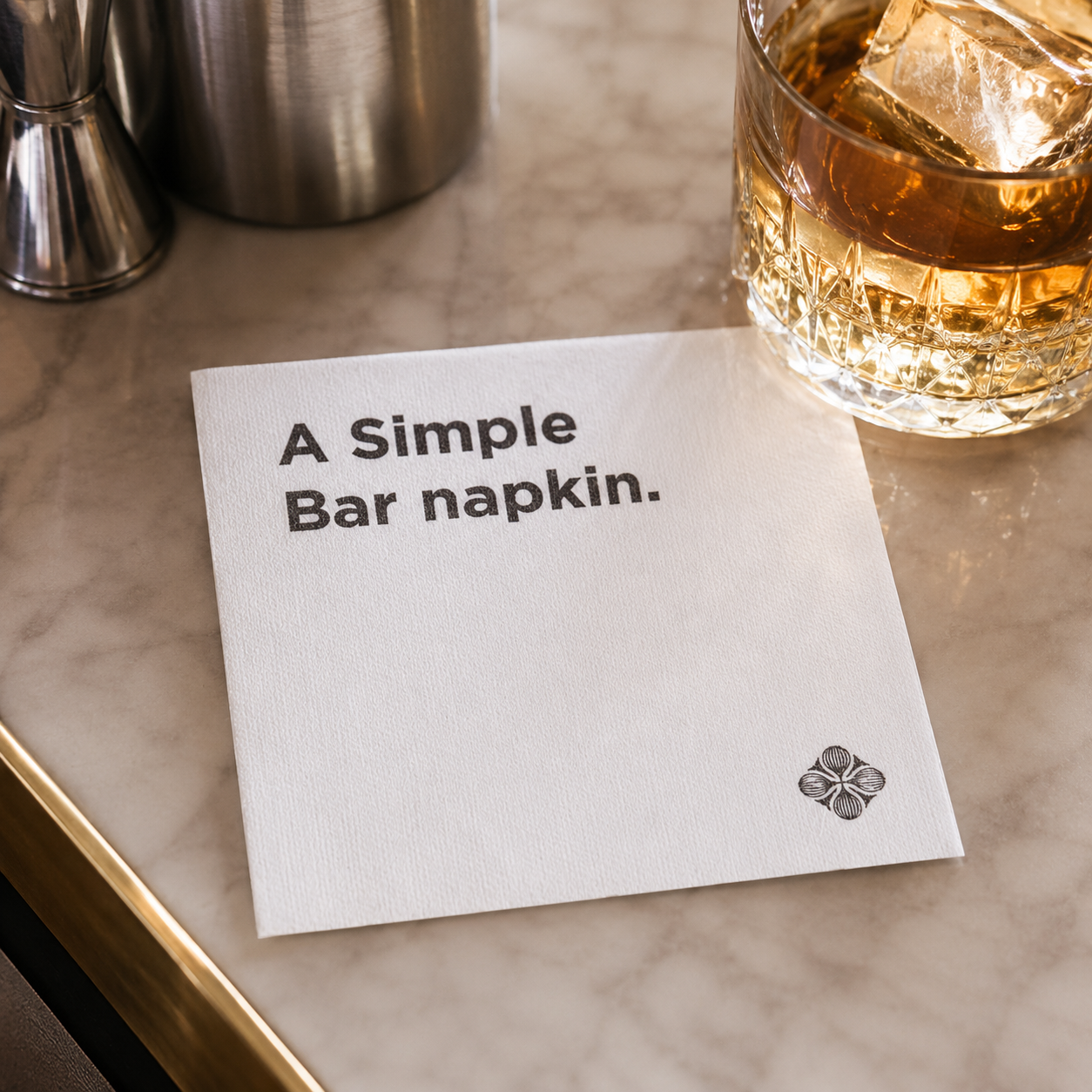
By Size: Cocktail Napkins versus Dinner Napkins
Size determines how a napkin is used and where it fits in a service flow. Cocktail napkins are small squares intended for beverages, canapes and light snacks. They are usually placed under a glass or next to a plate of finger food. Dinner napkins are much larger, often around 40 cm square when unfolded, and are placed on the lap or beside the plate for full-course meals. Lunch napkins sit between these two sizes and are common in cafes and business catering.
When sourcing, buyers should measure the actual folded and unfolded dimensions rather than relying on the category name alone. Two suppliers may both describe a product as a dinner napkin while offering quite different sizes.
By Surface Style and Decoration
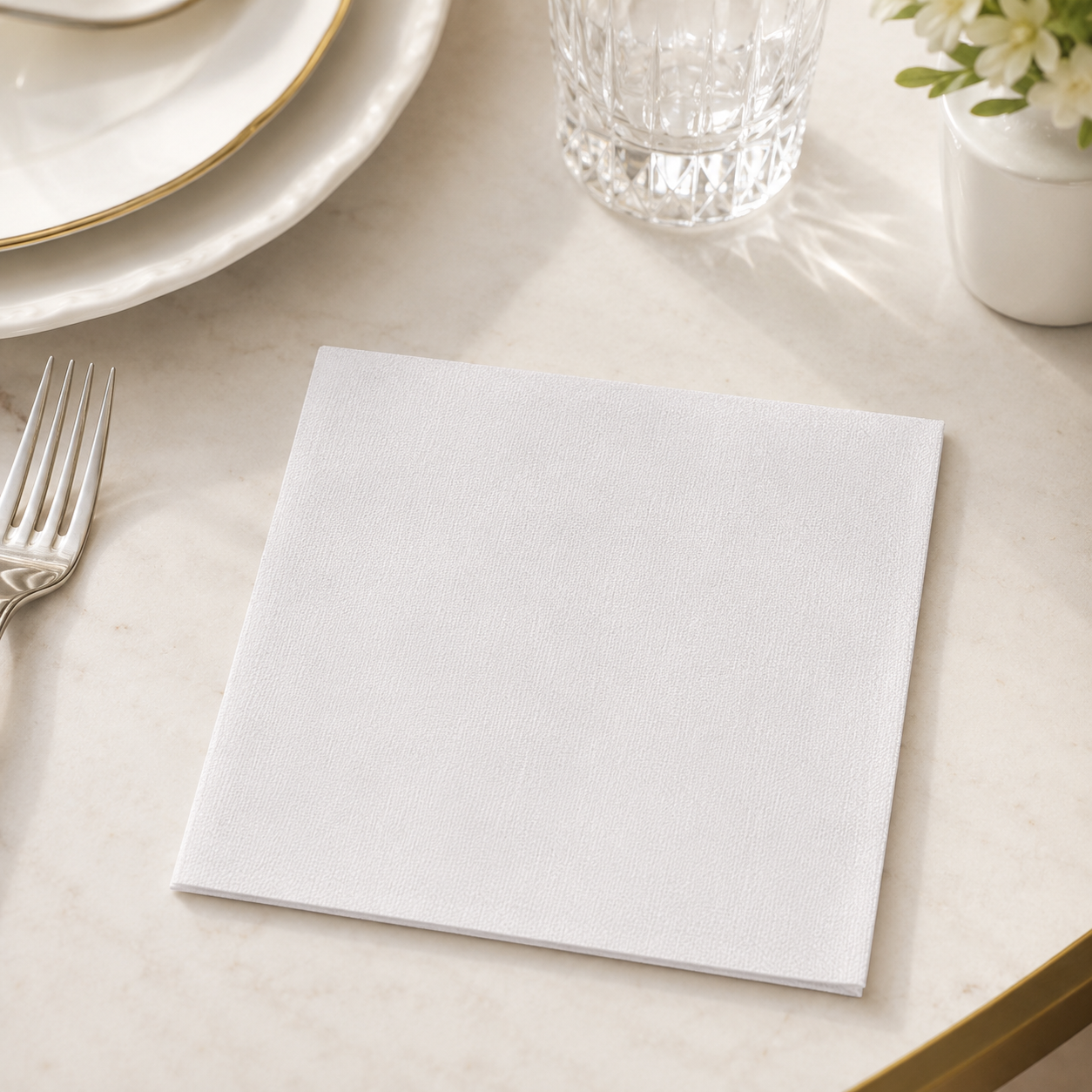
- Plain solid-colored napkins are the most versatile option for hospitality, offering consistent color across large orders.
- Printed napkins carry seasonal or themed designs such as floral patterns, holiday motifs or birthday graphics.
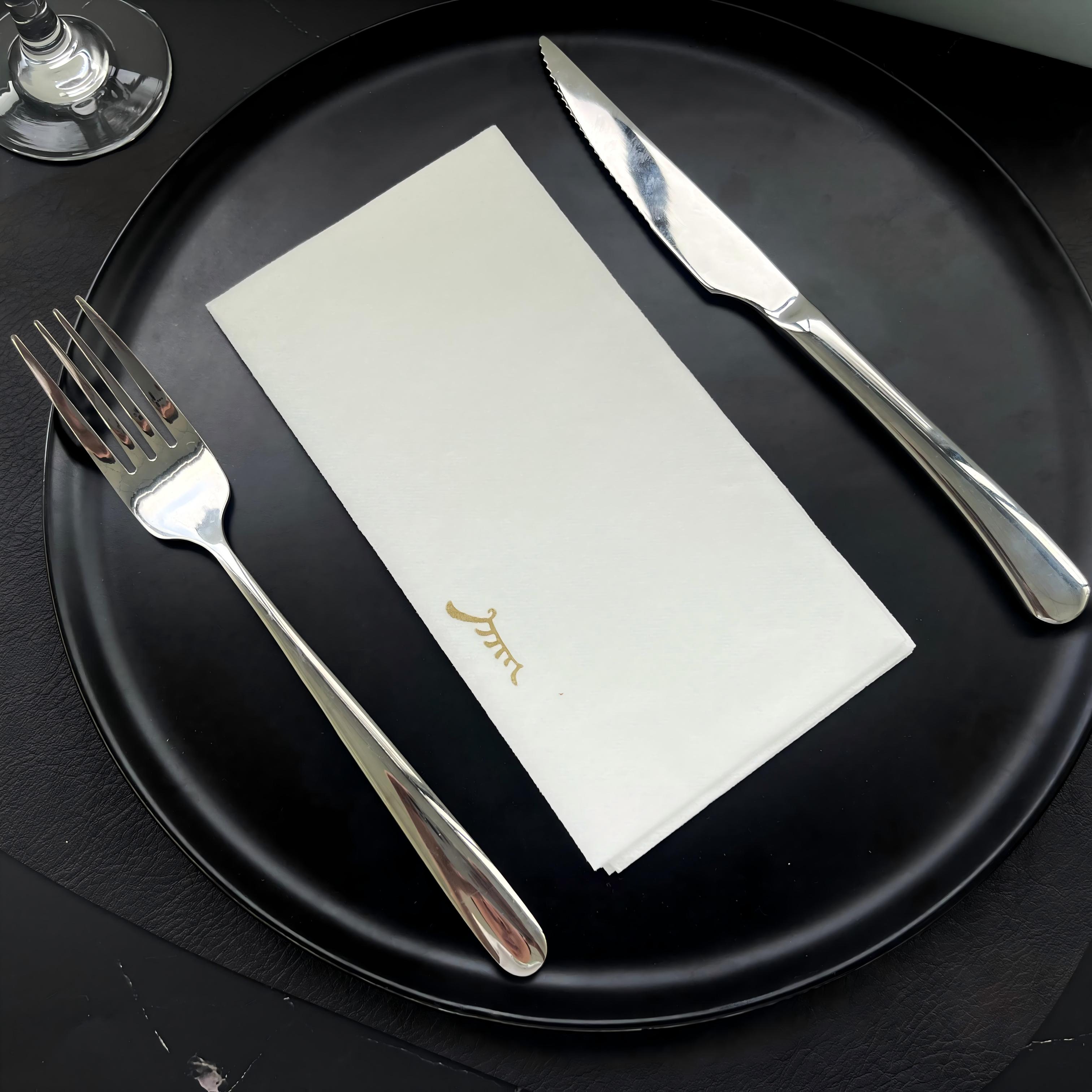
- Hot-stamped napkins use foil or metallic accents for weddings and formal banquets, adding visual weight without heavy ink coverage.
- Embossed and die-cut napkins create textured surfaces or decorative edges that improve tactile appeal and visual depth.
Each decoration method has trade-offs. Heavy ink coverage can affect absorbency and transfer color to food-contact hands, so printed designs for food service should use suitable inks and leave an adequate margin. Embossing can strengthen a sheet while adding texture, but deep patterns may reduce the effective thickness in some areas.
Materials: Virgin Wood Pulp versus Recycled Fibers
The fiber used in a napkin strongly influences softness, strength, color and environmental profile. Most napkins are made from either virgin wood pulp, recycled paper fiber or a blend of both. Virgin pulp typically has longer fibers, which can improve tensile strength and wet resistance. Recycled fibers are shorter and may have a slightly more textured or natural appearance, but they support circular material use and can reduce demand for new forest resources.
| Attribute | Virgin Wood Pulp | Recycled Fiber |
|---|---|---|
| Softness | High | Moderate to high |
| Wet strength | Generally stronger | Depends on process |
| Color consistency | Very consistent | Can vary slightly |
| Environmental profile | Responsibly sourced if certified | Uses post-consumer or pre-consumer content |
Buyers who want a sustainable product should look for clear documentation rather than vague claims such as natural or green. Useful information includes the fiber source, recycled content level and whether the forest material comes from managed sources under a recognized third-party certification scheme. When an eco-friendly paper napkins option is required, these details matter more than the word itself.
Eco-Friendly Choices and Compostability
Environmental expectations have changed the way many venues and event organizers buy disposable products. Customers increasingly notice whether napkins are compostable, recyclable or made with recycled content. Yet the term eco-friendly has no single legal definition, so procurement teams need practical criteria to compare options fairly.
A practical sustainability checklist for buyers: confirm the fiber source, request the recycled content percentage in writing, check whether inks and coatings are suitable for food contact, and ask whether the product is marketed as compostable under a recognized standard in your target market.
Compostable and biodegradable are not identical. Compostable napkins are designed to break down in composting conditions within a defined timeframe, while biodegradable is a broader term that does not always specify conditions or timing. For food-service buyers, the most important factor is often whether the napkin can be disposed of alongside food waste in local systems. Ask suppliers which disposal route they expect and whether the product has been tested under relevant standards.
Packaging also contributes to the overall footprint. Bulk cartons, minimal plastic wrap and efficient pallet loading reduce waste and shipping emissions. For portable packs, moisture-resistant wrapping should protect the napkins without adding unnecessary layers.
Everyday Uses Beyond the Dining Table
Although most purchases are made for restaurants and events, paper napkins perform a wide range of secondary roles. Understanding these uses helps buyers identify products that serve several purposes at once, which can simplify inventory and reduce the number of SKUs a business must manage.
Core Dining and Event Applications
In restaurants, cafes and bars, napkins protect guests from spills and keep hands clean during meals. At weddings, corporate dinners and club events, coordinated napkins extend the color scheme and support the overall table design. Outdoor picnics and garden parties depend on napkins that can handle humidity and light breeze without tearing.
On-the-Go and Portable Use
Square portable napkins are popular in lunch boxes, delivery bags, vehicles and travel kits. Their compact footprint makes them practical for on-the-go hygiene, especially when water or soap is not immediately available. Buyers who supply these products should pay attention to moisture protection, because a single damp pack can ruin an entire box of tissue-based napkins before the end user opens it.
Household and Personal Care
At home, napkins are often used for quick cleanup of drinks, blotting oil from food, drying hands during cooking and wiping small surfaces. Because they are disposable, many households prefer them over cloth in situations where cross-contamination is a concern, such as handling raw food or cleaning up after a child or pet accident.
Creative and DIY Applications
Crafters use napkin layers for decoupage, collage, greeting cards and seasonal decorations. The thin top layer of a multi-ply napkin can be separated and glued onto surfaces to create patterned effects. Creative users often prefer printed or colored napkins with consistent ink, and they may value softness and flexibility over absorbency.
A Practical Buying Framework for Wholesale and Hospitality Buyers
Good sourcing decisions come from matching a product to a clearly defined occasion. The most efficient buyers start with the use case, then work through the specifications in a logical sequence. The diagram below shows a simple four-step path that many procurement teams find useful.
The first step is defining the occasion precisely. A cocktail reception, a hotel breakfast buffet and a barbecue catering job all need different napkins, even though all three fall under the same product name. Write down the expected guest count, the type of food, whether napkins will be used heavily, and whether the setting is formal, casual or outdoors.
The second step is selecting the ply count and folded size. Consider how many napkins each guest will realistically use. If the menu includes sauces, oils or dessert, a higher ply count is usually justified. If napkins are mainly decorative or used for light touch, a lower ply count may be sufficient.
The third step is choosing the material and surface. Virgin pulp may be preferred for premium table service, while recycled content may be more suitable for organizations with sustainability targets. Confirm color matching, especially when napkins must coordinate with tableware or brand colors.
The fourth step is confirming print, finishing and packaging details. Ask for pre-production proofs when a design is custom. Verify whether the napkins will be packed individually, in dispensers or in portable sleeves, and check that the packaging protects the product from moisture and dust during storage and transit.
Key Specification Checklist
| Specification | What to Confirm | Why It Matters |
|---|---|---|
| Ply count | Number of layers and total thickness | Affects absorbency and perceived quality |
| Dimensions | Folded and unfolded size | Determines fit for napkin holders and table setting |
| Fiber source | Virgin, recycled or blended | Influences softness, strength and sustainability claims |
| Print method | Ink type, color count and coverage | Impacts appearance, food-contact suitability and cost |
| Packaging | Individual wrap, box count and moisture protection | Protects quality during storage and delivery |
Customization for Branding and Special Celebrations
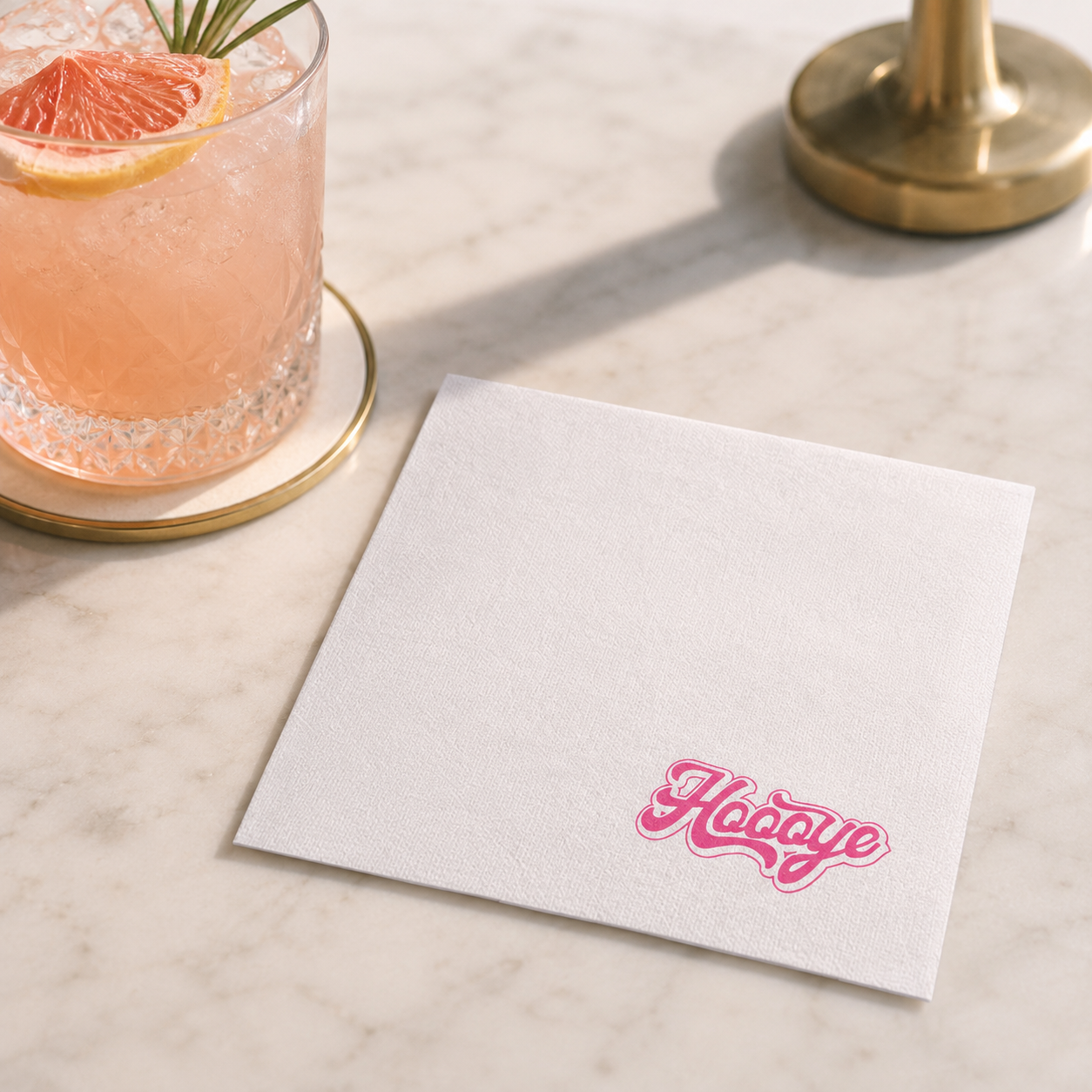
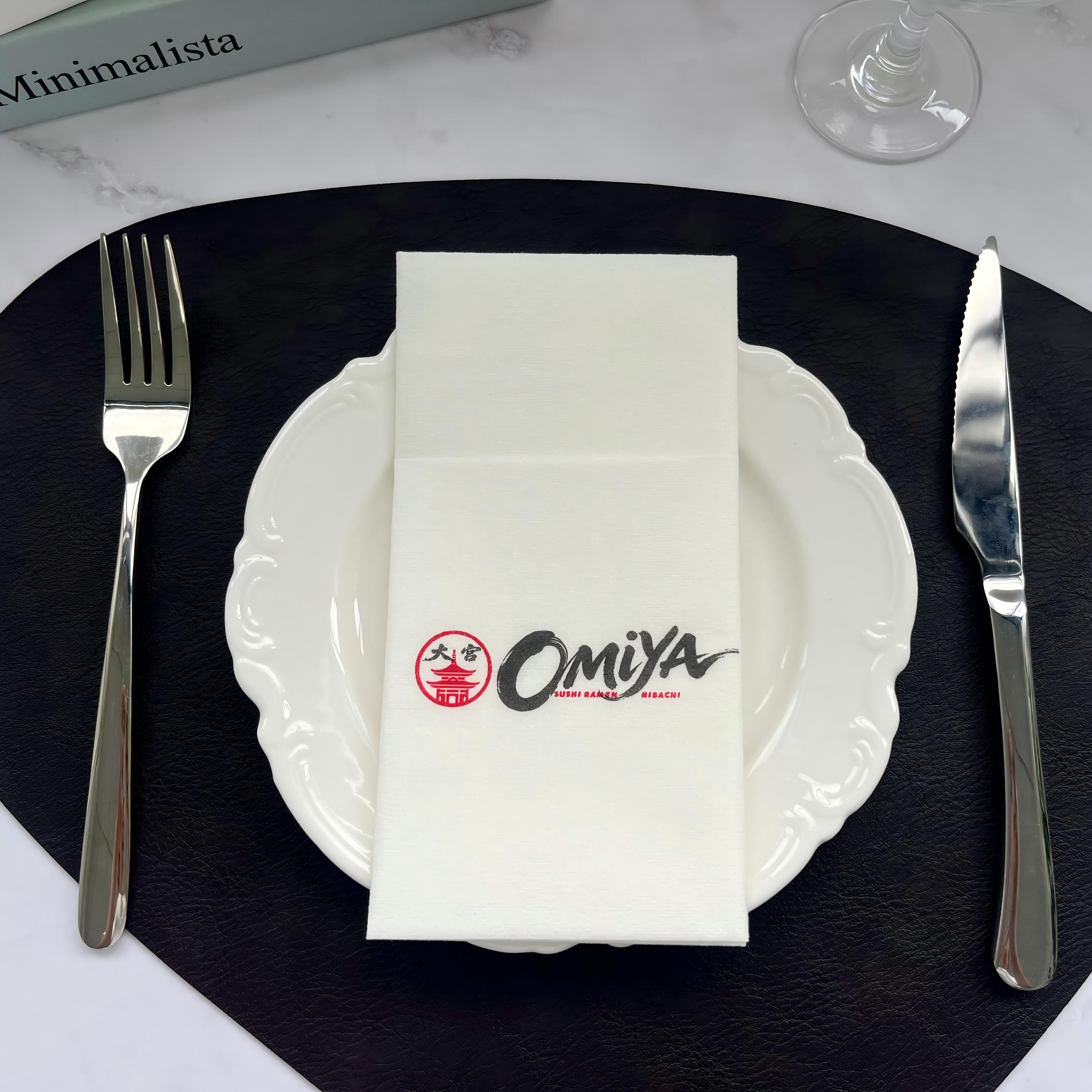
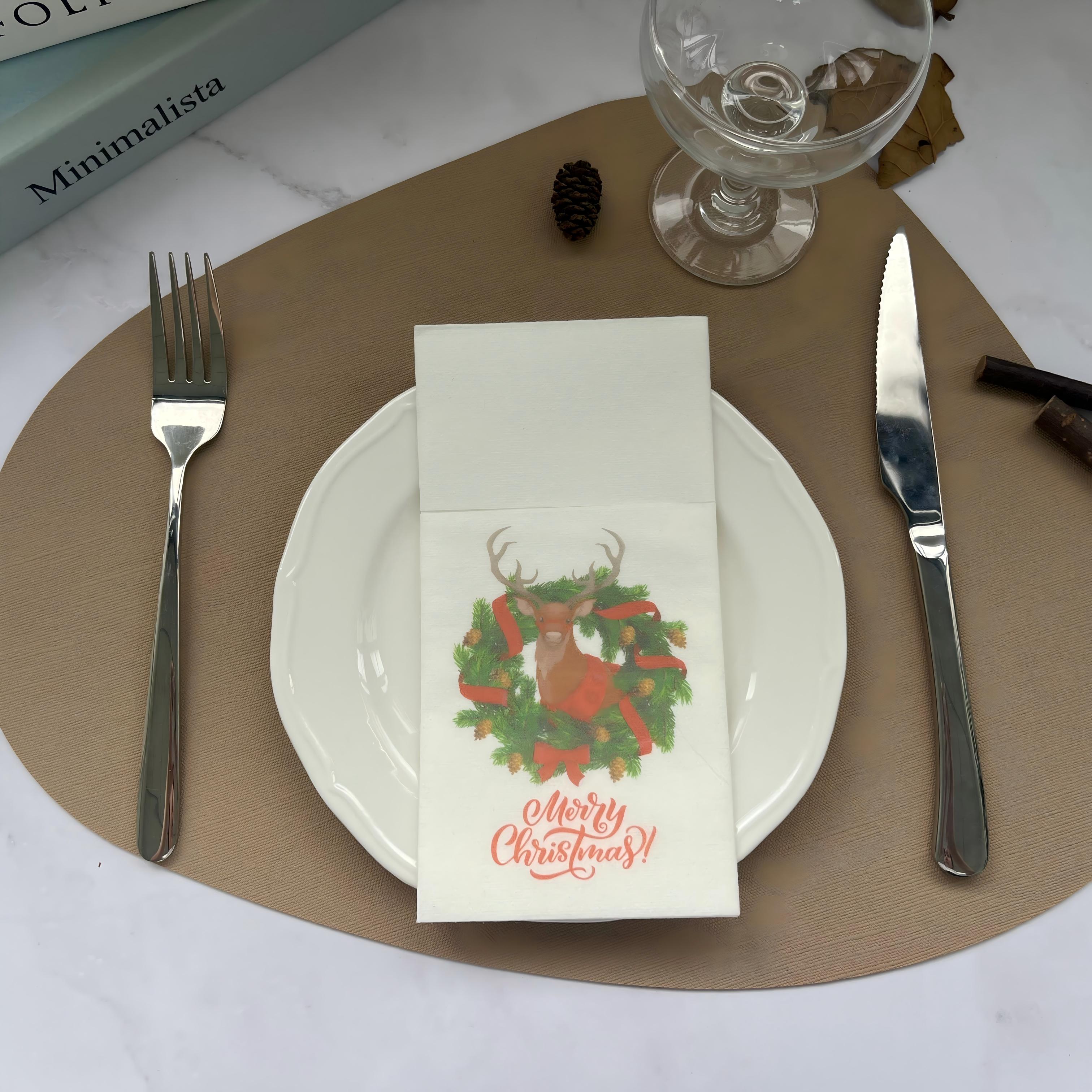
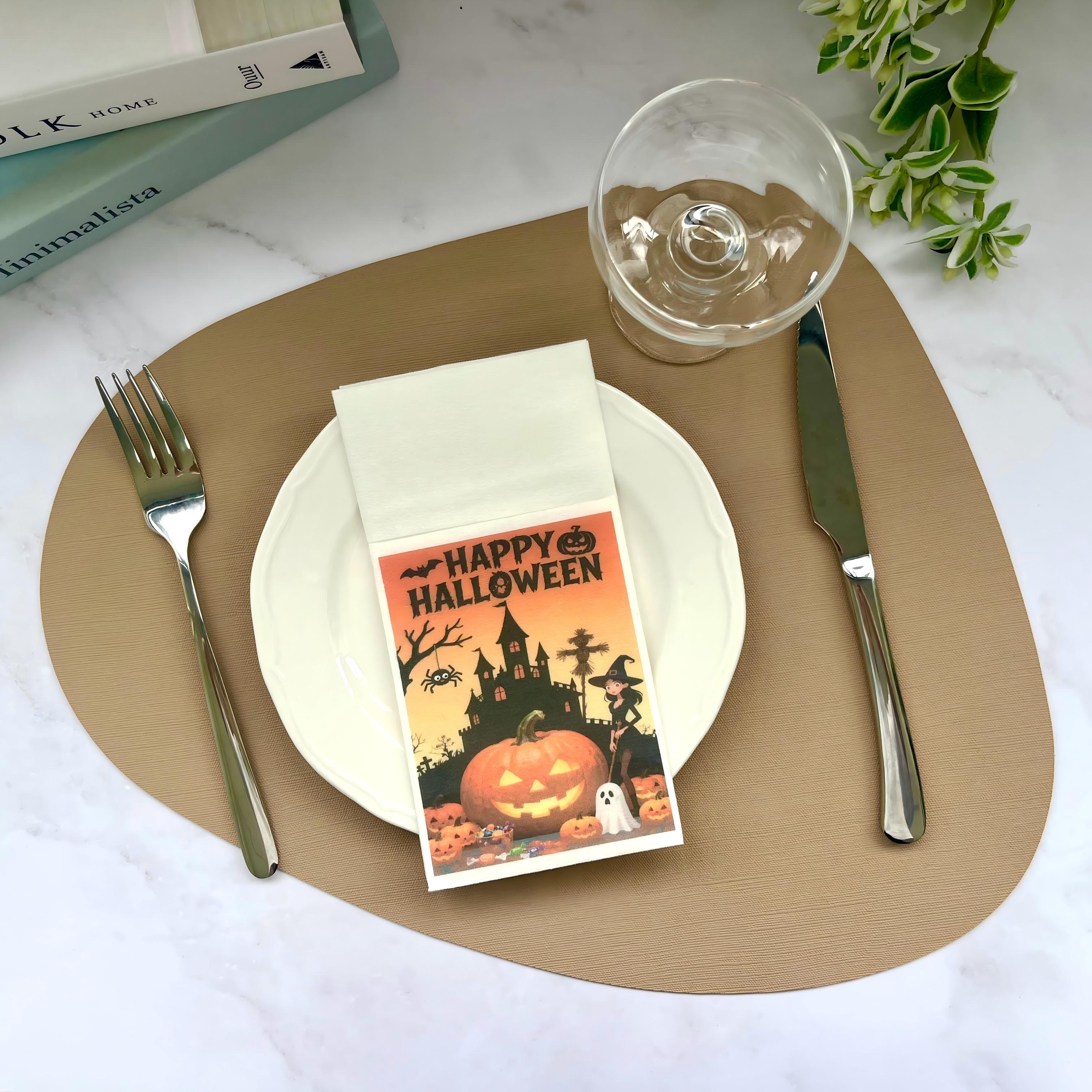
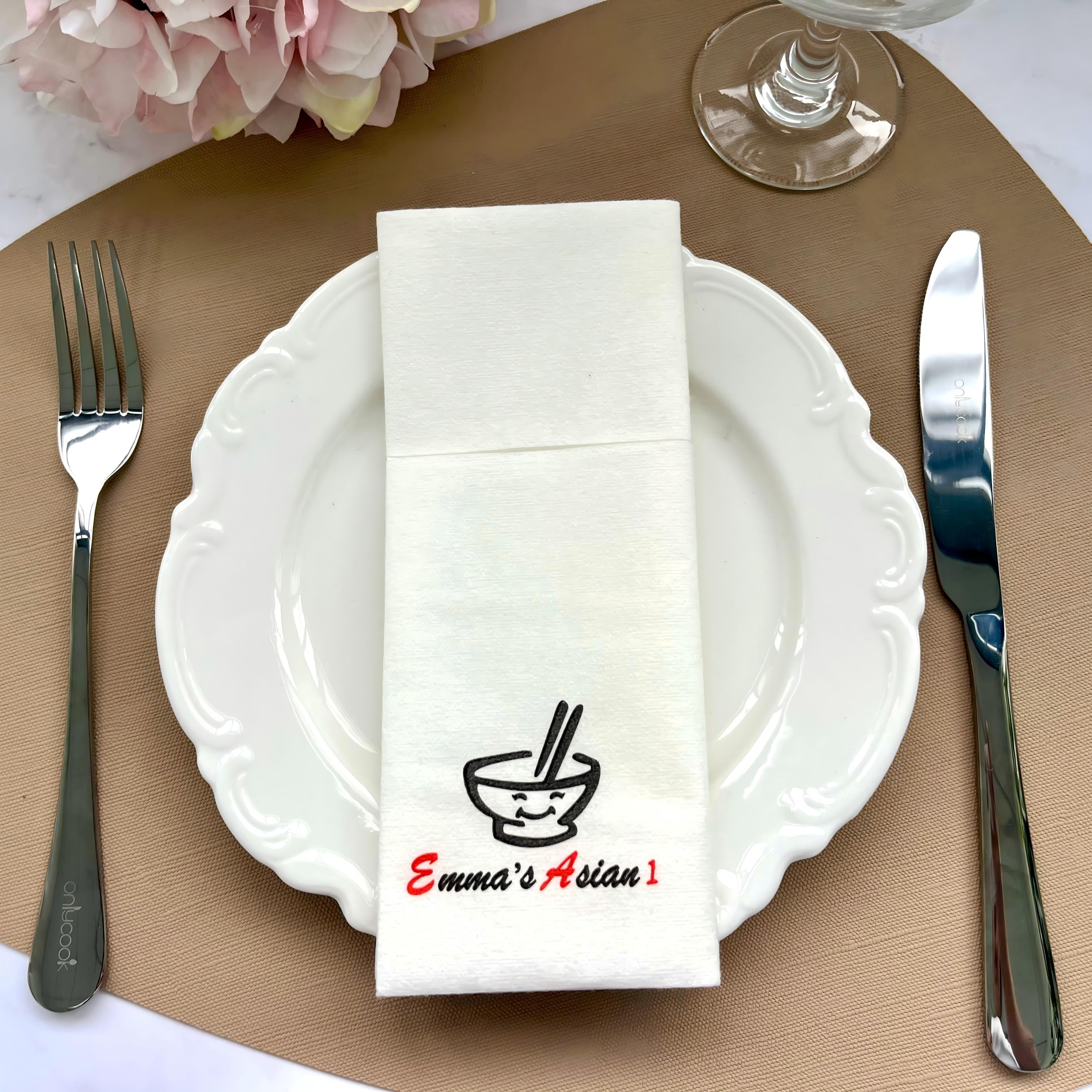
Custom napkins give hospitality businesses and event organizers a practical way to reinforce identity without adding a separate printed item. Logos, seasonal artwork, wedding monograms and celebratory messages can all be applied to a napkin surface. For many buyers, personalized custom paper napkins represent the most memorable detail in a whole event setting.
Customization choices typically fall into four categories: color, print method, size and finish. Solid colors are the simplest and most cost-effective option for large runs. Multi-color printing allows detailed artwork but increases setup effort and requires careful color proofing. Foil stamping adds a premium look for weddings and formal banquets, while embossing creates a tactile signature effect.
Artwork tip: keep important logos and text at least 1 cm away from the napkin edges and fold lines, because folding and handling can shift the visible area during service.
Lead time planning is important for custom orders. Buyers should allow time for artwork approval, proof sign-off, production and shipping. Orders placed close to a major event date often carry higher risk, especially when a new design or specialty finish is involved. Requesting a sample set before committing to a full run is a common way to check color, print clarity and fiber feel.
Common Buying Mistakes and How to Avoid Them
Many sourcing problems are not caused by poor products but by incomplete specifications. Recognizing the most frequent errors can save time, budget and reputation. The following points are drawn from common procurement experience across restaurants, caterers and event suppliers.
- Ordering only by category name without checking the actual folded and unfolded size, which can lead to napkins that do not fit holders or look too small on tables.
- Choosing single-ply products for dinner service, then discovering that guests need two or three sheets per meal.
- Ignoring moisture protection for portable napkins, causing packs to stick together or weaken before use.
- Approving custom artwork without checking color on the actual material, since screens and print outputs rarely match exactly.
- Failing to plan for reorders, which can result in color or batch variation between events held months apart.
Another frequent oversight is inventory planning. Buyers who purchase in small quantities may pay more per unit and risk running out during peak season. Those who order too far in advance may tie up cash and storage space. A rolling forecast based on past event counts, seasonal peaks and guest estimates usually provides a more reliable basis for order timing.
Conclusion: Matching Napkins to Real Operating Needs
Paper napkins are more than disposable consumables. They influence hygiene, guest comfort, visual presentation and operating efficiency. The right choice depends on the setting, the menu, the expected guest behavior, the sustainability goals and the level of customization required. By evaluating ply count, size, fiber source, decoration and packaging together, buyers can avoid both overspending and under-specifying.
For hospitality teams, the most effective approach is to standardize a small range of napkins for core occasions, then add specialty options for weddings, seasonal promotions and branded events. This reduces complexity while keeping the table presentation consistent. Buyers who want to review available styles can explore the complete paper napkins range and compare specifications against their own event requirements.
Frequently Asked Questions
Q1: How many plies should I choose for a restaurant?
Three-ply napkins are a common choice for restaurant dinner service because they handle sauces, condensation and repeated wiping well. Two-ply can work for lunch service or casual dining where napkins are used more lightly.
Q2: Are cocktail napkins and dinner napkins interchangeable?
They are not interchangeable in most settings. Cocktail napkins are small and intended for drinks and snacks, while dinner napkins are much larger and designed for full meals. Using the wrong size can affect both function and table presentation.
Q3: What is the difference between compostable and biodegradable napkins?
Compostable napkins are designed to break down under composting conditions within a defined timeframe. Biodegradable is a broader term that may not specify conditions or timing. Buyers should check the disposal route and any relevant standards before making claims to customers.
Q4: How far in advance should I order custom printed napkins?
Plan for artwork approval, proof sign-off, production and shipping. For large events or new designs, allowing several weeks is safer, and requesting samples first can reduce the risk of color or layout problems.
Q5: Why do some napkins tear when they get damp?
Wet strength depends on fiber length, the number of plies, the bonding process and any additives used. Lower-quality or thin napkins are more likely to tear when exposed to moisture, so choosing an appropriate ply count and fiber type is important for wet-use settings.

- Contact
-
+86-18205820793lydia@shuangjiepaper.comPhone
- Get Connected

