
 English
 Español


What Are Airlaid Napkins and How to Choose the Right Type for Wholesale and Custom Orders?
Content
- 1 Understanding Airlaid Napkins Before Bulk Purchasing
- 2 1. What Are Airlaid Napkins and How Are They Made?
- 3 2. Airlaid Napkins vs Regular Paper Napkins: Which Should Buyers Choose?
- 4 3. Popular Types and Styles of Airlaid Napkins for Wholesale Orders
- 4.1 Folding Options: Pocket, Quarter Fold, Sixth Fold, and Eighth Fold
- 4.2 Why Are Pocket Airlaid Napkins for Silverware Popular?
- 4.3 Color Range of Premium Airlaid Napkins
- 4.4 Customization Options for OEM Airlaid Napkins
- 4.5 Logo Printing
- 4.6 Hot Stamping
- 4.7 Embossing
- 4.8 Die-Cutting
- 4.9 Custom Monograms
- 4.10 Custom Pocket Folding
- 4.11 Custom Colored Napkins with Silverware Pockets
- 5 4. Key Specifications Buyers Should Check Before Placing Bulk Orders
- 5.1 GSM and Material Thickness
- 5.2 Size and Folded Dimensions
- 5.3 Packaging Standards: 50 Pieces or 100 Pieces per Pack
- 5.4 MOQ for Stock and Custom-Printed Airlaid Napkins
- 5.5 Reference MOQ for Custom Printing and Stamping
- 5.6 Lead Time and Production Planning
- 5.7 Preparing a Custom Airlaid Napkin Order?
- 6 5. Best Applications and Industries Using Airlaid Napkins
- 7 6. How to Evaluate an Airlaid Napkins Wholesale Supplier
- 8 7. Environmental Considerations: Are Airlaid Napkins Biodegradable and Compostable?
- 9 8. How to Prepare an Efficient Wholesale or OEM Purchase Order
- 9.1 Step 1: Define the Intended Application
- 9.2 Step 2: Confirm the Product Construction
- 9.3 Step 3: Select Size and Folding Style
- 9.4 Step 4: Provide Color and Artwork Requirements
- 9.5 Step 5: Determine Packaging and Order Quantity
- 9.6 Step 6: Approve a Sample Before Mass Production
- 9.7 Wholesale Airlaid Napkin Inquiry Checklist
- 10 9. Why Source Custom Airlaid Napkins from Shuangjie Paper Factory?
- 11 10. Frequently Asked Questions About Airlaid Napkins
- 11.0.1 Q1: What are airlaid napkins made of?
- 11.0.2 Q2: Are airlaid napkins biodegradable and compostable?
- 11.0.3 Q3: What is the difference between airlaid napkins and regular paper napkins?
- 11.0.4 Q4: Can airlaid napkins be custom printed with a logo or hot stamping?
- 11.0.5 Q5: What is the MOQ for custom airlaid napkins with silverware pockets?
- 11.0.6 Q6: What sizes do airlaid pocket napkins come in?
- 11.0.7 Q7: What GSM is suitable for airlaid napkins?
- 11.0.8 Q8: What is the lead time for an OEM airlaid napkin bulk order?
- 11.0.9 Q9: Can I get free samples of colored airlaid napkins?
- 11.0.10 Q10: Are airlaid napkins suitable for weddings and restaurant catering?
- 11.0.11 Q11: What packaging options are available for wholesale airlaid napkins?
- 11.0.12 Q12: How can I request a quotation for custom airlaid napkins?
1. What Are Airlaid Napkins and How Are They Made?
Airlaid napkins are disposable table napkins manufactured from cellulose-based fibers using an airlaid nonwoven production process. Unlike conventional wet-laid papermaking, which disperses fibers in water before forming a paper web, airlaid technology uses controlled airflow to distribute dry fibers into a uniform web structure.
The resulting material has a relatively open fiber arrangement and a soft, textile-like hand feel. Depending on the production method and material formulation, the web may be bonded through thermal treatment, chemical binders, or other suitable processes. It is subsequently converted into finished napkins through operations such as cutting, embossing, printing, folding, and packaging.
For commercial buyers, understanding this manufacturing principle helps explain why airlaid products differ from lightweight conventional paper napkins. Their material structure supports a combination of softness, bulk, liquid absorption, and practical handling characteristics.
What Is Airlaid Paper Material?
Airlaid paper is generally produced using cellulose fibers, commonly derived from wood pulp. The fibers are separated and transported through an airflow system before being deposited onto a forming surface. This creates a web with a controlled distribution of fibers and a comparatively bulky structure.
Several material characteristics are particularly relevant to napkin production:
- Fiber composition: Cellulose-based fibers provide the primary structure and contribute to the material's absorbency and softness.
- Web formation: Air distribution helps create a relatively uniform fiber structure suitable for converting into different napkin formats.
- Material bonding: The bonding method influences web integrity, flexibility, and resistance to handling.
- Basis weight: A typical specification for the products discussed in this guide is approximately 50 to 60 GSM, depending on the intended application.
- Surface characteristics: Embossing and other finishing treatments can change the appearance, texture, and visual definition of the finished product.
It is important to distinguish airlaid material from products marketed as cloth-like disposable napkins. A fabric-like appearance does not necessarily mean that a product contains textile fibers. Buyers should confirm the actual fiber composition and bonding system through the supplier's technical specification.
How Are Airlaid Napkins Manufactured?
Commercial airlaid napkin production involves several connected stages. Each stage influences the finished product's consistency, dimensions, appearance, and suitability for its intended application.
Typical Airlaid Napkin Production Workflow
A representative production sequence. Actual processes and finishing arrangements vary according to material construction and product requirements.
First, cellulose fibers are prepared and conditioned for the forming process. Next, airflow distributes the fibers to create a continuous web. The web is then bonded to provide the necessary structural integrity. After material formation, converting equipment processes the material into the required widths, lengths, and surface finishes.
Depending on the order, additional operations may include color processing, logo printing, embossing, hot stamping, and pocket folding. Finished products are inspected for dimensions, folding accuracy, visual consistency, and packaging requirements before shipment.
For wholesale buyers, the key point is that the final napkin specification depends on the entire manufacturing chain, rather than the raw material alone. A consistent material specification and clearly defined converting requirements are essential for repeat orders.
Key Benefits of Airlaid Napkins for Commercial Buyers
Linen-Like Texture
The soft, bulky material structure provides a fabric-like appearance that supports formal table settings and coordinated event presentation.
Absorbency and Handling
The cellulose-based structure can absorb liquid efficiently. Material bonding and web integrity also influence performance during serving and handling.
Fiber-Based Material
Wood-pulp-based airlaid materials can be designed with fiber-based compositions. Environmental claims should be verified against the complete product construction.
Flexible Customization
Printing, embossing, hot stamping, color selection, and pocket folding allow buyers to coordinate napkins with different service requirements.
Multiple Formats
Different dimensions, folding arrangements, and colors make airlaid napkins suitable for hospitality, catering, and event distribution.
2. Airlaid Napkins vs Regular Paper Napkins: Which Should Buyers Choose?
Airlaid napkins and conventional paper napkins are both disposable table products, but their material construction and intended positioning are different. For purchasing departments, the appropriate choice depends on the expected guest experience, usage frequency, presentation requirements, and budget allocation.
Conventional paper napkins are commonly selected for everyday food service, takeaway counters, quick-service restaurants, and other environments where basic wiping functionality and economical consumption are priorities. Airlaid products are more appropriate when a softer hand feel, greater material bulk, or a more refined table presentation is required.
| Evaluation Factor | Airlaid Napkins | Regular Paper Napkins |
|---|---|---|
| Material structure | Air-formed cellulose fiber web | Conventional paper web |
| Surface feel | Soft and relatively fabric-like | Generally lighter and more paper-like |
| Material bulk | Relatively thick and bulky | Usually thinner, depending on ply and GSM |
| Liquid absorption | Designed for practical absorbency and handling | Varies with paper grade and ply construction |
| Presentation | Suitable for formal and coordinated table settings | Suitable for everyday food service |
| Customization | Can support selected colors, printing, embossing, and special folds | Printing and selected folding options are common |
| Cost positioning | Generally a higher material and processing cost | Generally more economical for routine consumption |
| Typical applications | Weddings, banquets, hotels, and premium catering | Takeaway, cafeterias, and daily dining |
When Should You Choose Airlaid Paper Napkins?
Airlaid products are worth considering when disposable tableware needs to contribute to the overall appearance of a dining environment. For example, a wedding planner may need napkins that coordinate with table linens, floral arrangements, and place settings. A pocket-fold format can also help organize silverware before guests arrive.
Hotels and banquet operators may prioritize a consistent presentation across multiple tables. In this situation, the napkin's color, dimensions, folding accuracy, and surface quality become part of the purchasing specification rather than optional decorative details.
For corporate receptions and promotional events, customized napkins can incorporate visual elements that correspond with an event theme or printed identity. These requirements often justify choosing an airlaid material over a standard paper alternative.
When Are Regular Paper Napkins Sufficient?
Conventional paper napkins remain a practical choice for operations with high daily consumption and limited presentation requirements. Fast-food counters, takeaway businesses, food courts, and casual dining establishments may obtain better purchasing efficiency from standard paper products.
Buyers should avoid selecting a more expensive material simply because it has a premium positioning. Instead, compare the total cost per serving with the functional and presentation requirements of the operation.
Procurement Consideration
For premium dining, wedding reception, and banquet applications, compare not only the material price but also the consistency of finished dimensions, folding quality, color availability, and packaging convenience. These factors affect the actual usability of the product.
Explore pocket-style airlaid napkins for silverware3. Popular Types and Styles of Airlaid Napkins for Wholesale Orders
Wholesale airlaid napkins are available in different formats to meet the requirements of food service operators, event organizers, and hospitality purchasing teams. When selecting a product, buyers should consider how it will be presented, how much table space is available, and whether the napkin needs to accommodate silverware or printed branding.
Folding Options: Pocket, Quarter Fold, Sixth Fold, and Eighth Fold
Folding configuration is one of the most important purchasing considerations because it determines how a napkin is stored, presented, and used during service.
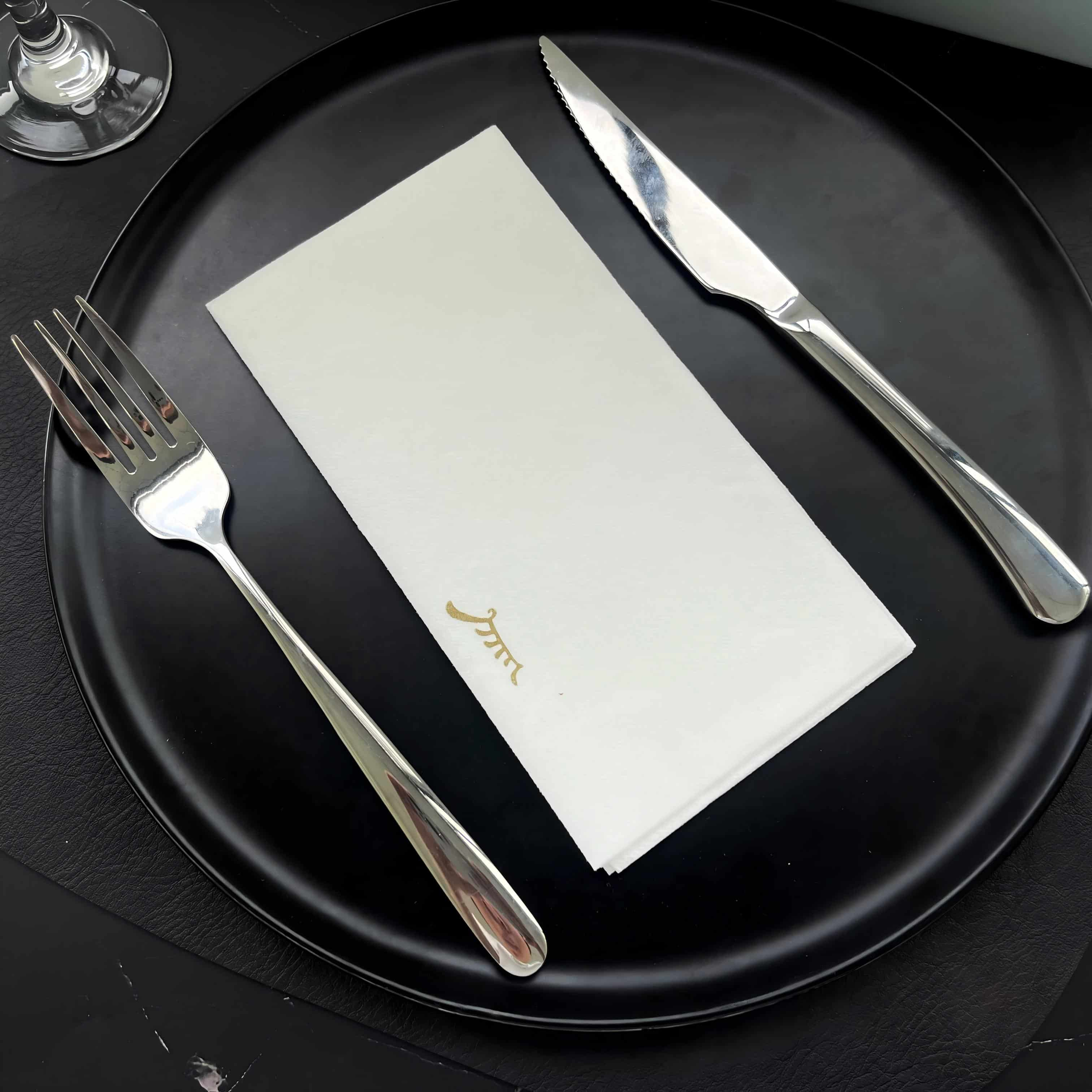
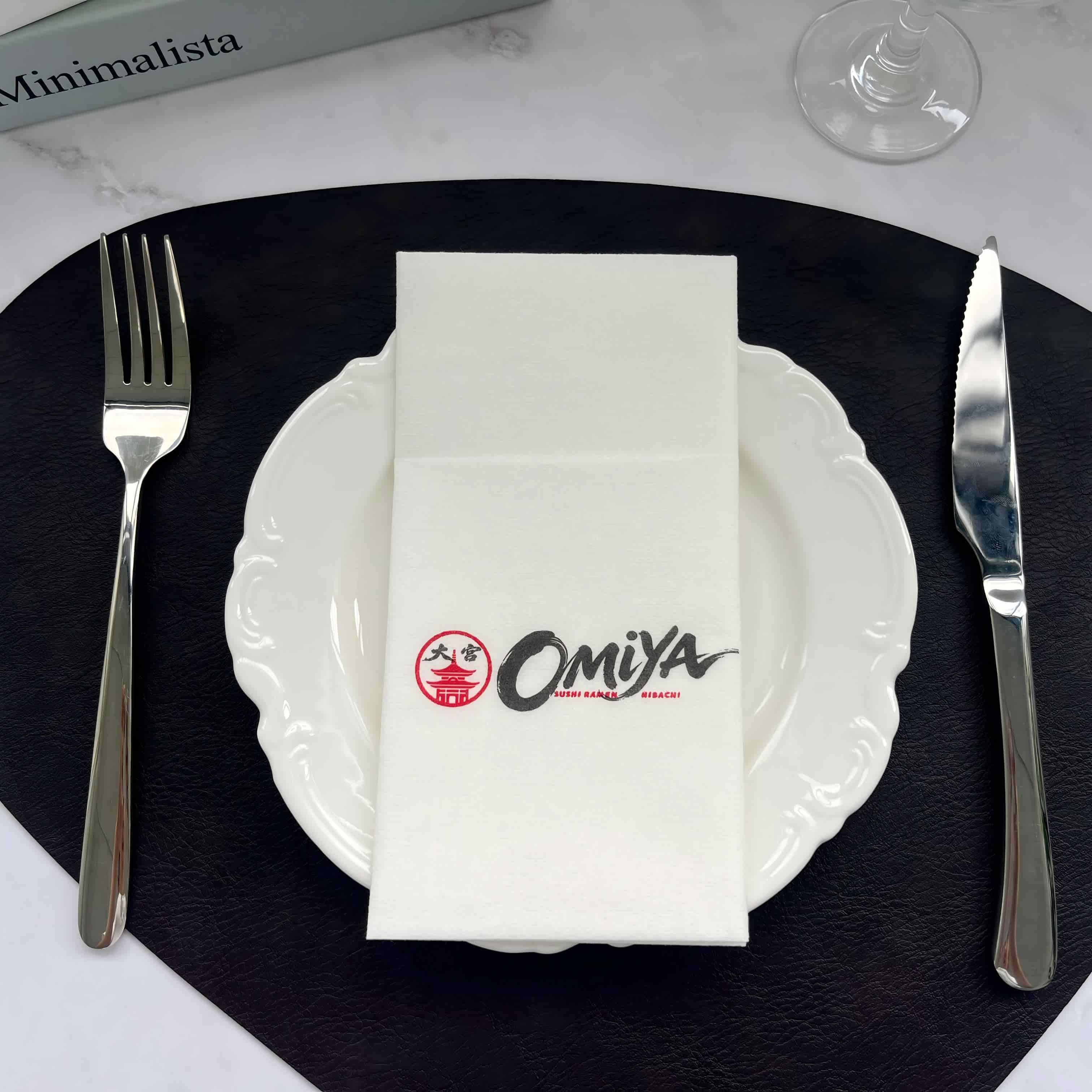
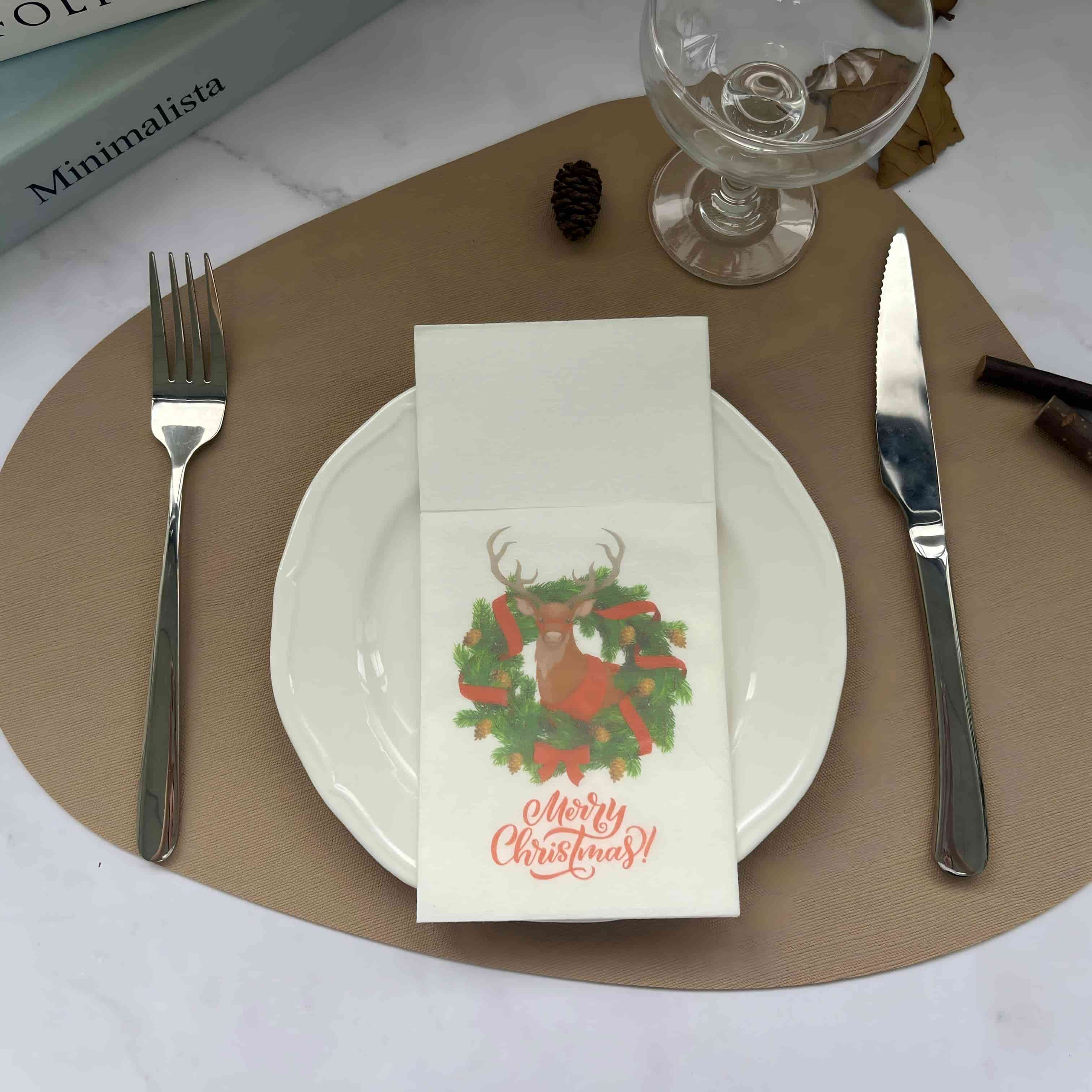
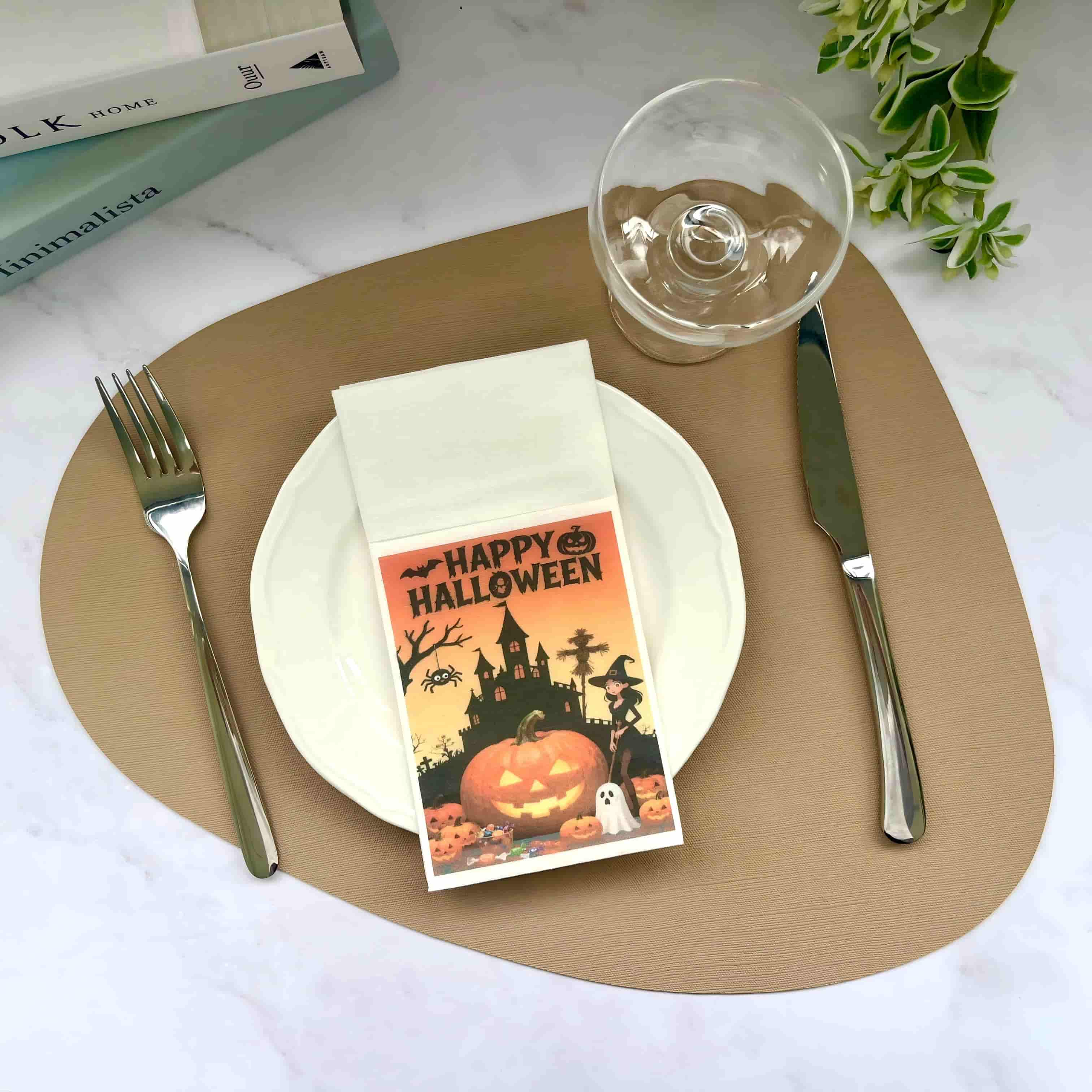
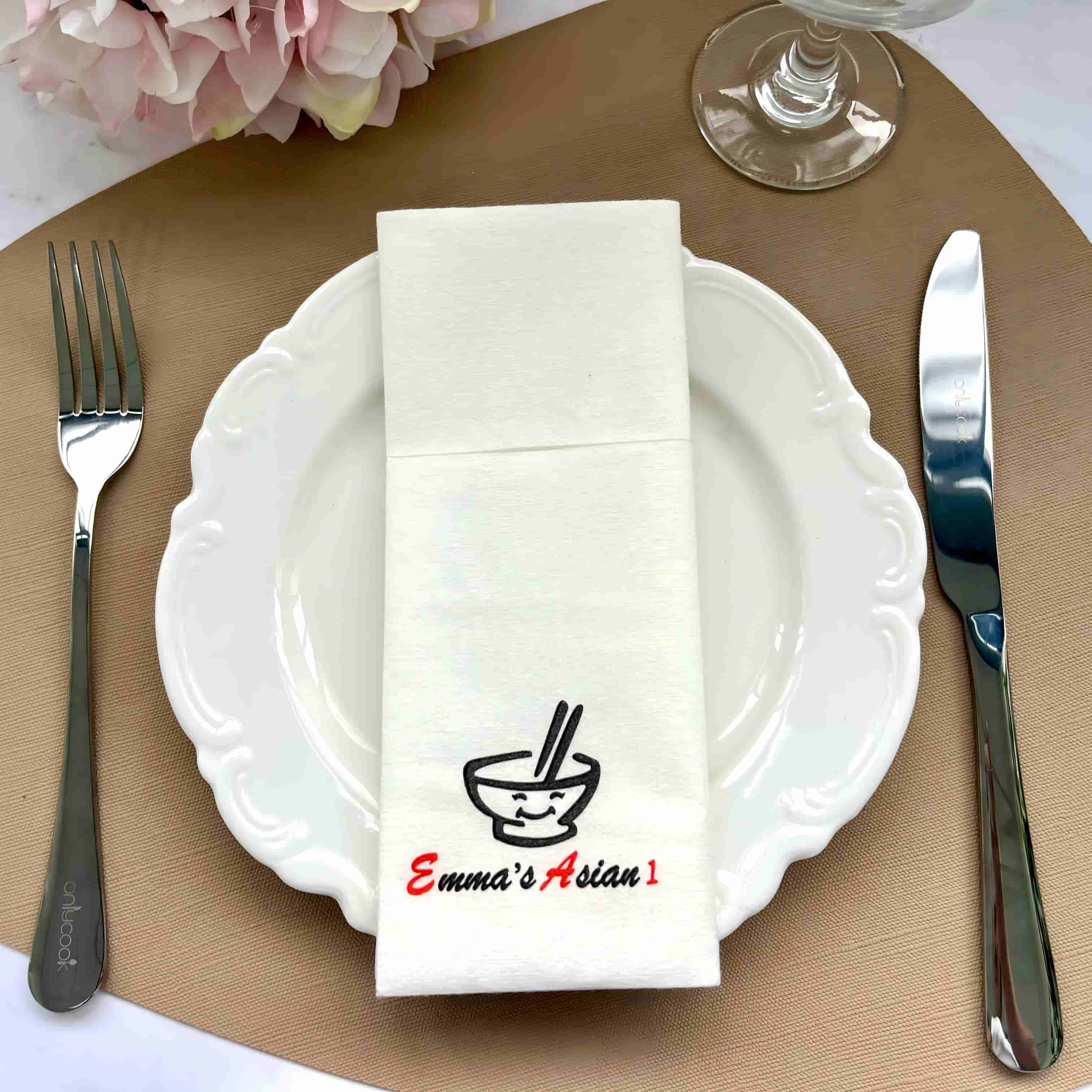
- Pocket fold: A dedicated compartment accommodates a fork, knife, or selected cutlery combination. This format is particularly useful for pre-arranged restaurant place settings, banquets, and wedding receptions.
- Quarter fold: The napkin is folded into a compact rectangular or square package, depending on the original dimensions. It is suitable for standard table presentation and storage.
- Sixth fold: Multiple folding operations create a narrower presentation format. The final appearance depends on the original napkin size and folding sequence.
- Eighth fold: A more compact arrangement can be used for selected table settings where a smaller finished format is preferred.
For pocket airlaid napkins, buyers should request a sample showing the actual compartment dimensions and opening direction. A pocket that is too narrow may make cutlery insertion difficult, while an oversized compartment may not hold the intended utensils securely.
Compact napkin format
Common dining format
Larger table setting format
Reference finished format for selected pocket designs
These dimensions are reference options rather than universal standards. The actual folded dimensions depend on the original material size, pocket construction, folding sequence, and equipment configuration. Buyers should confirm whether the quoted dimensions refer to the unfolded napkin, folded product, or usable pocket area.
Why Are Pocket Airlaid Napkins for Silverware Popular?
Pocket-fold napkins combine two practical functions: providing a disposable wiping material and organizing table utensils. This reduces the need for separate cutlery wrapping and can simplify preparation in catering and hospitality environments.
For event organizers, pre-folded pocket napkins can help standardize the appearance of large numbers of dining tables. They also allow the purchasing team to coordinate napkin colors with tablecloths, chair decorations, menus, and other event materials.
When evaluating a custom pocket design, check the following details:
- Whether the pocket opening accommodates the intended fork, knife, or spoon combination.
- Whether the folded structure remains intact during transportation and table preparation.
- Whether the pocket dimensions are consistent across the production batch.
- Whether printing or hot stamping affects the usable pocket area.
- Whether the napkin can be packed without excessive deformation.
Color Range of Premium Airlaid Napkins
Color selection is particularly important for event rental companies, hotels, and wedding suppliers. A napkin's color can influence the overall table design, so buyers should evaluate it in relation to other decorative materials rather than selecting it independently.
Common purchasing preferences include:
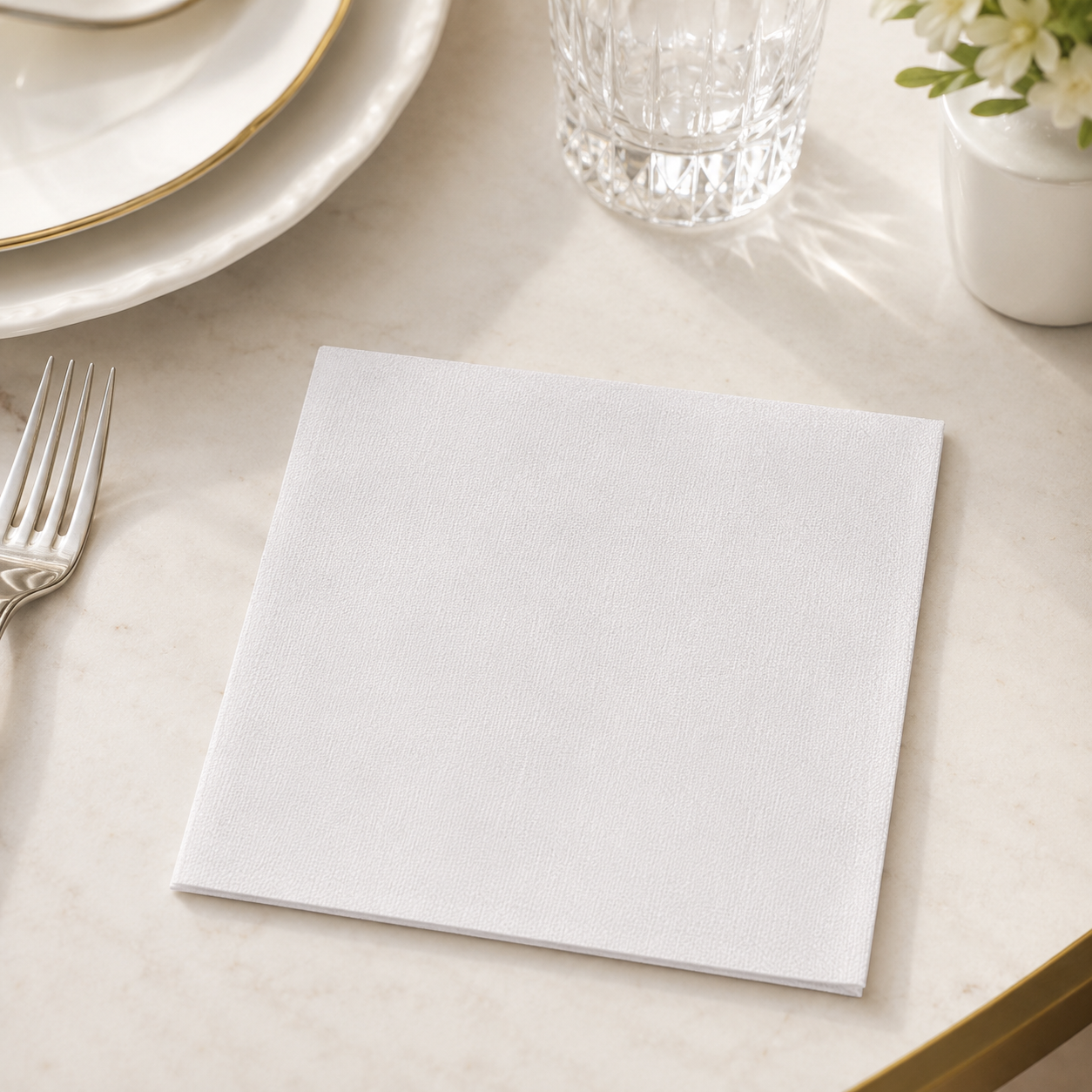
- White: A versatile option for hotels, formal banquets, restaurants, and classic wedding settings.
- Black: Suitable for contemporary table designs, formal dinners, and selected corporate events.
- Red: Frequently selected for celebratory occasions and themed dining arrangements.
- Pink: Used for wedding receptions, bridal events, and decorative table settings.
- Navy blue: Appropriate for formal events and coordinated hospitality interiors.
- Custom colors: Developed according to the buyer's reference, subject to material and production feasibility.
For colored airlaid napkins, color consistency should be checked across different production batches. Buyers should provide a physical color sample or an agreed reference standard whenever color accuracy is important. Digital screen colors alone may not accurately represent the finished material.
Customization Options for OEM Airlaid Napkins
OEM customization allows importers, distributors, and event suppliers to develop products according to their sales positioning and customer requirements. However, each customization method has different technical considerations and may influence the production schedule or MOQ.
Logo Printing
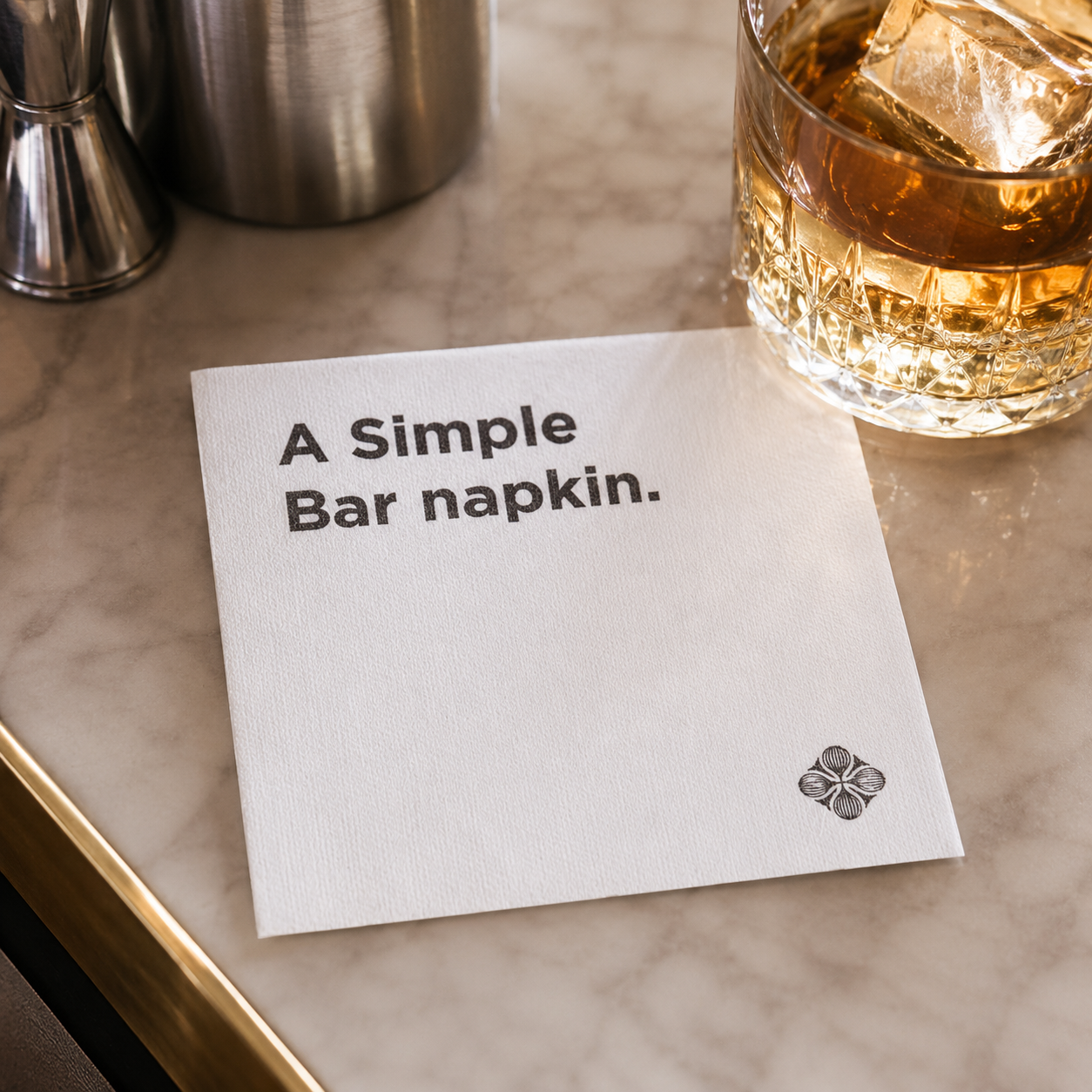
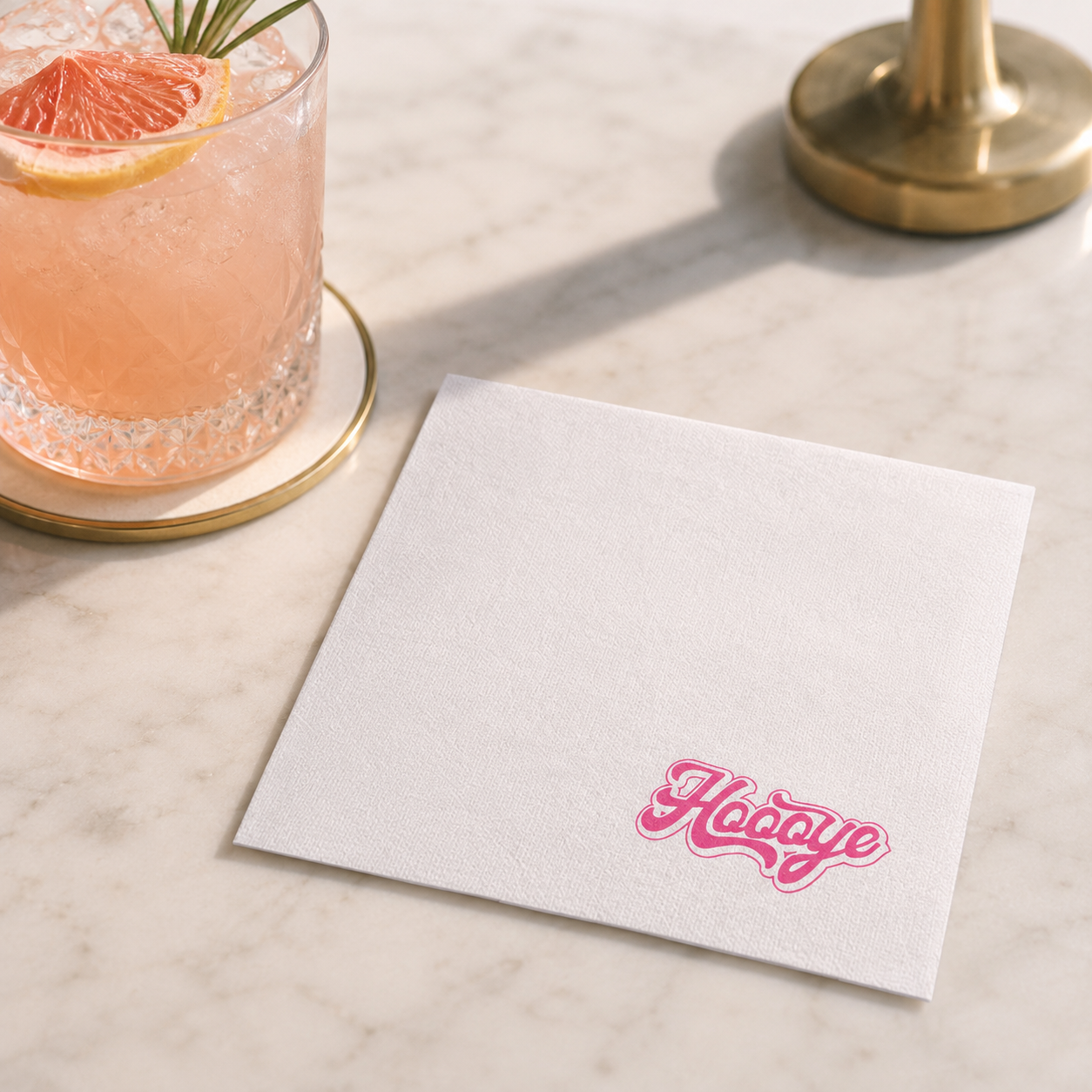
Printed logos, patterns, and text can be incorporated into selected areas of the napkin. Artwork positioning, print color, and material compatibility should be confirmed before production.
Hot Stamping
Gold or silver foil stamping can create a decorative metallic appearance for wedding initials, event names, and formal table arrangements. Placement and foil adhesion require sample verification.
Embossing
Embossed patterns create surface texture and visual definition without relying exclusively on printed graphics. Pattern depth and material response should be evaluated together.
Die-Cutting
Selected die-cutting operations can create distinctive shapes or customized product structures. Feasibility depends on the design, dimensions, and material characteristics.
Custom Monograms
Wedding initials, event names, and personalized decorative elements can help create a coordinated presentation for private celebrations and commercial events.
Custom Pocket Folding
Buyers can specify the pocket arrangement and finished dimensions according to the cutlery combination and table-setting requirements.
When ordering custom airlaid napkins, buyers should submit artwork in an appropriate production format and indicate the preferred printing position, finished size, color, and folding arrangement. A physical sample or pre-production approval sample is useful for confirming the combined result before mass production.
For projects involving several customization methods, it is advisable to confirm the production sequence with the factory. For example, printing, embossing, and pocket folding may require different equipment arrangements. Their compatibility should be assessed before the quotation is finalized.
Custom Colored Napkins with Silverware Pockets
For projects that require coordinated napkin colors and a dedicated cutlery compartment, buyers can review the specifications and available design options for premium colored airlaid napkins with pockets for silverware.
4. Key Specifications Buyers Should Check Before Placing Bulk Orders
A clear product specification is essential when requesting quotations from an airlaid napkin manufacturer. Even when two suppliers offer products with similar descriptions, differences in basis weight, dimensions, material construction, and folding arrangements can result in different finished products.
Procurement teams should prepare a written specification before comparing prices. This helps suppliers calculate material consumption, evaluate processing requirements, and identify any technical limitations.
GSM and Material Thickness
GSM refers to grams per square meter and indicates the basis weight of a material. It is commonly used to specify the weight of paper and nonwoven materials. For the product range discussed here, 50 to 60 GSM is a useful reference range for airlaid napkins.
However, GSM should not be treated as a complete measure of product quality. Two materials with similar basis weights may have different bulk, softness, absorbency, and structural integrity because of differences in fiber composition and bonding methods.
Buyers should evaluate the following factors together:
- Basis weight: Confirm the target GSM and acceptable production tolerance.
- Bulk: Check the material thickness and volume in relation to the required folding format.
- Softness: Assess the hand feel and surface characteristics using a physical sample.
- Absorbency: Evaluate performance under conditions similar to the intended service application.
- Structural integrity: Check whether the napkin maintains its shape during normal handling.
For large wholesale orders, the approved sample should be retained as a reference for subsequent production batches. This is especially useful when multiple product colors or customized finishes are involved.
Size and Folded Dimensions
Size specifications should distinguish between unfolded dimensions and finished folded dimensions. This distinction is particularly important for pocket napkins because the final compartment must accommodate the required silverware.
| Specification | Reference Option | Buyer Consideration |
|---|---|---|
| Unfolded size | 25 x 25 cm | Compact applications |
| Unfolded size | 33 x 33 cm | General dining and event use |
| Unfolded size | 40 x 40 cm | Larger table settings |
| Folded size | 20 x 10 cm | Reference pocket-style format |
These are reference dimensions and should not replace a confirmed technical drawing or approved sample. If a buyer needs a specific pocket size, the factory should confirm the finished dimensions and usable opening before production.
Packaging Standards: 50 Pieces or 100 Pieces per Pack
Packaging influences warehouse management, transportation efficiency, and end-user convenience. Airlaid napkins can be packed in different quantities according to the target market and distribution channel.
Common reference quantities include 50 pieces and 100 pieces per pack. Buyers should confirm whether the quotation includes individual retail packaging, bulk inner packaging, outer cartons, or customized printed packaging.
Several packaging details should be specified:
- Pieces per inner pack and packs per carton.
- Packaging material and sealing method.
- Carton dimensions and gross weight.
- Product identification and carton labeling requirements.
- Protection against moisture, dust, and deformation during transportation.
- Whether packaging artwork or private-label information is required.
For international shipments, carton configuration should be considered alongside container loading efficiency. A slightly different packaging arrangement can influence the number of cartons that fit into a shipment, so it is useful to confirm packing details before finalizing the purchase order.
MOQ for Stock and Custom-Printed Airlaid Napkins
Minimum order quantity is an important consideration for importers and distributors, particularly when launching a new product or testing market demand. MOQ is not determined by the napkin material alone. It may also depend on color preparation, printing requirements, special finishing, packaging, and production scheduling.
Reference MOQ for Custom Printing and Stamping
For the customization requirements specified in this product range, the reference minimum order quantity for custom printing and stamping is 10,000 pieces. Actual requirements should be confirmed according to the selected design and production configuration.
Stock-colored products may support smaller trial orders, depending on current inventory and packaging arrangements. Custom-dyed colors and special artwork generally require additional coordination because the factory must prepare materials and production processes for the specific order.
When asking for an MOQ quotation, buyers should provide the expected quantity per design, color, and size. Combining several specifications into one inquiry without identifying their individual quantities can make it difficult for the manufacturer to calculate an accurate production plan.
Lead Time and Production Planning
Lead time should be discussed after the product specification and order quantity have been established. A stock order may follow a different schedule from a fully customized OEM order.
For customized products, the process generally includes artwork confirmation, sample preparation, sample approval, material arrangement, production, quality inspection, and packing. Delays in artwork approval or changes to the product specification can affect the final delivery schedule.
To improve planning efficiency, buyers should provide their required delivery date at the quotation stage. The supplier can then evaluate material availability, production capacity, and the feasibility of the requested schedule.
Preparing a Custom Airlaid Napkin Order?
Share your preferred GSM, unfolded dimensions, color, folding style, printing requirements, and estimated order quantity. These details help the manufacturer evaluate production feasibility and prepare a more accurate quotation.
For pocket-style products, include the intended cutlery dimensions and any reference artwork. Requesting a physical sample before bulk production can also help verify material feel, color, folding structure, and finishing quality.
Recommended inquiry information: Product size, material weight, color, pocket design, customization method, packing quantity, and destination market.
5. Best Applications and Industries Using Airlaid Napkins
Airlaid napkins are used across several commercial sectors because they combine disposable convenience with a relatively refined material appearance. Their suitability depends on the required presentation, serving process, consumption volume, and purchasing budget.
Wedding Planners and Event Rental Companies
Wedding planners and event rental companies often need table accessories that match a specific decorative theme. Napkin colors, folding styles, and personalized finishes can be coordinated with flowers, tablecloths, chair decorations, and printed menus.
For formal receptions, pocket airlaid napkins can help organize cutlery before guests arrive. This is particularly useful for events with many tables because a standardized folding arrangement simplifies preparation and improves consistency across the venue.
Custom hot stamping is another option for wedding applications. Gold or silver decorative elements can be used for initials, wedding dates, or selected text, subject to the material's compatibility with the finishing process.
Hotels, Resorts, and Cruise Hospitality
Hotels and resorts require table products that support consistent service standards across restaurants, banquet facilities, and special dining events. Purchasing departments may prioritize stable dimensions, reliable packaging, coordinated colors, and repeat-order consistency.
Different dining environments may require different napkin specifications. A casual restaurant may prefer a standard folded format, while a formal banquet department may select a larger napkin or pocket-fold design. A clear product specification helps hospitality operators manage these variations without unnecessary inventory complexity.
Catering and Banquet Services
Catering companies frequently handle large numbers of dining settings within a limited preparation period. Products that are easy to distribute, arrange, and store can help streamline operational workflows.
Pre-folded airlaid napkins are suitable for applications where table preparation needs to be standardized. Bulk packaging also allows catering teams to estimate consumption and prepare supplies according to the number of guests.
For outdoor events, buyers should pay particular attention to protective packaging and storage conditions. Although the material is designed for practical use, moisture exposure during storage can affect the condition of paper-based products.
Corporate Galas and Brand Promotion Events
Corporate dinners, conferences, award ceremonies, and promotional receptions may require customized table accessories. Logo printing and selected decorative treatments can help maintain visual consistency throughout the event.
In these applications, artwork accuracy and placement are important. Buyers should provide approved design files and confirm print dimensions before mass production. A pre-production sample helps ensure that the printed result is consistent with the intended layout.
Restaurants and Fine-Dining Establishments
Fine-dining restaurants often consider napkins as part of the complete table presentation. Material texture, color, folded appearance, and consistency can influence how the table setting is perceived by customers.
Airlaid paper napkins offer an option for establishments seeking a cloth-like appearance while maintaining the convenience of disposable products. Pocket formats may also help simplify cutlery preparation during busy service periods.
However, restaurants should assess the cost per cover and daily consumption before selecting a specification. The appropriate GSM and size should meet the actual serving requirements without creating unnecessary material costs.
Application-Based Product Selection
| Industry | Suggested Format | Key Purchasing Priority |
|---|---|---|
| Weddings | Colored pocket napkins | Color matching and decorative finishing |
| Hotels | Standard or premium folded napkins | Consistent quality and supply |
| Catering | Bulk-packed folded napkins | Preparation efficiency and packaging |
| Corporate events | Printed or stamped napkins | Artwork accuracy and presentation |
| Restaurants | Standard or pocket-fold napkins | Absorbency and cost per serving |
6. How to Evaluate an Airlaid Napkins Wholesale Supplier
Finding a suitable supplier involves more than identifying a manufacturer with an attractive unit price. Importers and distributors need to evaluate production capabilities, material control, customization experience, quality inspection, and communication efficiency.
A supplier that understands the requirements of airlaid napkin converting can help buyers avoid specification misunderstandings and unnecessary production adjustments.
Check Raw Material and Product Consistency
The raw material has a direct influence on the finished napkin's hand feel, absorbency, and structural characteristics. Buyers should ask how the supplier manages incoming material inspection and whether the production specification can be maintained across repeat orders.
Relevant inspection items may include:
- Incoming material basis weight and appearance.
- Material uniformity and surface condition.
- Finished napkin dimensions and folding accuracy.
- Color consistency between samples and production batches.
- Printing and hot stamping position and appearance.
- Packaging quantity and carton condition.
For customized products, the approved sample should serve as the production reference. Buyers should also agree on acceptable tolerances for dimensions, weight, and other measurable characteristics.
Evaluate Manufacturing and Converting Capabilities
Airlaid napkin manufacturing involves more than converting raw material into a folded product. Different orders may require material splitting, embossing, printing, folding, and special finishing operations.
When evaluating a factory, buyers should determine which processes are performed in-house and which are outsourced. This distinction can affect production coordination, inspection arrangements, and delivery planning.
For pocket napkins, particular attention should be paid to the factory's folding equipment and experience with the required pocket structure. A supplier should be able to explain how the design affects the finished dimensions and cutlery compartment.
Confirm OEM and ODM Service Scope
OEM and ODM services can cover different levels of product customization. OEM orders generally follow the buyer's supplied specifications, while ODM cooperation may involve the development or adjustment of product designs according to project requirements.
Before placing an order, clarify whether the factory can support:
- Customized unfolded and folded dimensions.
- Standard and special color requirements.
- Logo printing and decorative artwork.
- Gold and silver hot stamping.
- Embossing and selected die-cutting requirements.
- Different pocket-fold configurations.
- Customized inner packs, outer cartons, and labeling.
Buyers should also confirm which options are available for the selected material and production quantity. Not every finishing method is compatible with every construction, and some customization options may require additional setup.
Review Sample and Quality Control Procedures
Samples provide an opportunity to assess the product before committing to a large order. However, sample evaluation should follow a defined checklist rather than relying only on visual impressions.
For airlaid napkins, the evaluation should cover material feel, surface uniformity, dimensions, folding structure, pocket usability, color, and finishing quality. If the product will be used in food service, buyers should also request relevant material documentation and confirm applicable food-contact requirements for the intended market.
It is advisable to keep a signed or otherwise formally approved reference sample for subsequent production. For repeat orders, agreed inspection standards help maintain consistency and reduce disputes caused by subjective differences in product evaluation.
Compare Quotations on a Consistent Basis
Wholesale quotations should be compared using identical product specifications. A lower unit price may reflect a different GSM, smaller unfolded dimensions, simpler packaging, or fewer finishing operations.
When comparing quotations, confirm whether the following items are included:
- Material specification and basis weight.
- Unfolded and folded product dimensions.
- Color and customization requirements.
- Pieces per pack and cartons per shipment.
- Sample and tooling costs, where applicable.
- Production lead time and delivery conditions.
- Inspection requirements and documentation.
A standardized quotation comparison makes it easier to identify the actual cost differences between suppliers and determine whether the proposed product meets the intended application.
7. Environmental Considerations: Are Airlaid Napkins Biodegradable and Compostable?
Environmental characteristics are increasingly relevant in disposable tableware procurement. However, buyers should distinguish between a product's fiber composition and its verified end-of-life performance.
Cellulose-based airlaid material can be manufactured primarily from wood pulp, which is a plant-derived fiber source. Under suitable conditions, untreated cellulose fibers can biodegrade. Nevertheless, the environmental characteristics of a finished napkin depend on its complete composition and processing.
Why Fiber Composition Matters
A napkin made primarily from cellulose may have a different environmental profile from a product containing substantial synthetic components. Binders, surface treatments, inks, coatings, and decorative finishes can also influence how the finished product behaves after disposal.
For example, a plain cellulose-based napkin and a napkin with additional polymer-based surface treatments should not automatically be assigned the same compostability characteristics. The complete product needs to be assessed.
Biodegradable Does Not Automatically Mean Compostable
Biodegradability describes the ability of a material to break down through biological activity under suitable environmental conditions. Compostability is a more specific claim that generally requires testing against defined requirements, including the conditions and timeframe for decomposition and the quality of the resulting compost.
Therefore, buyers should not assume that every airlaid napkin is certified compostable simply because its main raw material is wood pulp.
What Should Buyers Ask About Environmental Claims?
- What percentage of the finished product consists of cellulose-based material?
- Does the product contain synthetic binders, coatings, or other non-cellulosic components?
- Are the printing inks and decorative finishes suitable for the intended disposal system?
- Is there a recognized test report or certification supporting the environmental claim?
- Does the documentation apply to the complete finished napkin or only to the raw material?
- Are the disposal instructions consistent with local waste-management regulations?
For international distributors, environmental claims should be checked against the requirements of the destination market. Accurate product descriptions and supporting documents are important for avoiding misleading claims in commercial packaging and marketing materials.
8. How to Prepare an Efficient Wholesale or OEM Purchase Order
A well-prepared inquiry helps manufacturers understand the buyer's requirements and reduces the number of specification revisions during the quotation process. This is especially important for custom airlaid napkins involving multiple colors, special folding arrangements, or decorative finishing.
Step 1: Define the Intended Application
Begin by identifying whether the napkins are intended for weddings, hotel dining, restaurant service, catering, or promotional events. The application determines the appropriate material weight, dimensions, appearance, and packaging format.
Step 2: Confirm the Product Construction
Specify the material type and target GSM. If the buyer has an existing sample, providing it to the supplier can help establish a practical reference for softness, bulk, and surface appearance.
Step 3: Select Size and Folding Style
Provide both the unfolded dimensions and the required folded dimensions where applicable. For pocket products, specify the type and approximate dimensions of the silverware that needs to fit inside.
Step 4: Provide Color and Artwork Requirements
Identify the preferred color and provide a physical reference when color matching is important. For printed or stamped products, submit the artwork, indicate the intended placement, and confirm the required visual treatment.
Step 5: Determine Packaging and Order Quantity
Specify the number of pieces per pack, the number of packs per carton, and the estimated total quantity. For multi-design orders, identify the quantity assigned to each color and design separately.
Step 6: Approve a Sample Before Mass Production
Review the sample against the agreed specification. Check material characteristics, folding structure, pocket functionality, print alignment, and packaging details. Any revisions should be confirmed before the bulk production process begins.
Wholesale Airlaid Napkin Inquiry Checklist
- Product type and intended application
- Material composition and target GSM
- Unfolded dimensions and folded dimensions
- Pocket design and silverware requirements
- Required colors and color references
- Logo printing, embossing, or hot stamping
- Pieces per pack and carton specifications
- Estimated quantity per design and color
- Sample approval requirements
- Destination country and requested delivery date
Providing these details at the beginning of the sourcing process allows the manufacturer to assess material availability, production feasibility, and the applicable MOQ. It also creates a clearer basis for comparing offers from different suppliers.
9. Why Source Custom Airlaid Napkins from Shuangjie Paper Factory?
For importers, wholesalers, hotel purchasing departments, and event suppliers, selecting a manufacturing partner requires an understanding of both material processing and finished-product requirements. A factory should be able to coordinate raw material preparation, converting operations, customization, and quality inspection according to the order specification.
Shuangjie Paper Factory, based in Zhejiang, China, provides airlaid napkin manufacturing and customization services for commercial buyers. Its production capabilities cover several processes involved in preparing and converting airlaid paper products.
Integrated Converting and Finishing Processes
Relevant production processes include base-paper splitting, embossing, printing, and folding. Coordinating these operations helps the factory handle different product formats and customized finishing requirements.
For buyers developing pocket-fold napkins, the combination of material dimensions and folding configuration is particularly important. Production arrangements should be evaluated according to the intended final structure rather than treating the pocket as an independent decorative feature.
Raw Material and Finished Product Inspection
Raw material quality influences the performance and appearance of the finished napkin. Incoming material inspection and production-stage checks help identify potential variations before products reach the packaging stage.
For customized orders, quality evaluation should also cover the accuracy of printed graphics, stamping positions, folding dimensions, and final packing quantities. Buyers can establish inspection requirements according to the product's intended market and application.
OEM and ODM Customization
Different commercial projects require different product configurations. Shuangjie Paper Factory supports customization involving dimensions, colors, printing, hot stamping, and pocket-fold arrangements, subject to production feasibility and order specifications.
These options allow distributors and event suppliers to develop products for different customer groups without relying exclusively on standard white napkins. Customized designs can also help buyers establish a consistent product range for hospitality and event applications.
Sample Support and Bulk Order Coordination
Sample evaluation is an important part of custom product development. Buyers can use samples to assess material characteristics, color, folding structure, and decorative finishing before confirming a bulk order.
For wholesale projects, clear specifications and approved samples provide a reference for production coordination and repeat purchasing. Buyers should discuss the expected order quantity, customization requirements, and delivery schedule with the factory before issuing a purchase order.
Products for International Hospitality and Event Markets
Airlaid napkins serve different distribution channels, including hospitality purchasing, catering supply, wedding products, and wholesale tableware. Understanding the application and destination market helps manufacturers determine the appropriate product configuration and packaging requirements.
For buyers seeking a combination of colored material and silverware pocket folding, reviewing the product design before requesting a quotation can make the sourcing process more efficient.
Get a Quotation for Custom Airlaid Napkins
Looking for a manufacturing partner for colored airlaid napkins, pocket-fold napkins, or customized disposable table products?
Prepare your preferred dimensions, GSM, color, folding style, printing requirements, and estimated quantity. These details will help establish the technical requirements for your project and support a more accurate factory quotation.
Sample arrangements and production details can be discussed according to the selected product and order requirements.
View Premium Colored Airlaid Napkins with Silverware Pockets10. Frequently Asked Questions About Airlaid Napkins
The following answers address common questions from importers, distributors, hospitality buyers, and businesses sourcing custom airlaid paper napkins.
Q1: What are airlaid napkins made of?
Airlaid napkins are generally made from cellulose-based fibers, commonly wood pulp. The fibers are distributed through airflow to form a web, which is subsequently bonded and converted into finished napkins. Additional binders, treatments, or finishing materials may be used depending on the product construction. Buyers should request the complete material specification when fiber composition is important. Contact the factory for product details and available samples.
Q2: Are airlaid napkins biodegradable and compostable?
Cellulose fibers are biodegradable under suitable environmental conditions. However, the biodegradability and compostability of a finished airlaid napkin depend on its complete composition, including binders, coatings, inks, and decorative treatments. Compostability should be supported by relevant testing or certification rather than assumed from the use of wood pulp alone. Buyers should request supporting documentation for the intended market.
Q3: What is the difference between airlaid napkins and regular paper napkins?
Airlaid napkins are formed through an airlaid fiber-web process and generally have a softer, bulkier, more fabric-like feel. Regular paper napkins are produced through conventional papermaking methods and are commonly used for everyday food service. Airlaid products are often selected for weddings, hotels, banquets, and premium dining applications where appearance and material feel are important.
Q4: Can airlaid napkins be custom printed with a logo or hot stamping?
Yes. Depending on the material and production configuration, customization options can include logo printing, decorative patterns, gold or silver hot stamping, and embossing. Buyers should provide artwork, color references, and preferred placement before requesting a sample. The factory should confirm process compatibility and any additional MOQ requirements before mass production.
Q5: What is the MOQ for custom airlaid napkins with silverware pockets?
The reference MOQ for custom printing and stamping in this product range is 10,000 pieces. The actual MOQ for a pocket-style design depends on the selected color, finishing method, size, and production arrangement. Stock-colored products may support smaller trial orders, subject to inventory and packaging availability. Contact the factory with your preferred design and quantity for confirmation.
Q6: What sizes do airlaid pocket napkins come in?
Reference unfolded sizes include 25 x 25 cm, 33 x 33 cm, and 40 x 40 cm. A selected pocket-fold design may have a finished folded dimension of approximately 20 x 10 cm. Actual dimensions depend on the folding configuration and pocket structure. Buyers should confirm both the finished product size and usable pocket dimensions before ordering.
Q7: What GSM is suitable for airlaid napkins?
A reference range of 50 to 60 GSM is used for the airlaid napkin products discussed in this guide. The appropriate specification depends on the intended application, required material feel, absorbency, and folding format. GSM should be evaluated together with bulk, softness, and structural integrity rather than used as the only quality indicator.
Q8: What is the lead time for an OEM airlaid napkin bulk order?
Production lead time depends on order quantity, raw material availability, color requirements, artwork approval, finishing processes, and packaging arrangements. Customized printing and stamping orders may require additional preparation compared with stock products. Buyers should confirm the production schedule after the final specification and sample have been approved.
Q9: Can I get free samples of colored airlaid napkins?
Sample support can be discussed according to the selected product, available stock colors, and customization requirements. Stock samples are generally easier to arrange than samples requiring new artwork or special finishing. Buyers should provide the intended size, color, folding style, and delivery destination when requesting sample information.
Q10: Are airlaid napkins suitable for weddings and restaurant catering?
Yes. Their soft, fabric-like appearance, absorbency, and range of folding and customization options make them suitable for wedding receptions, hotel banquets, catering services, corporate dinners, and restaurants. Pocket-fold versions can also organize cutlery for prepared table settings. The final specification should be selected according to the serving environment and presentation requirements.
Q11: What packaging options are available for wholesale airlaid napkins?
Common reference packing quantities include 50 pieces and 100 pieces per pack. Bulk buyers should confirm the number of packs per carton, carton dimensions, labeling requirements, and whether customized retail packaging is needed. The packaging specification should be finalized before production to ensure that shipping and storage requirements are properly considered.
Q12: How can I request a quotation for custom airlaid napkins?
Provide the supplier with the product size, GSM, color, folding arrangement, pocket dimensions, customization method, packaging quantity, and estimated order volume. If you have a reference sample or artwork, include it with the inquiry. The manufacturer can then assess the production requirements, MOQ, sample arrangements, and quotation details.

- Contact
-
+86-18205820793lydia@shuangjiepaper.comPhone
- Products
- Airlaid Napkins
- Paper napkins
- Die-cut Napkins
- Cloth Napkin
- Cocktail Napkins
- Dinner Napkins
- Kangaroo Napkins
- Cutlery Napkin Bag
- Get Connected

