
 English
  Español


Airlaid Napkins: The Complete Guide for Restaurants, Hotels & Events
Content
- 1 What Are Airlaid Napkins: The Manufacturing Difference
- 2 Airlaid vs. Paper Napkins: A Detailed Comparison for Buyers
- 3 Which Venues Benefit Most from Airlaid Napkins
- 4 Customization Options and Branded Airlaid Napkins
- 5 How to Source Airlaid Napkins: Pricing, MOQ, and Supplier Evaluation
- 6 Sustainability Considerations for Airlaid Napkins
- 7 Frequently Asked Questions About Airlaid Napkins
- 7.0.1 Q1: Are airlaid napkins recyclable?
- 7.0.2 Q2: What is the difference between airlaid and tablin napkins?
- 7.0.3 Q3: Are airlaid napkins waterproof?
- 7.0.4 Q4: Can I source airlaid napkins with a small order quantity?
- 7.0.5 Q5: How long does it take to receive airlaid napkins after placing an order?
- 7.0.6 Q6: What basis weight should I choose for airlaid napkins?
- 7.0.7 Q7: Can airlaid napkins be used with printed designs without bleeding or fading?
- 7.0.8 Q8: How do airlaid napkins perform in humid or coastal environments?
- 8 Conclusion: Why Airlaid Napkins Matter for Your Business
When you run a restaurant, hotel, or event space, the choice of table napkins matters more than most people realize. Traditional fabric napkins demand laundry services, logistics overhead, and environmental cost. Standard paper napkins, by contrast, feel cheap and disintegrate under moisture. There's a middle ground that hospitality professionals have increasingly adopted: airlaid napkins.
These engineered disposables combine the tactile luxury of linen with the convenience and consistency of single-use products. Unlike conventional wet-laid paper, airlaid napkins are constructed using dry-air technology that creates a three-dimensional fiber structure, delivering superior absorbency, wet strength, and a genuinely luxurious feel.
This guide walks you through everything a B2B buyer needs to know: what makes airlaid different, which venues benefit most, customization and branding options, practical sourcing criteria, and sustainability considerations. By the end, you'll understand whether airlaid napkins make economic and experiential sense for your operation.
What Are Airlaid Napkins: The Manufacturing Difference
How Airlaid Napkins Are Made
The core distinction between airlaid and conventional paper napkins lies in how fibers are bonded. Traditional napkins employ wet-laid papermaking: wood pulp is suspended in water, pressed onto a mesh screen, and then compressed into sheets. This process flattens and aligns fibers in a single direction, resulting in a thin, fragile product.
Airlaid napkins use a fundamentally different approach. Instead of water, compressed air disperses wood pulp fibers randomly in three dimensions. These fibers are then bonded using either a synthetic latex binder or a natural starch-based adhesive. The result is a lofty, bulky structure with significantly more volume than wet-laid paper.
Why This Matters: The Tactile Experience
That three-dimensional structure creates measurable performance benefits. First, the loose fiber arrangement allows greater water absorption. Airlaid napkins typically absorb 30 to 50 percent more liquid than standard paper napkins of the same weight. Second, the fibers remain intact when wet, meaning your napkin won't disintegrate mid-meal or when guests wipe condensation from glassware.
Most importantly, the tactile experience differs dramatically. Standard paper napkins feel smooth and uniform. Airlaid napkins feel distinctly softer and more textured, similar to a lightweight linen table napkin. Guests notice this immediately upon contact. In hospitality settings where every touchpoint communicates quality, that difference registers as luxury.
Airlaid vs. Paper Napkins: A Detailed Comparison for Buyers
When evaluating napkin options, B2B buyers typically weigh performance, economics, and brand impact. The following comparison addresses each dimension:
| Criteria | Standard Paper Napkins | Airlaid Napkins |
|---|---|---|
| Tactile Feel | Smooth, thin, papery | Soft, textured, cloth-like |
| Absorbency | Moderate | 30-50% higher |
| Wet Strength | Disintegrates when saturated | Remains intact when wet |
| Linting and Debris | Leaves fibers on glassware and dark clothing | Minimal lint, ideal for polishing glassware |
| Printing Capability | Basic single-color or simple two-color | Full-color digital, embossing, foil stamping |
| Embossing and Texture | Shallow, often not visible | Deep, pronounced, adds luxury feel |
| Moisture Resilience | Degrades rapidly around cold drinks | Maintains integrity with condensation |
| Cost per Unit | 0.005 - 0.03 USD | 0.02 - 0.12 USD |
Key Takeaway: If your guests will hold a napkin for more than 30 seconds, or if you serve cold beverages, airlaid napkins provide a noticeably superior experience compared to standard paper. The upgrade in perceived quality often justifies a modest cost premium, especially in fine dining, upscale events, and hospitality settings where brand positioning depends on attention to detail.
Which Venues Benefit Most from Airlaid Napkins
Bars, Lounges, and Cocktail Venues
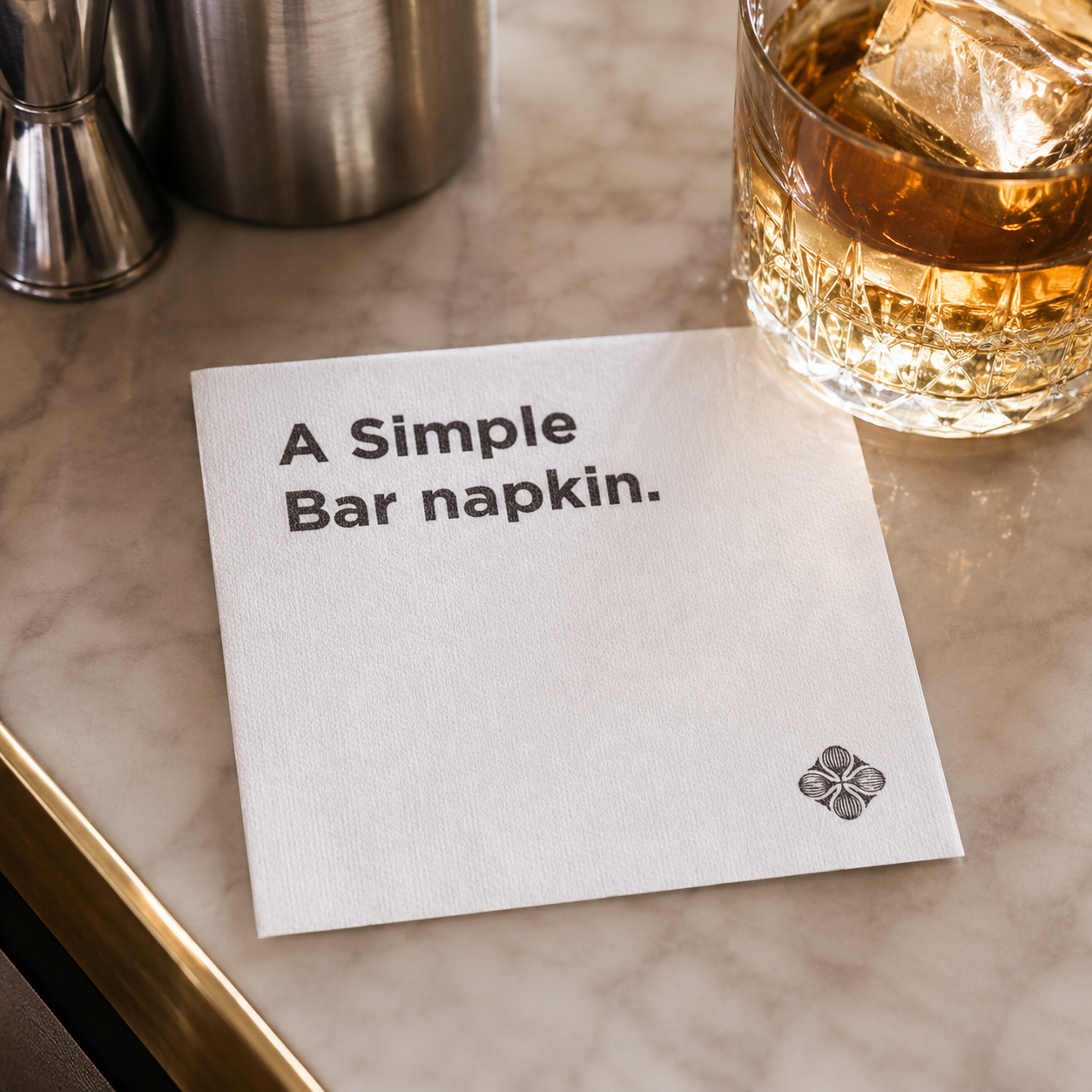
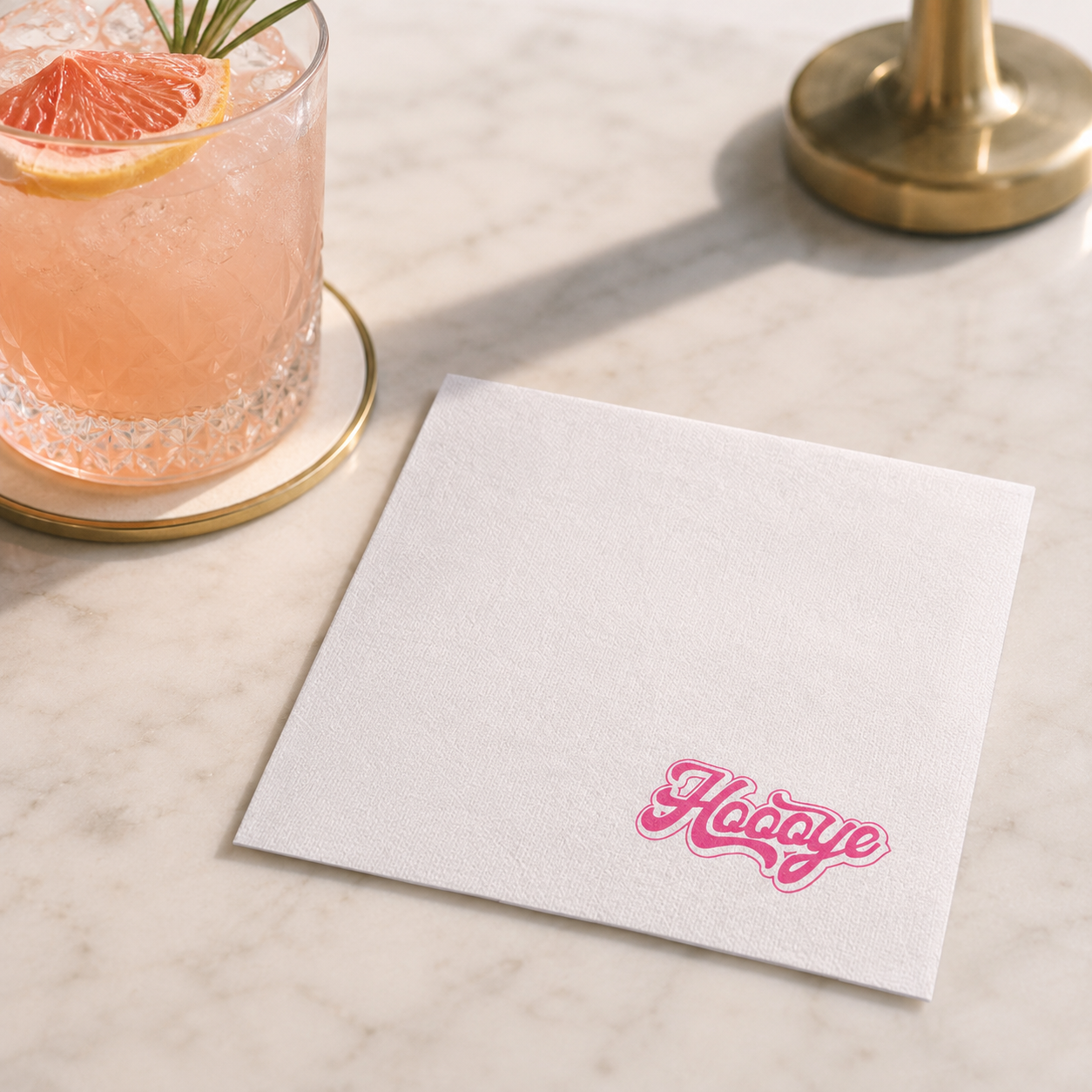
Condensation is the ultimate stress test for any napkin. When customers order an iced cocktail or cold beer, moisture beads on the glass and transfers to whatever's underneath. Standard paper napkins become sodden and shred within minutes. Airlaid napkins, by contrast, resist saturation, remain structurally sound, and can actually be used to polish the glassware without leaving residue.
Beyond functionality, airlaid napkins elevate the entire drinking experience. A craft cocktail paired with a substantial, textured napkin signals quality and care. Many upscale bars use embossed or foil-stamped airlaid napkins as part of their brand presentation, creating an impression of luxury that a flimsy paper napkin simply cannot deliver.
Fine Dining Restaurants
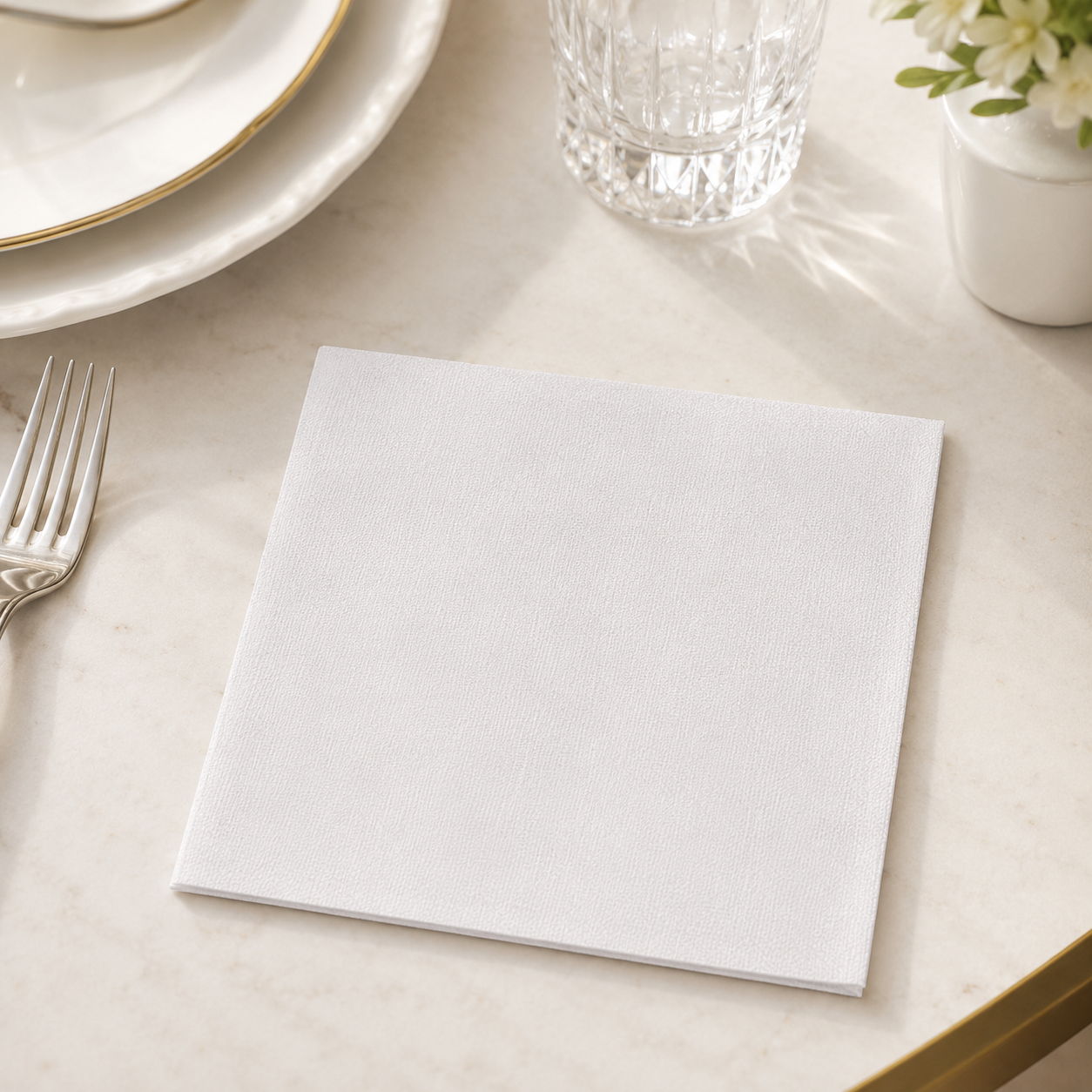
In fine dining, every element—from plating to stemware to napkins—communicates culinary and operational excellence. Standard paper napkins undermine that narrative. Airlaid napkins, particularly in white or custom-branded versions, feel expensive and align with upscale table settings. They also handle sauces and moisture better than alternatives, reducing the need for mid-meal napkin replacements.
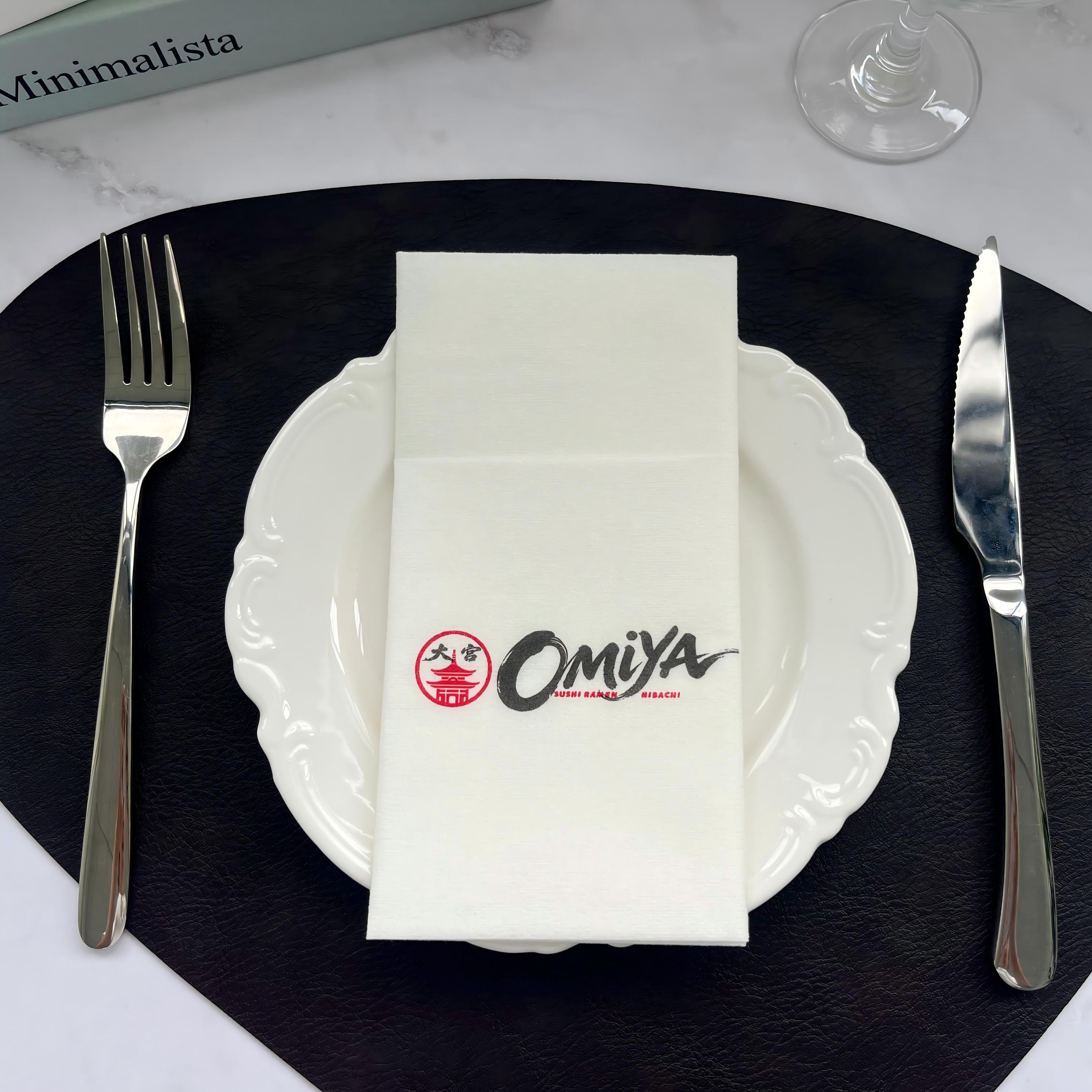
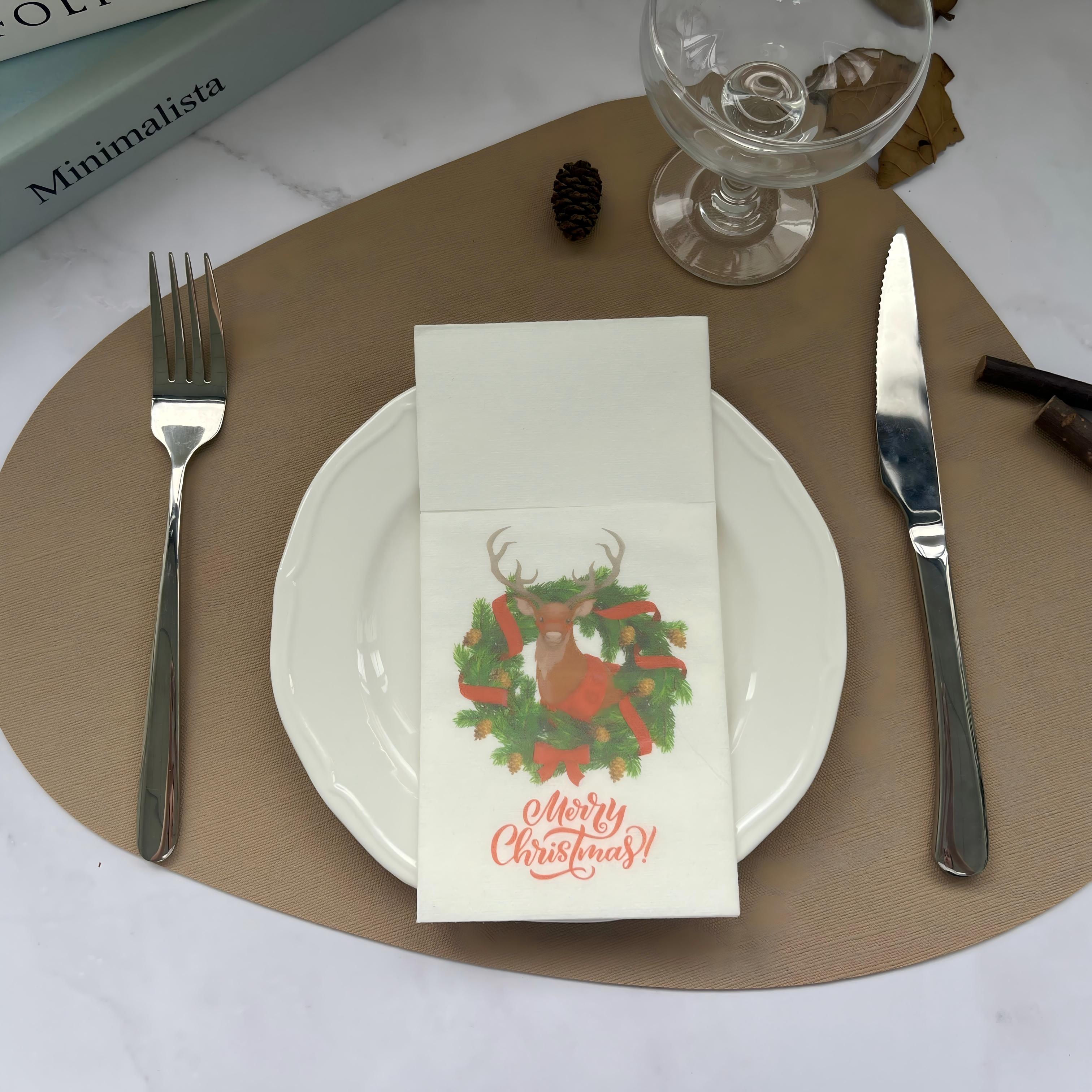
Additionally, airlaid's compatibility with embossing and specialty printing allows restaurants to incorporate their logo or a seasonal design, reinforcing brand identity while enhancing the guest experience.
Hotels and Resorts
Hotels operate across multiple venues: room service, hallway bars, conference centers, spa facilities, and fine dining restaurants. Using airlaid napkins across all touchpoints creates brand consistency and a unified luxury experience. Guests encounter the same quality napkin at breakfast, in the bar, and during evening events, reinforcing the hotel's commitment to excellence.
Operationally, hotels without on-site laundry facilities—increasingly common in smaller luxury properties—avoid the costs and carbon footprint associated with washing and transporting bulk fabric napkins. Airlaid offers the quality feel of linen without the logistical burden.
Weddings and Special Events
Event planners recognize that guests often keep embossed or foil-stamped napkins as keepsakes. A beautifully designed airlaid napkin with the couple's monogram, wedding date, or event theme becomes a memorable memento that extends brand recall long after the event ends. This inherent "keepsake potential" makes airlaid napkins especially attractive for weddings, galas, corporate events, and milestone celebrations.
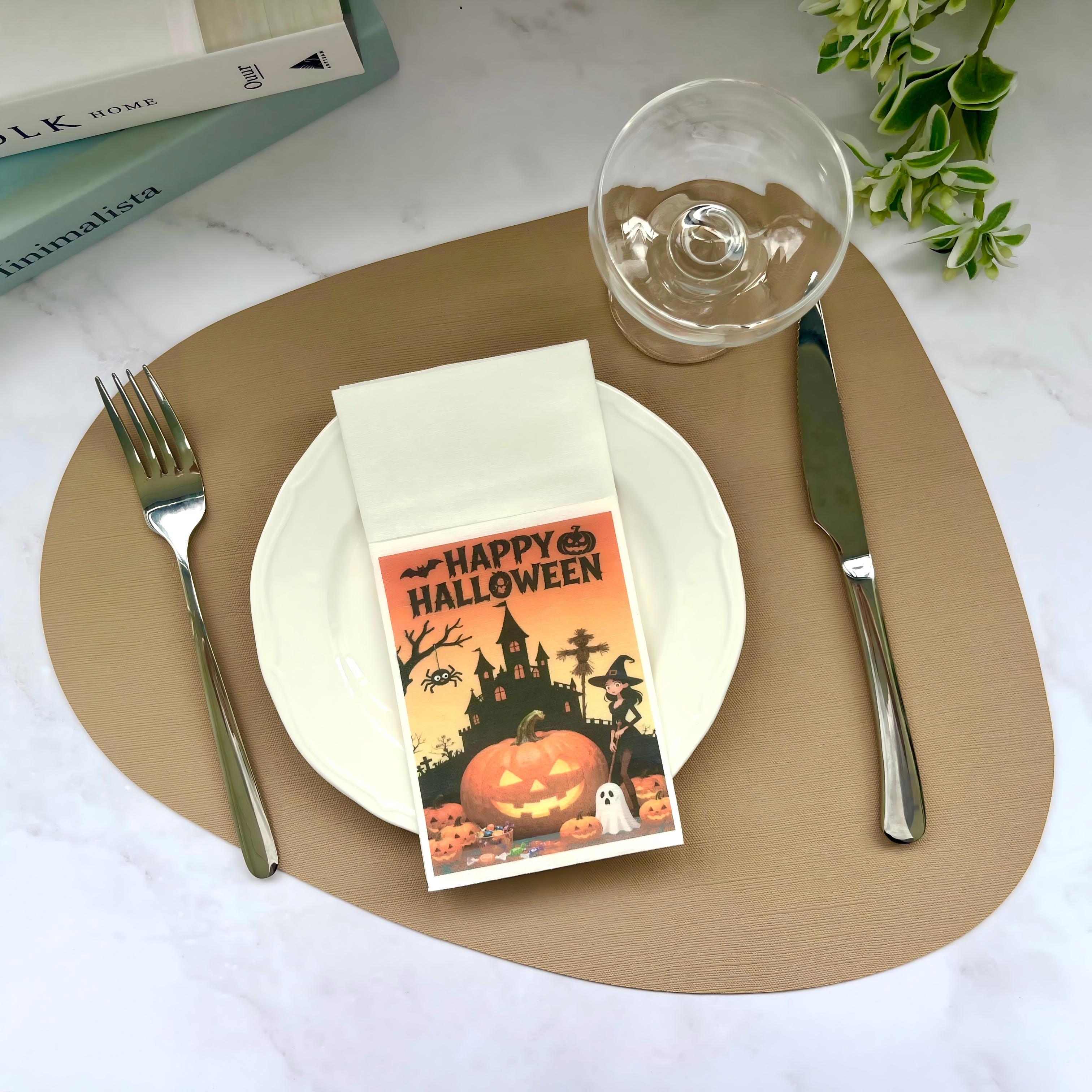
Airlaid also permits seasonal and thematic flexibility. Unlike costly fabric napkins that must be replaced entirely for each event, airlaid allows planners to coordinate colors, embossing, and printing with event themes without incurring prohibitive inventory costs.
Catering and Buffet Operations
Catering operations serve meals across diverse venues and often produce high napkin volumes. Airlaid napkins' durability and professional appearance make them ideal for upscale catering. They maintain structural integrity through greasy foods and sauces, resist lint transfer to dark clothing, and project a premium brand image—qualities that justify a higher napkin cost when competing for high-value catering contracts.
Customization Options and Branded Airlaid Napkins
For most B2B buyers, the ability to customize napkins with branding, colors, and design elements is paramount. Airlaid napkins offer far greater customization flexibility than standard paper alternatives, making them an ideal platform for brand expression.
Printing and Color Options
Modern airlaid manufacturing supports multiple printing technologies:
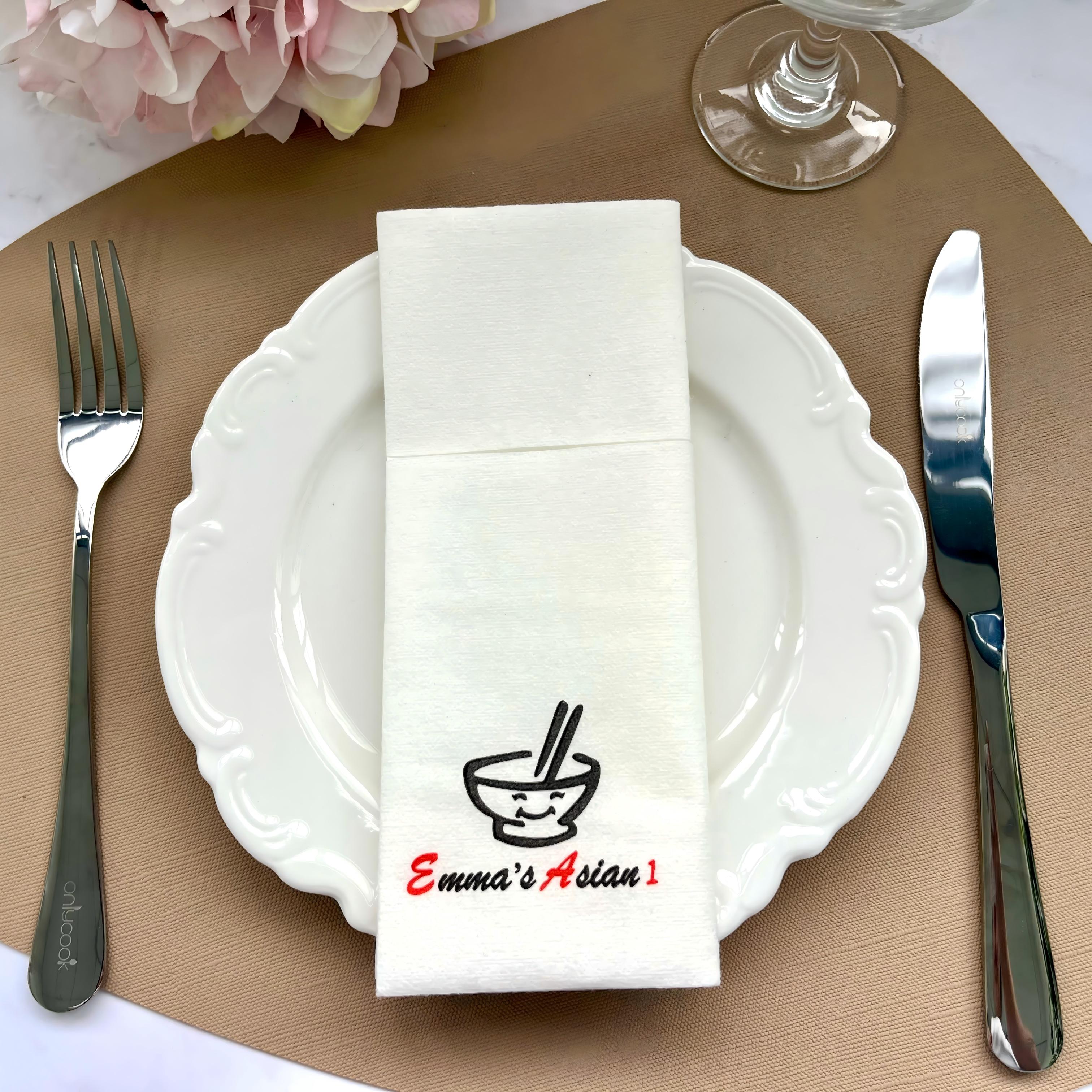
- Full-color digital printing allows complex designs, photographs, and multi-color logos without setup charges typical of traditional printing methods.
- Single-color flexographic or gravure printing suits high-volume orders and simple logos, offering lower per-unit costs.
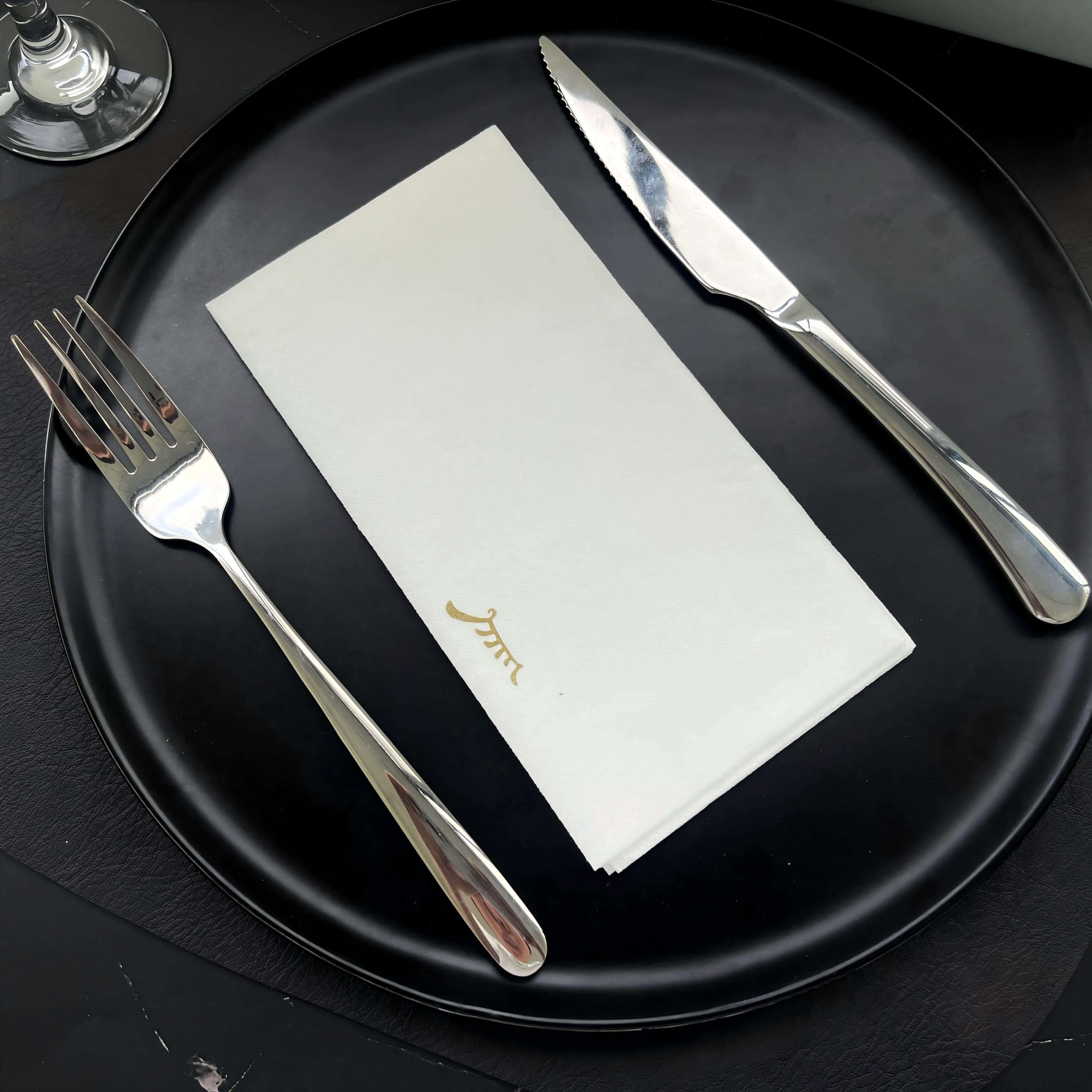
- Foil stamping in gold, silver, or copper adds a premium metallic accent that catches light and communicates luxury.
- Combination approaches—for example, a digitally printed design with gold foil accents—create distinctive, high-impact products that command attention on any table.
Embossing and Texture
Airlaid's structural integrity allows for deep, complex embossing patterns. Options include:
- Standard embossed patterns: damask, linear quilting, or geometric textures that add tactile depth without custom tooling costs.
- Custom embossing: restaurants and events can commission unique designs—logos, monograms, or thematic patterns—though this requires a setup fee amortized across larger order volumes.
- Combination embossing and printing: an embossed pattern overlaid with a printed logo creates exceptional visual and tactile impact.
Folding Styles
Airlaid napkins are available in several fold configurations suited to different service types:
- Cocktail fold: a compact square ideal for bars and standing receptions, typically 25 x 25 cm.
- Dinner fold: the standard rectangular configuration used in formal place settings, typically 40 x 40 cm.
- Pocket fold: a tri-fold design with a pocket for flatware, adding elegance to formal table service and reducing setup labor.
- Custom folds: larger operations may request proprietary folds that enhance brand differentiation.
Size Options
While standard sizes (40 x 40 cm for dinner, 33 x 33 cm for casual, 25 x 25 cm for cocktail) cover most applications, suppliers often accommodate custom dimensions for bulk orders, allowing venues to match napkin size to their specific table layout and brand guidelines.
How to Source Airlaid Napkins: Pricing, MOQ, and Supplier Evaluation
Sourcing airlaid napkins involves understanding pricing structures, minimum order quantities, compliance standards, and supplier reliability. This section equips you with the criteria needed to make informed purchasing decisions and evaluate whether a supplier aligns with your operation's needs.
Understanding Pricing Factors
The cost of airlaid napkins depends on several variables:
- Basis weight (gsm): Heavier napkins (80-120 gsm) cost more than lighter ones (60-80 gsm) but offer superior absorbency and tactile quality.
- Size and fold: Larger napkins and complex folds increase material use and production time.
- Printing complexity: Basic single-color printing costs less than full-color digital or foil stamping. Custom embossing requires tooling investment.
- Order volume: Bulk orders (50,000+ units) benefit from economies of scale; smaller orders incur per-unit setup charges.
- Customization: Branded napkins cost more than plain white, with pricing scaling based on design complexity and production method.
As a general reference for bulk purchases, wholesale airlaid napkin pricing ranges from 0.02 to 0.12 USD per unit, depending on the factors above. Unprinted, standard-size plain white napkins sit at the lower end; custom-printed, embossed, or foil-stamped specialty napkins occupy the upper range.
Minimum Order Quantities (MOQ)
MOQ policies vary significantly by supplier and product type:
- Sample orders: Many suppliers offer small quantities (100-500 units) at a premium per-unit rate to allow testing before committing to larger volumes. This is valuable for venues evaluating quality and brand fit.
- Low-volume production: Some suppliers accept orders as small as 5,000-10,000 units, suitable for smaller restaurants or niche event planners.
- Standard commercial orders: 20,000-50,000 units is typical for small to mid-sized hospitality operations and represents the volume at which per-unit pricing becomes competitive.
- Large-scale procurement: Hotels, large catering companies, and national chains often place orders exceeding 100,000 units quarterly, securing the most favorable pricing.
When evaluating suppliers, confirm their flexibility on MOQ, especially if your venue is testing airlaid napkins for the first time or requires specialty designs.
Quality and Compliance Standards
Purchasing airlaid napkins from compliant, certified suppliers protects your operation from liability and ensures product safety and performance:
- Food contact certification: Napkins used in dining settings should comply with FDA food contact material standards (USA) or EU Regulation 1935/2004 (Europe). This ensures inks, dyes, and adhesives are safe if they contact food or lips.
- ISO 9001 certification: Quality management system certification indicates consistent manufacturing and inspection procedures.
- SGS or equivalent third-party testing: Independent lab reports confirm wet strength, absorbency, basis weight, and other technical specifications.
- Fiber sourcing transparency: Ask whether pulp is sourced from sustainably managed forests (FSC-certified preferred) and whether synthetic binders are disclosed.
- Ink and dye safety: Confirm that printing inks are food-safe and do not bleed or fade with moisture or washing.
Supplier Evaluation Criteria
Beyond price and MOQ, assess suppliers on operational reliability:
- On-time delivery: A supplier with a 95%+ on-time delivery rate minimizes supply chain disruptions. Request references from existing clients to verify this.
- Response time: Quality suppliers respond to inquiries and sample requests within 5 business hours. Slow communication often signals deeper operational issues.
- Technical support: Does the supplier provide detailed product specifications, testing reports, and design consultation? This indicates a commitment to customer success.
- Repeat customer rate: A supplier with a 15%+ repeat customer rate demonstrates reliability and customer satisfaction. High churn suggests quality or service issues.
- Minimum quality control processes: Ask about incoming material inspection, production quality gates, and final product testing. Transparency here is essential.
Getting Started: Requesting a Quote
When contacting a supplier to request a quote for airlaid napkins, provide the following information to receive an accurate estimate:
- Desired quantity and timeline
- Size and fold configuration
- Basis weight (gsm) preference
- Printing method, color, and design (provide a design file or description)
- Whether embossing or foil stamping is desired
- Any specific compliance or certification requirements
- Packaging preferences (bulk, boxed, or palletized)
This detail accelerates the quoting process and ensures the supplier's proposal matches your actual needs, not generic assumptions.
Sustainability Considerations for Airlaid Napkins
Environmental responsibility increasingly influences B2B purchasing decisions, particularly in hospitality. Understanding airlaid napkins' sustainability profile—both strengths and limitations—is essential for venues operating under corporate sustainability mandates or guest expectations.
Manufacturing Efficiency
From an energy and resource perspective, airlaid manufacturing has advantages over traditional papermaking. The dry-laid process eliminates the need for large water volumes and energy-intensive evaporation phases required in wet-laid paper production. Per unit, airlaid napkins typically consume 20-30% less water and energy than conventional paper napkins of comparable quality.
Lifecycle Benefits vs. Fabric Napkins
When compared to washing, drying, and transporting reusable fabric napkins, single-use airlaid often presents a lower environmental impact despite its disposable nature. Institutional laundry services consume substantial water, detergent, and energy. For venues without on-site laundry, transportation adds carbon emissions. Airlaid napkins, used once and recycled, frequently represent a net environmental improvement over the laundry lifecycle of fabric alternatives.
Challenges and Honest Considerations
Not all airlaid napkins are created equal from an environmental standpoint. Transparency matters here:
- Binder composition: Many airlaid napkins use synthetic latex or acrylic binders, which are petroleum-derived and not biodegradable. Some suppliers offer starch-based or plant-derived binders as an alternative, though at higher cost.
- Fiber sourcing: Look for FSC (Forest Stewardship Council) certification to ensure pulp comes from sustainably managed forests. Uncertified fiber may originate from environmentally sensitive regions.
- Recyclability: Most airlaid napkins are recyclable through standard paper waste streams if binders are minimal or water-soluble. However, heavily coated or foil-stamped napkins may not be accepted by all recycling facilities.
- Compostability: Few airlaid napkins are compostable due to synthetic binders. Venues pursuing zero-waste goals should specifically request compostable-certified products and confirm compatibility with local composting infrastructure.
Making Sustainable Sourcing Decisions
If environmental performance is a priority, when requesting quotes from airlaid napkin suppliers, ask explicitly for:
- FSC or equivalent forest certification for pulp
- Biodegradable or plant-based binder options
- Compostable product lines, if available
- Third-party lifecycle assessment or carbon footprint data
Suppliers that proactively share this information demonstrate environmental commitment and align with venues pursuing credible sustainability goals.
Frequently Asked Questions About Airlaid Napkins
Q1: Are airlaid napkins recyclable?
Most airlaid napkins are recyclable through standard municipal paper waste streams, as the napkins are primarily wood pulp. However, napkins with heavy ink coverage, foil stamping, or food residue may be diverted to landfill by recycling facilities due to contamination concerns. If recyclability is essential, consult with your local waste management provider about acceptance criteria and consider minimizing ink coverage or removing heavily soiled napkins from the recycling stream.
Q2: What is the difference between airlaid and tablin napkins?
Tablin (a trademarked term in some regions) refers to a similar dry-laid napkin technology, though the manufacturing process and binder compositions can vary. Generally, tablins are constructed with a stiffer, more formal hand feel and tighter embossing patterns, making them suitable for ultra-formal dining. Airlaid napkins, by contrast, emphasize softness and cloth-like texture. Both offer superior performance to standard paper napkins, but airlaid is typically preferred for contemporary hospitality applications where comfort and luxury feel take precedence over rigid formality.
Q3: Are airlaid napkins waterproof?
No, airlaid napkins are not waterproof; they are absorbent by design. However, they possess much higher wet strength than standard paper napkins, meaning they retain structural integrity when saturated rather than disintegrating. This distinction matters in practice: an airlaid napkin used to dry a cold glass will not shred, but it will eventually become fully saturated if left in contact with liquid for an extended period. For applications requiring moisture resistance, special barrier-coated airlaid napkins are available, though these are less common and costlier than standard options.
Q4: Can I source airlaid napkins with a small order quantity?
Yes, though with conditions. Most suppliers offer sample orders (100-500 units) at a premium per-unit price, allowing you to test quality and brand fit before committing to larger volumes. Some suppliers also accept production runs of 5,000-10,000 units, particularly for unprinted or simply printed items. Heavily customized designs (deep embossing, foil stamping, complex full-color printing) typically have higher MOQs due to tooling and setup costs. When inquiring, mention your volumes clearly and ask whether the supplier can accommodate your specific quantity needs or recommend products requiring lower setup investment.
Q5: How long does it take to receive airlaid napkins after placing an order?
Lead times vary by supplier, customization complexity, and order volume. Unprinted stock napkins may ship within 2-3 weeks. Custom-printed or embossed napkins typically require 4-8 weeks to account for design approval, tooling, production, quality control, and logistics. Rush options are sometimes available at a premium. Always confirm lead times with your supplier during the quoting phase, especially if you have time-sensitive events or seasonal needs.
Q6: What basis weight should I choose for airlaid napkins?
Basis weight (measured in grams per square meter, or gsm) directly affects napkin feel, absorbency, and durability. Lighter napkins (60-70 gsm) are cost-effective for casual venues and high-volume uses. Mid-range napkins (80-100 gsm) offer the best balance of quality feel, absorbency, and value for most restaurants and events. Heavier napkins (120+ gsm) provide luxury texture and superior absorbency but cost more and may feel overly substantial for some applications. For venues seeking to project premium quality without excessive cost, 80-100 gsm is the recommended sweet spot.
Q7: Can airlaid napkins be used with printed designs without bleeding or fading?
Yes, when using food-safe inks and appropriate printing methods. Digital printing and flexographic printing both produce stable, fade-resistant designs on airlaid napkins. Foil stamping is inherently stable and resistant to wear. However, confirm with your supplier that food-contact safety standards are met and that inks are specifically formulated for paper rather than transferred from fabric or synthetic printing processes. Always request color stability testing, especially if napkins will be stored in humid environments or exposed to sunlight.
Q8: How do airlaid napkins perform in humid or coastal environments?
Airlaid napkins maintain structural integrity better than standard paper napkins in humid conditions, as their fiber architecture resists excessive moisture absorption that would compromise standard paper products. However, extended storage in high humidity (above 80% relative humidity) can still affect napkin performance over time. For venues in coastal or tropical climates, store napkins in climate-controlled conditions (40-60% humidity) and minimize exposure to salt air or airborne moisture. Suppliers can advise on packaging and storage best practices for specific regional conditions.
Conclusion: Why Airlaid Napkins Matter for Your Business
Airlaid napkins represent a strategic upgrade for any hospitality or event operation. They combine the tactile luxury of fabric with the operational convenience of single-use products. Guests perceive quality and care through superior napkin performance, and your operation benefits from reliability, customization flexibility, and reduced laundry overhead.
Whether you run a craft cocktail bar, a fine dining restaurant, a boutique hotel, or a high-end catering business, the choice of napkins communicates your brand values. Airlaid napkins signal professionalism, attention to detail, and commitment to guest experience—qualities that justify their cost premium and influence repeat bookings, guest loyalty, and word-of-mouth referrals.
The next step is straightforward: identify a reputable supplier, request samples aligned with your specific needs (size, customization, quantity), evaluate quality and pricing, and pilot a trial order. Most suppliers respond within hours and can provide samples within one to two weeks. Use this pilot phase to assess guest perception, operational fit, and true cost-benefit relative to your current napkin solution.
Ready to explore airlaid options for your venue? Contact a qualified supplier today to request samples and a detailed quote. Provide your quantity requirements, design preferences, and specific performance needs—this ensures a proposal tailored to your business rather than generic assumptions.

- Contact
-
+86-18205820793lydia@shuangjiepaper.comPhone
- Get Connected

