
 English
  Español


What Makes Die-Cut Napkins the Perfect Blend of Function and Aesthetic Appeal
Content
- 1 The Evolution of Napkin Design Through Die-Cutting Technology
- 2 Understanding Absorbency in Specialty Napkin Formats
- 3 Customization Possibilities: From Concept to Reality
- 4 Diverse Applications Across Event Types and Industries
- 5 Wholesale Solutions and Bulk Ordering Dynamics
- 6 Contemporary Design Trends in Specialty Napkin Production
- 7 Technical Specifications and Quality Assurance Standards
- 8 The Manufacturing Process: From Design to Finished Product
- 9 Visual Comparison: Die-Cut Napkins Versus Standard Formats
- 10 Selecting the Right Die-Cut Napkin Solution for Your Needs
- 11 Environmental Considerations and Sustainable Practices
- 12 Cost Analysis: Understanding Pricing Factors and Value Propositions
- 13 Handling, Storage, and Maximizing Product Lifespan
- 14 Industry Standards and Regulatory Compliance
- 15 Emerging Trends and Future Developments in Napkin Innovation
- 16 Frequently Asked Questions About Die-Cut Napkins
- 16.0.1 Q1: Do die-cut napkins maintain the same absorbency as standard rectangular napkins?
- 16.0.2 Q2: How long does production typically require for custom die-cut napkins?
- 16.0.3 Q3: Can die-cut napkins be produced with full-color photography or complex images?
- 16.0.4 Q4: Are die-cut napkins suitable for outdoor events or high-moisture environments?
- 16.0.5 Q5: What disposal options exist for used die-cut napkins?
- 16.0.6 Q6: Can die-cut napkins incorporate multi-color printing with different colors in different regions?
The Evolution of Napkin Design Through Die-Cutting Technology
Napkins have transcended their basic functional role in modern entertaining and dining. What once served merely as a practical necessity has evolved into a design statement that reflects personal taste, brand identity, and event sophistication. The introduction of die-cutting technology revolutionized how napkins are manufactured and perceived, allowing for precise shapes, intricate patterns, and creative expressions that were previously impossible with standard rectangular formats.
Die-cutting creates clean, precise edges and allows manufacturers to produce napkins in virtually any shape imaginable. Whether custom-designed for corporate events, weddings, holiday celebrations, or everyday dining, die-cut napkins have become a cornerstone of sophisticated table settings and brand differentiation strategies. The technology enables consistent quality across production runs while maintaining the absorbent properties that napkins fundamentally require.
Understanding Absorbency in Specialty Napkin Formats
While aesthetics matter, the fundamental purpose of any napkin remains unchanged: effective absorption. Many assume that specialty shapes compromise functionality, but modern manufacturing techniques ensure that die cut napkins wholesale maintain exceptional absorbency levels regardless of their design complexity.
Material Science Behind Die-Cut Napkins
The absorbent properties of napkins depend on three primary factors: fiber composition, ply structure, and surface treatment. Most quality napkins use virgin or recycled wood pulp, which naturally exhibits excellent water absorption capabilities. The fibrous network creates capillary pathways that draw moisture rapidly and hold it within the material matrix.
When manufacturers apply die-cutting to napkins, they maintain the original fiber composition while simply reshaping the perimeter. The internal structure remains identical to traditional napkins, preserving absorption rates. In fact, strategic die-cutting can sometimes enhance absorption by increasing surface area exposure in specific regions of the napkin.
Ply Configuration and Absorbency Correlation
Die-cut napkins are available in single-ply, two-ply, and three-ply configurations. Each ply layer contributes to overall absorbency:
- Single-ply napkins offer basic absorbency and are ideal for casual gatherings and high-volume events where cost efficiency matters.
- Two-ply napkins provide enhanced absorbency and durability, making them suitable for fine dining, cocktail events, and professional settings.
- Three-ply napkins deliver premium absorbency and structural integrity, perfect for luxury applications and situations requiring maximum performance.
Customization Possibilities: From Concept to Reality
The versatility of custom die cut napkins extends far beyond basic shapes. Modern production capabilities allow designers and event planners to realize virtually any vision while maintaining product functionality and quality standards.
Shape Design Considerations
Common shapes include standard geometric forms like circles, squares, and diamonds, but possibilities extend to themed designs such as hearts, stars, flowers, leaves, and custom logos. The design process begins with understanding the intended use case and audience expectations.
| Shape Category | Typical Applications | Absorbency Impact |
|---|---|---|
| Geometric (circles, squares) | Corporate events, modern dining | Minimal to none |
| Organic (flowers, leaves) | Garden parties, seasonal events | Slightly enhanced edge exposure |
| Custom logos/text | Branding, promotional events | Depends on design complexity |
| Novelty shapes | Themed parties, special occasions | Maintained with quality design |
Color and Print Options
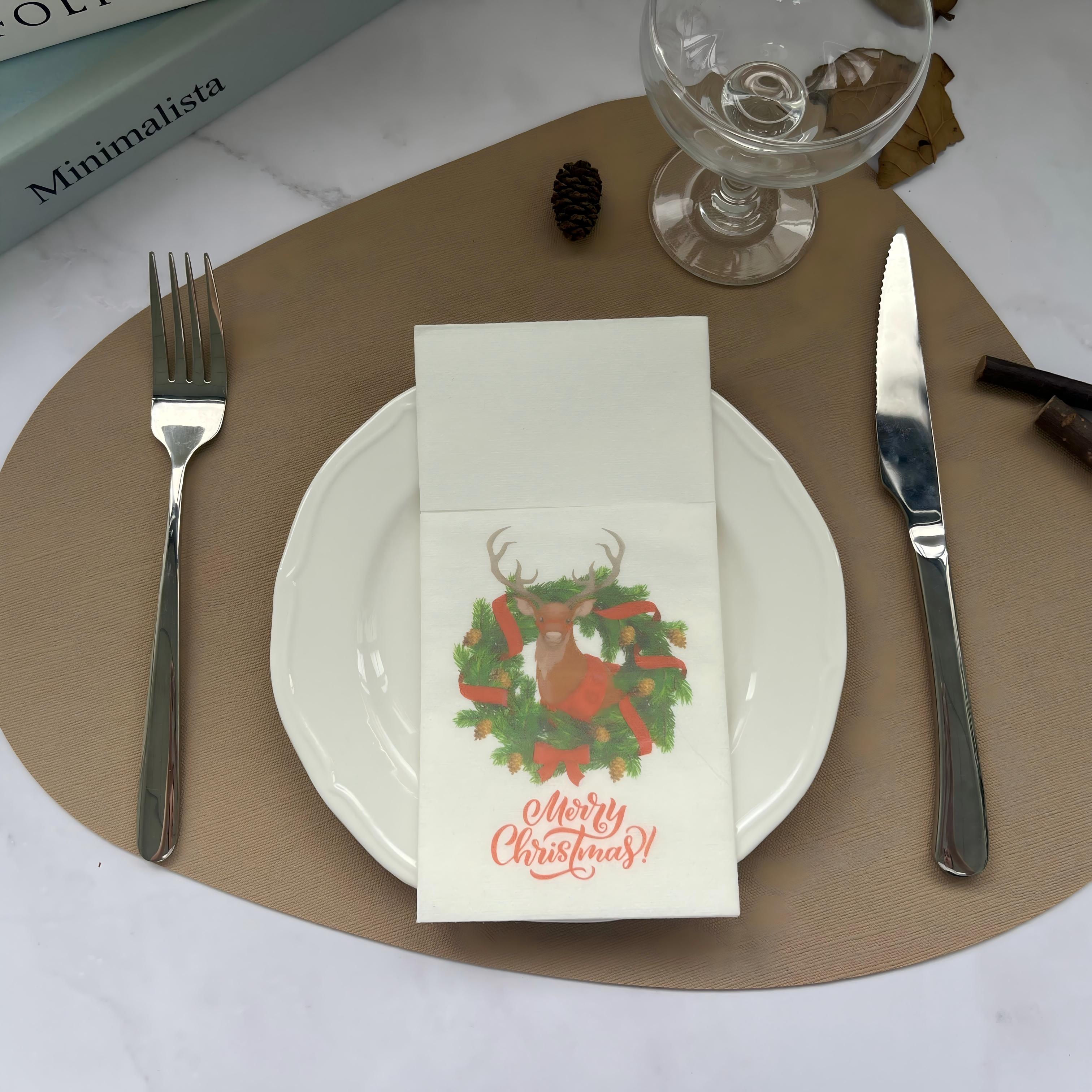
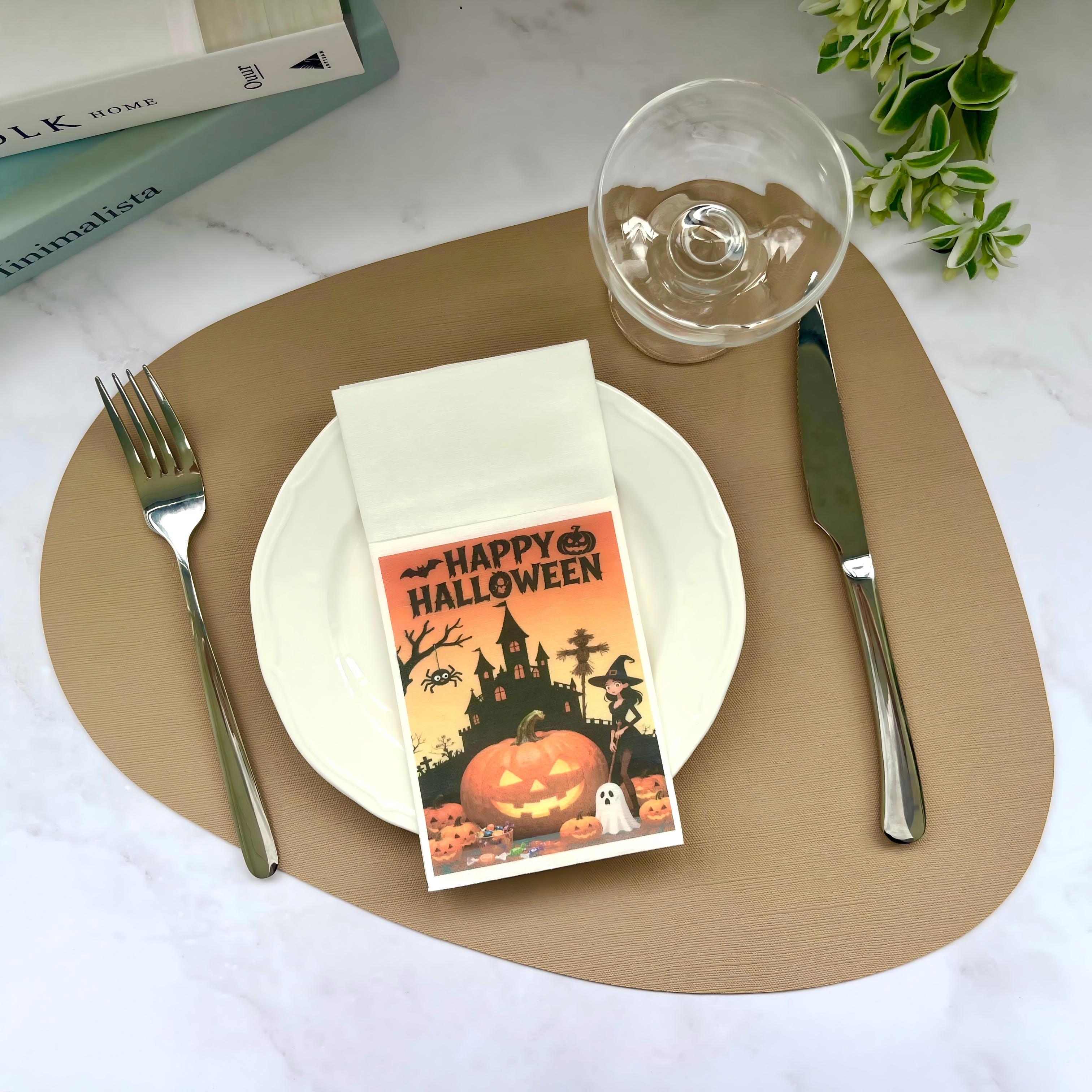
Printed die cut napkins allow for single-color, multi-color, or full-color digital printing. Advanced printing technologies ensure vibrant colors that remain colorfast even after contact with beverages or foods. The printing process is carefully controlled to maintain napkin softness and absorbency while adding visual appeal.
Diverse Applications Across Event Types and Industries
The adaptability of shaped paper napkins makes them suitable for countless scenarios, each with distinct requirements and aesthetic preferences.
Hospitality and Fine Dining
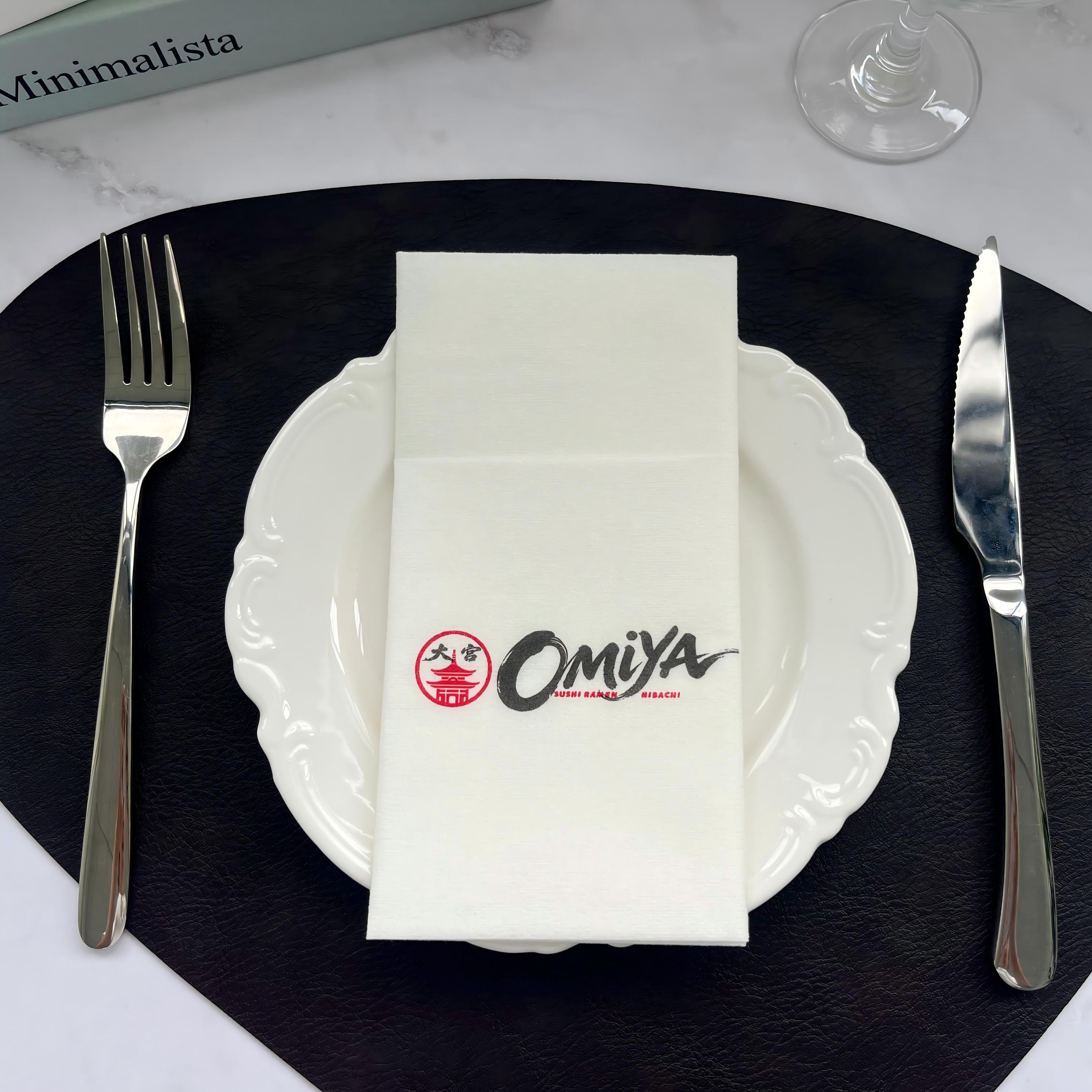
Upscale restaurants and hotels leverage luxury paper napkins with sophisticated die-cut designs to enhance the dining experience. Custom shapes that coordinate with table settings, plating presentations, and overall ambiance contribute to memorable guest experiences. Disposable die cut napkins allow establishments to maintain high standards of cleanliness while adding design consistency across service.
Event Planning and Celebrations
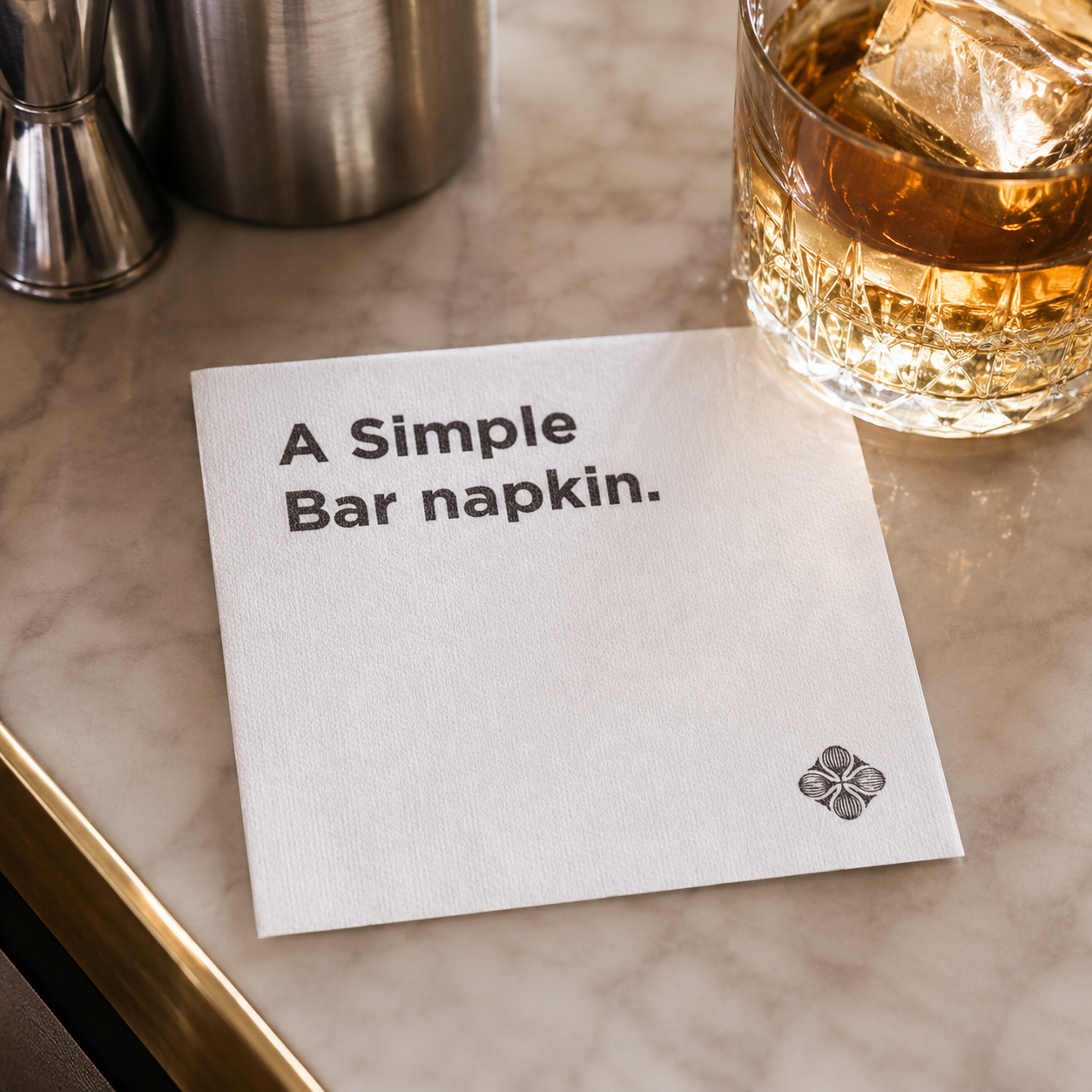
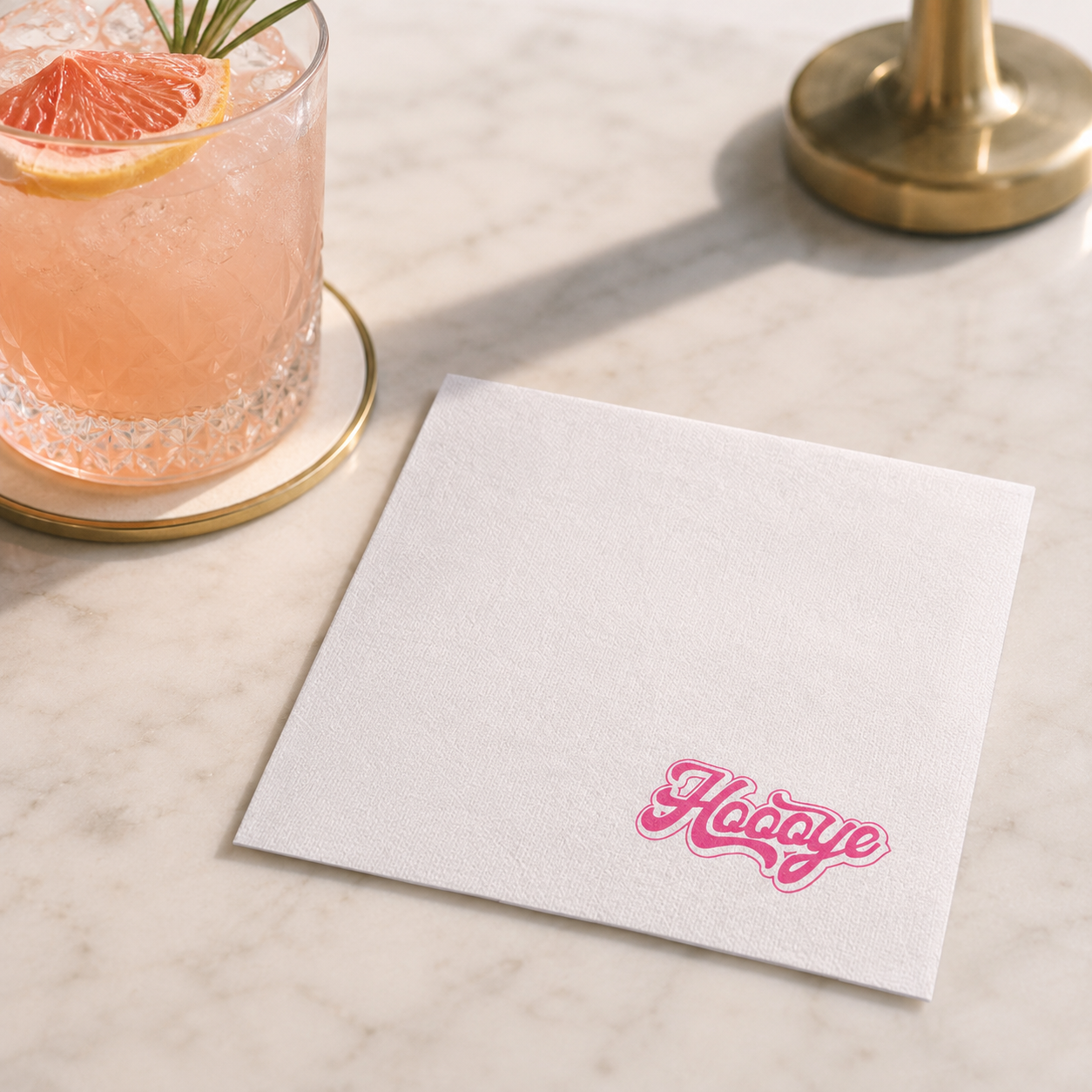
Wedding planners, event coordinators, and party organizers depend on specialty napkins to reinforce themes and color schemes. Whether coordinating with seasonal decorations, cultural celebrations, or creative party concepts, custom options enable seamless integration into comprehensive event designs. Cocktail die cut napkins specifically serve as functional coasters and decorative elements during reception gatherings.
Corporate Branding and Promotions
Companies utilize branded die-cut napkins as marketing tools at conferences, trade shows, product launches, and corporate events. These items function as practical necessities while subtly reinforcing brand presence and messaging. The dual purpose of utility and marketing makes them cost-effective promotional investments.
Food Service and Beverage Operations
Beverage napkins with die-cut designs serve dual purposes in bars, cafes, and quick-service restaurants. They prevent condensation damage to surfaces while communicating brand personality. The absorbent properties remain critical in high-moisture environments where performance cannot be compromised.
Wholesale Solutions and Bulk Ordering Dynamics
Organizations requiring consistent supplies of specialty napkins benefit from wholesale procurement models that offer economic advantages and reliable availability.
Volume-Based Pricing Structures
Die cut napkins wholesale operations typically implement tiered pricing where per-unit costs decrease as order quantities increase. A restaurant ordering 50,000 units annually achieves significantly lower per-piece costs than a business purchasing 5,000 units. Understanding minimum order quantities, bulk discounts, and volume tiers enables organizations to optimize procurement strategies.
Customization at Scale
Wholesale suppliers invest in production capabilities that handle custom designs efficiently. Rather than charging premium prices for small custom orders, wholesale operations achieve economies of scale that make customization accessible even for mid-sized businesses. Many suppliers maintain design templates and color specifications that expedite the ordering process for returning customers.
Supply Chain Reliability
Established wholesale channels ensure consistent access to products, predictable delivery schedules, and quality assurance protocols. Businesses can establish long-term supplier relationships that accommodate fluctuating demand while maintaining pricing stability through commitment agreements.
Contemporary Design Trends in Specialty Napkin Production
The napkin industry reflects broader design movements that emphasize sustainability, minimalism, personalization, and cultural representation.
Sustainability-Conscious Design
Modern consumers increasingly expect environmental responsibility in single-use products. Manufacturers now produce die-cut napkins from recycled materials, biodegradable fibers, and sustainably sourced wood pulp. Design choices that minimize waste, use water-based inks, and reduce packaging materials appeal to environmentally conscious organizations and individual consumers.
Minimalist Aesthetic Approaches
Contemporary design favors clean lines, limited color palettes, and sophisticated simplicity over ornate patterns. Subtle die-cut shapes combined with refined printing techniques create elegant napkins that complement modern table settings without demanding excessive visual attention.
Personalization and Micro-Branding
Advances in digital printing enable cost-effective personalization even in relatively small quantities. Individual names, dates, or customized messages transform generic napkins into memorable keepsakes. This trend particularly influences wedding planning, anniversary celebrations, and milestone events.
Technical Specifications and Quality Assurance Standards
Professional manufacturers maintain rigorous quality standards that ensure die-cut napkins consistently meet performance expectations and aesthetic specifications.
Dimensional Tolerances
Precision die-cutting equipment maintains tight tolerances on shape dimensions, ensuring consistency across production runs. Quality control processes verify that each napkin meets specified dimensions within acceptable variance ranges, typically plus or minus one to two millimeters.
Edge Quality Assessment
The die-cutting process must produce clean edges without fraying, tearing, or material degradation. Advanced equipment equipped with sharp dies and proper pressure settings ensures professional edge finish. Post-production inspection identifies and removes any napkins with edge defects that compromise appearance or functionality.
Absorbency Testing Protocols
Manufacturers conduct standardized absorbency testing that measures water absorption rates, retention capacity, and performance consistency. These tests ensure that die-cut napkins meet or exceed absorbency standards regardless of shape complexity. Testing occurs at multiple points in production runs to maintain quality consistency.
The Manufacturing Process: From Design to Finished Product
Understanding how die-cut napkins transition from concept to finished product clarifies why design, quality, and absorbency work in concert rather than opposition.
Stage One: Design Development and Die Creation
The process begins when designers develop shape concepts that balance aesthetic vision with production feasibility. Once approved, dies are manufactured from hardened steel or carbide materials. These dies must withstand thousands of cutting cycles while maintaining precise shape definition. Die creation represents the largest upfront investment but enables economical per-unit production once the initial investment is distributed across high-volume runs.
Stage Two: Material Selection and Preparation
Napkin manufacturers source tissue paper or specialty napkin stock from paper mills. Material selection considers factors including fiber composition, ply structure, texture, and weight. The selected material undergoes quality checks before entering production. Proper material preparation ensures consistent feeding into production equipment.
Stage Three: Printing Application
For printed varieties, color application occurs on large rolls of napkin material before die-cutting. Modern printing technologies including rotogravure, flexography, and digital printing deposit inks with precision, ensuring color vibrancy while maintaining tissue integrity. Multiple color passes create complex designs with precise registration and color accuracy.
Stage Four: Die-Cutting Execution
Automated die-cutting equipment feeds pre-printed napkin rolls through cutting stations where hardened dies compress against the material with specific force levels. Operators monitor cut quality, adjust equipment as needed, and ensure consistent production speed. Modern equipment completes thousands of cuts per minute while maintaining dimensional accuracy and edge quality.
Stage Five: Packaging and Quality Verification
Cut napkins proceed to packing equipment that counts, stacks, and packages them according to specification. Final inspection verifies appearance, shape accuracy, and package integrity. Completed packages enter warehouse systems for distribution to retail or wholesale customers.
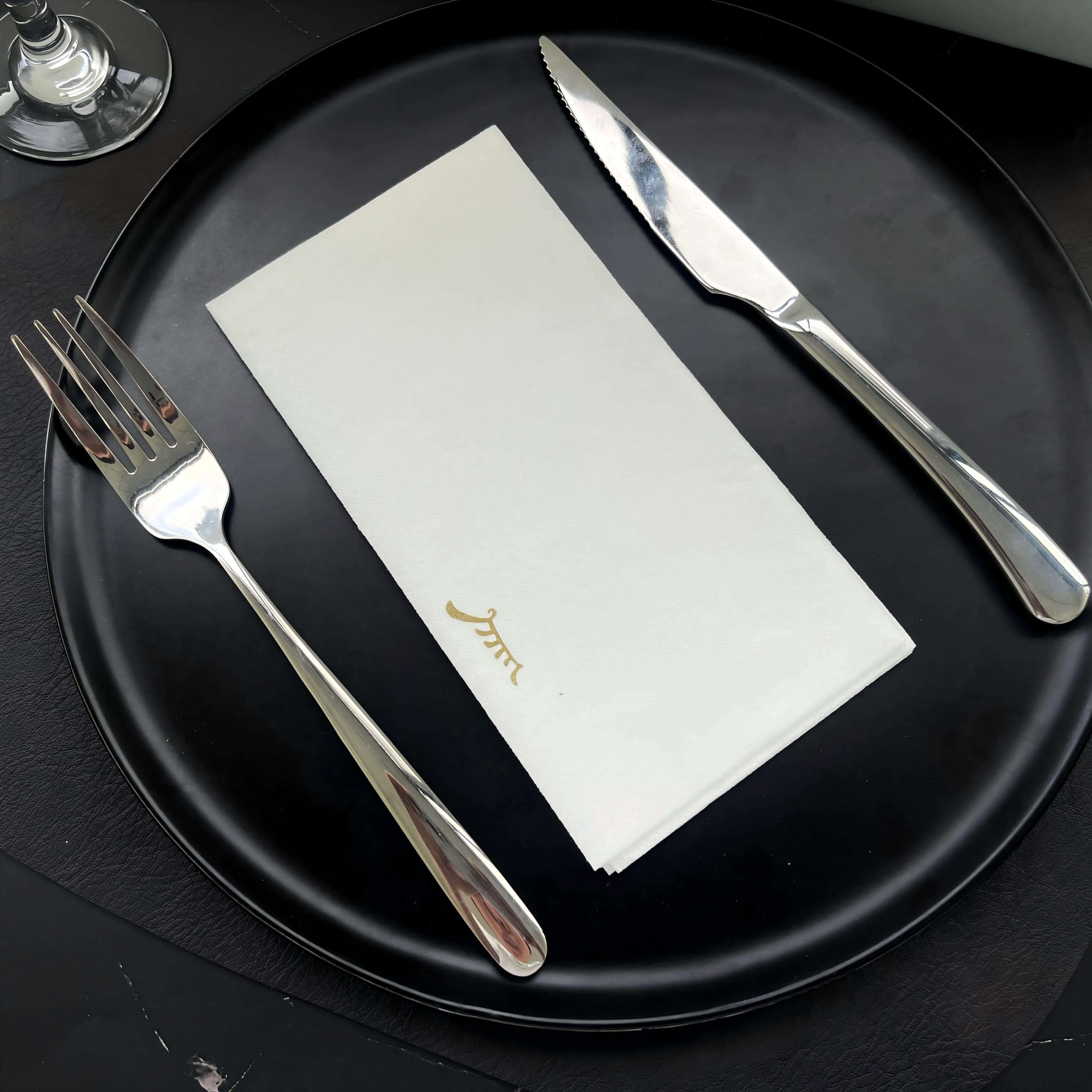
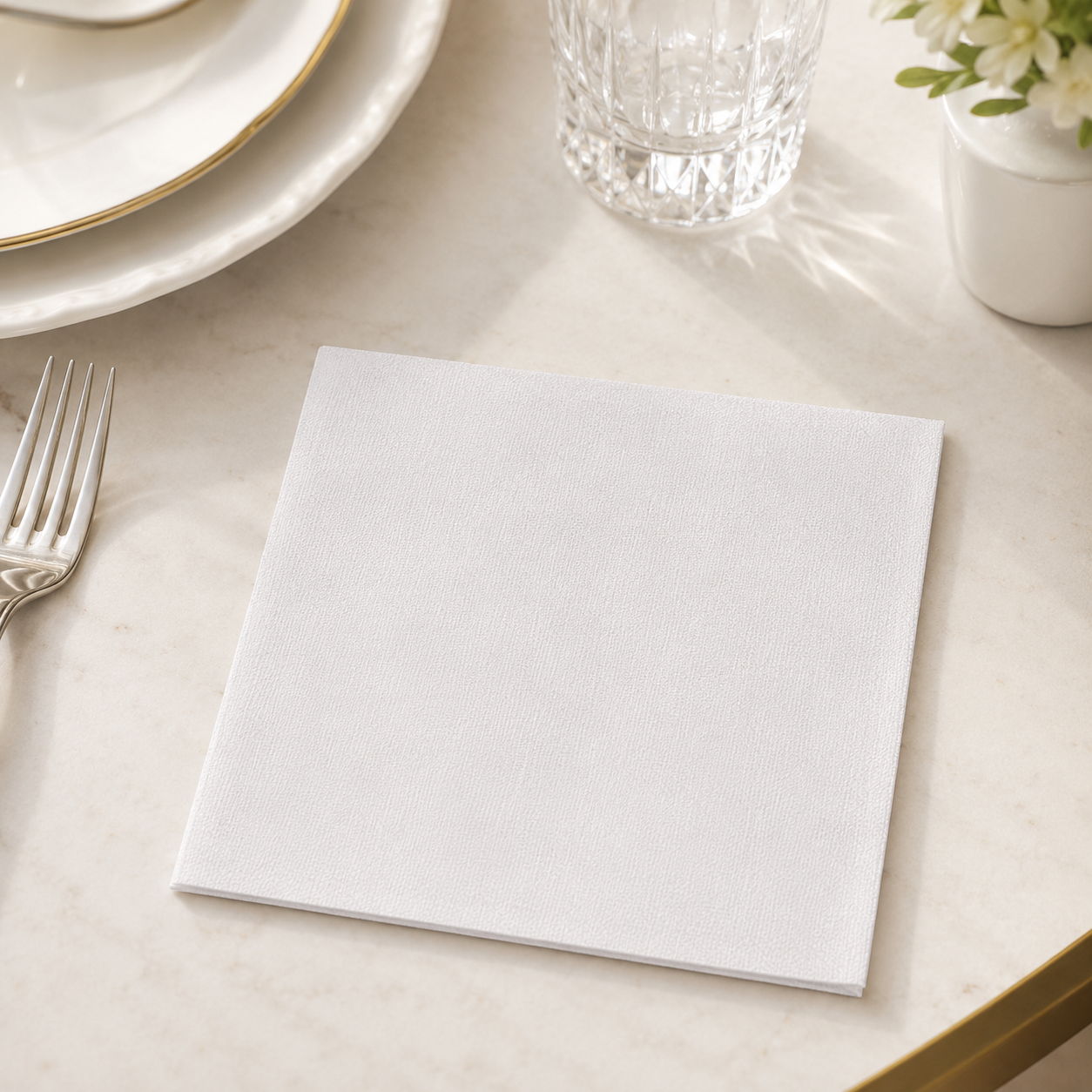
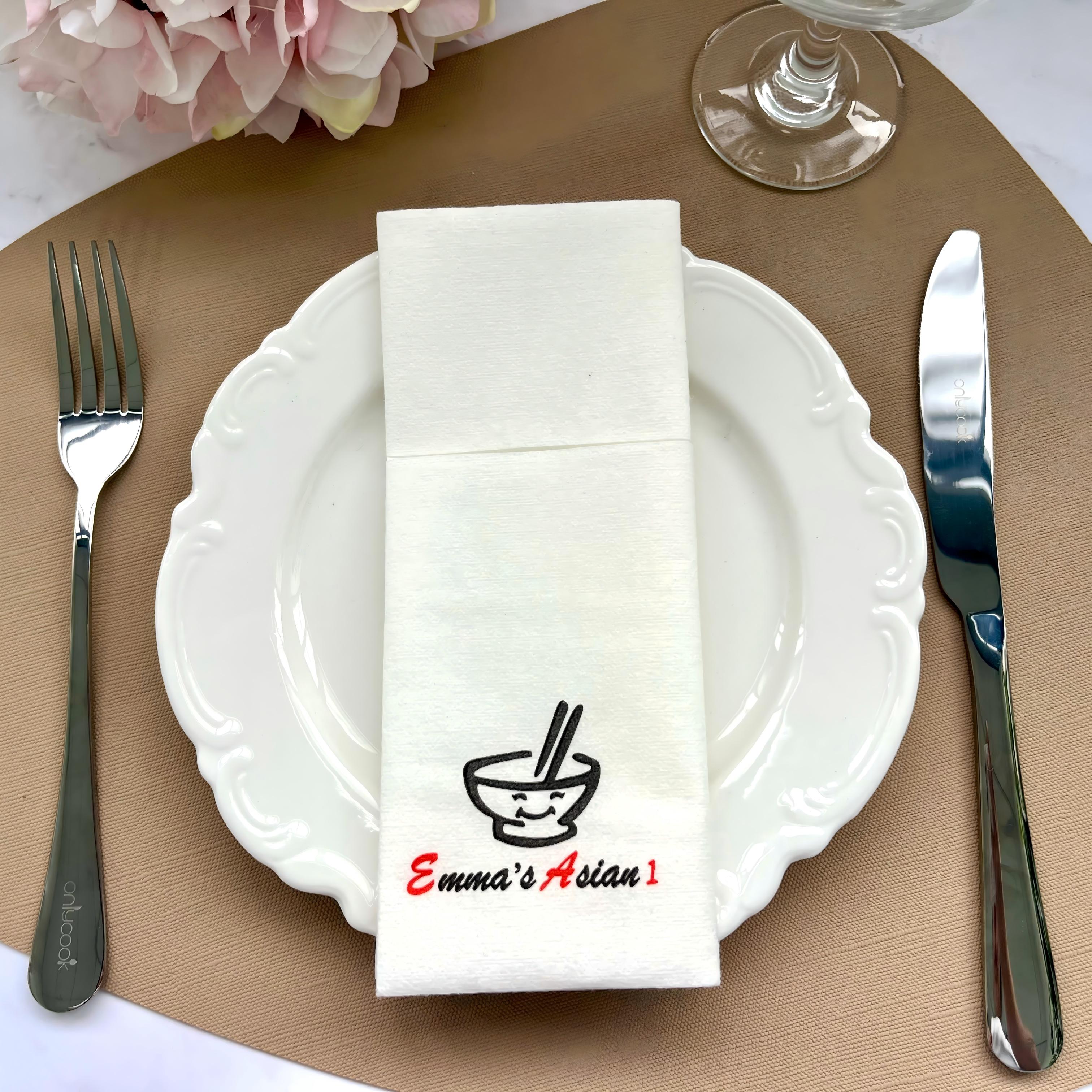
Visual Comparison: Die-Cut Napkins Versus Standard Formats
Selecting the Right Die-Cut Napkin Solution for Your Needs
Choosing appropriate napkin products requires evaluating multiple factors including intended application, aesthetic requirements, budget constraints, and volume projections.
Assessment Framework
- Define primary use case: formal dining, casual entertaining, corporate branding, or promotional purposes.
- Establish aesthetic requirements: color schemes, design complexity, and brand alignment considerations.
- Determine quantity needs: consider both immediate requirements and anticipated future usage to identify optimal wholesale volume tiers.
- Evaluate budget parameters: balance quality expectations against cost per unit, factoring in volume discounts and customization premiums.
- Assess sustainability priorities: determine if environmental considerations influence material or production method selection.
- Clarify delivery timelines: ensure supplier capacity aligns with required delivery schedules, especially for large orders or custom designs.
Matching Applications to Napkin Specifications
Different contexts demand different specifications. A luxury hotel might prioritize three-ply construction with sophisticated geometric die-cuts in coordinated colors, while a casual café might select cost-effective two-ply options with simple circular shapes. A corporate event might demand custom logo integration, while a wedding ceremony might emphasize elegant floral die-cuts in thematic colors.
Environmental Considerations and Sustainable Practices
Modern napkin manufacturing increasingly emphasizes environmental responsibility without compromising product quality or absorbency performance.
Material Sourcing and Certification
Responsible manufacturers source tissue materials from sustainably managed forests certified by recognized environmental organizations. Recycled fiber incorporation reduces demand for virgin materials while maintaining product performance. Some manufacturers achieve high percentages of recycled content while preserving the absorbent properties that customers expect.
Production Efficiency and Waste Reduction
Optimized die-cutting design minimizes material waste during production. Advanced equipment operates with minimal scrap generation, and any waste materials undergo appropriate recycling rather than disposal. Efficient production processes also reduce energy consumption and associated carbon footprints.
End-of-Life Considerations
Tissue-based napkins biodegrade readily in standard composting systems, representing a genuine end-of-life advantage compared to many alternative food service products. Consumers can dispose of used napkins through composting programs, home composting systems, or standard waste streams without environmental concern.
Cost Analysis: Understanding Pricing Factors and Value Propositions
Pricing for specialty napkins reflects multiple cost components including materials, customization, production complexity, and volume considerations.
Cost Component Breakdown
| Cost Component | Impact on Pricing | Optimization Opportunities |
|---|---|---|
| Raw Materials | Typically 30-40 percent of cost | Volume purchasing, material grade selection |
| Die Manufacturing | Fixed cost, amortized over production | Longer production runs, standard shape selection |
| Printing Services | Varies by complexity and colors | Simplified designs, standard color selection |
| Production Labor | Typically 15-25 percent of cost | Volume production, standard specifications |
| Packaging and Distribution | Typically 10-20 percent of cost | Bulk packaging, regional distribution |
Value Proposition Analysis
While custom die-cut napkins may cost more per unit than standard rectangular options, they deliver enhanced value through branding opportunities, aesthetic differentiation, and event enhancement. Organizations investing in quality custom napkins often find the cost justified through improved guest experiences, reinforced brand messaging, and event memorability that extends beyond the napkin itself.
Handling, Storage, and Maximizing Product Lifespan
Proper handling and storage practices ensure that die-cut napkins maintain quality from production through final use.
Storage Conditions
Napkins should be stored in cool, dry conditions away from direct sunlight and excessive humidity. Ambient temperature between 60 and 75 degrees Fahrenheit with relative humidity between 35 and 65 percent preserves tissue integrity and prevents moisture absorption that could compromise performance. Proper storage extends shelf life and maintains product quality indefinitely under appropriate conditions.
Transportation Considerations
During transport, napkins require protection from moisture exposure and physical damage. Secure packaging prevents crushing while in transit. Moisture barriers protect against humidity fluctuations, particularly important in climates with high seasonal variation or in shipping routes that cross diverse climate zones.
Preparation and Service
Before service, napkins can be displayed in napkin holders, fanned arrangements, or stacked presentations depending on aesthetic preferences and functional requirements. Presentation methods don't affect absorbency but can enhance visual impact and encourage use. Strategic napkin placement encourages guests to utilize them effectively.
Industry Standards and Regulatory Compliance
Napkin manufacturers operate within established quality frameworks and regulatory requirements that vary by geography but share common objectives of product safety and performance consistency.
Performance Standards
Industry standards define absorbency test methodologies, dimensional tolerances, strength requirements, and other measurable qualities. These standards enable consistency across manufacturers and provide benchmarks for quality assessment. Products certified to recognized standards provide assurance that performance claims are validated through independent testing.
Food Contact Safety
Napkins used in food service environments must comply with regulations regarding food contact materials. Inks, dyes, adhesives, and treatment chemicals must meet safety requirements ensuring no harmful substance migration to foods or beverages. Compliance certification provides confidence that products are safe for intended applications.
Environmental Regulations
Manufacturing operations must comply with environmental regulations governing waste disposal, water discharge, air emissions, and chemical handling. Responsible manufacturers invest in pollution control systems and sustainable practices that exceed minimum regulatory requirements.
Emerging Trends and Future Developments in Napkin Innovation
The napkin industry continues evolving with technological advances, changing consumer preferences, and emerging applications.
Digital Personalization at Scale
Advancing digital printing technologies enable economical personalization even for smaller order quantities. Future developments will likely make customized napkins more accessible to a broader range of businesses and events, potentially shifting market dynamics toward increased customization rather than standard formats.
Functional Napkin Integration
Research explores napkins infused with antimicrobial properties, temperature-responsive inks, or scent release technologies that extend functionality beyond absorption. While still emerging, these innovations suggest future napkins may offer benefits beyond current applications.
Smart Packaging and Traceability
Integration of QR codes, NFC technology, and blockchain-based traceability allows napkins to serve as marketing channels and supply chain verification tools. Smart packaging creates additional brand touchpoints and enables companies to gather consumer engagement data.
Frequently Asked Questions About Die-Cut Napkins
Q1: Do die-cut napkins maintain the same absorbency as standard rectangular napkins?
Yes, die-cut napkins maintain equivalent or superior absorbency compared to standard formats. The cutting process doesn't alter the fiber structure or composition that determines absorption capacity. In fact, increased surface area exposure in some die-cut designs can enhance absorbency in specific regions.
Q2: How long does production typically require for custom die-cut napkins?
Production timelines vary based on design complexity, die creation requirements, and current production schedules. Standard orders typically require three to six weeks from approval to delivery. Rush production may be available at premium pricing with shorter lead times. Die creation alone requires one to two weeks for custom designs, though standard shape options can proceed immediately to production.
Q3: Can die-cut napkins be produced with full-color photography or complex images?
Yes, modern digital printing technology enables high-quality full-color reproduction on napkins. Photography, complex illustrations, and detailed graphics can be reproduced with excellent fidelity. However, tissue material characteristics mean some fine detail may have slightly lower resolution than other media. Designers should consult with manufacturers regarding specific image requirements.
Q4: Are die-cut napkins suitable for outdoor events or high-moisture environments?
Standard napkins may become compromised in extremely wet conditions. For outdoor events with high splash exposure or high-moisture environments like spa settings, manufacturers can recommend heavier-weight options or special treatment that enhances water resistance while maintaining breathability and absorbency in appropriate use contexts.
Q5: What disposal options exist for used die-cut napkins?
Used napkins decompose readily through standard waste disposal routes, composting systems, or home composting. Unlike plastic-based alternatives, napkins don't persist in landfills and naturally biodegrade. This represents a genuine environmental advantage and aligns with waste reduction initiatives at environmentally conscious events.
Q6: Can die-cut napkins incorporate multi-color printing with different colors in different regions?
Yes, advanced printing allows multiple colors within single napkins with precise registration. Specific colors can be applied to designated regions, creating complex designs with varied coloration. This capability enables sophisticated branding, gradients, and multi-colored artistic expressions within individual napkins.

- Contact
-
+86-18205820793lydia@shuangjiepaper.comPhone
- Get Connected

