
 English
  Español


Why Are Leading Hospitality Suppliers Switching to Airlaid Napkins?
Content
- 1 1. What Are Airlaid Napkins and Why Do They Matter for B2B Buyers?
- 2 2. Airlaid Napkins vs. Cloth and Conventional Paper: A B2B Cost Analysis
- 3 3. How to Evaluate an Airlaid Napkins Supplier
- 4 4. Product Specifications and Application Mapping
- 5 5. Building a Profitable Airlaid Napkins Program
- 6 6. Frequently Asked Questions
- 6.0.1 Q1: What is the difference between airlaid and standard paper napkins?
- 6.0.2 Q2: What GSM range should I specify for different applications?
- 6.0.3 Q3: How do airlaid napkins compare to cloth on guest satisfaction?
- 6.0.4 Q4: What customization options are available for airlaid napkins?
- 6.0.5 Q5: How should I evaluate an airlaid napkins supplier?
- 6.0.6 Q6: Is airlaid napkin pricing stable compared to wood pulp price fluctuations?
For wholesalers, converters and brand owners in the foodservice and hospitality supply chain, the napkin category has long been a commodity game, competing primarily on price with thin margins and little differentiation. That dynamic is changing. airlaid napkins have emerged as a distinct product category that commands premium positioning, delivers measurable operational savings for end-users and offers meaningful differentiation for distributors who know how to position them.
The information is organized for procurement professionals, sales teams and brand managers who need to understand not just what airlaid napkins are, but why they matter for their business and how to source them effectively.
1. What Are Airlaid Napkins and Why Do They Matter for B2B Buyers?
Airlaid napkins are nonwoven products made through an air-forming process that disperses cellulose fibers in an air stream and bonds them without water. This distinguishes them fundamentally from conventional tissue paper, which is wet-laid and dried in sheets. The airlaid process creates a structure with higher bulk, better absorbency and a softer hand-feel than standard paper napkins of equivalent weight.
For B2B buyers, this technical distinction has commercial implications. Airlaid napkins sit in a market position between conventional disposable paper and reusable cloth, offering the convenience and hygiene of single-use products with the tactile quality and visual presence that premium hospitality venues require.
Key Performance Characteristics
- Wet strength: Airlaid napkins maintain structural integrity when wet, unlike standard paper that disintegrates easily. This matters for guests using napkins with moist foods or beverages.
- Absorbency: The porous structure absorbs liquids faster and holds more volume than wet-laid paper of similar basis weight.
- Lint resistance: Thermal or latex bonding reduces fiber shedding, which is particularly important for dark table linens and high-end table settings.
- Surface stability: The nonwoven structure accepts printing, embossing and foil stamping with better definition than standard tissue.
These characteristics explain why the hospitality sector has increasingly adopted airlaid napkins for premium service. Industry data indicates that approximately 30 percent of North American hospitality operators now purchase airlaid products for premium dining service, a figure that has grown substantially as the quality gap with cloth has narrowed.
2. Airlaid Napkins vs. Cloth and Conventional Paper: A B2B Cost Analysis
Understanding the total cost picture is essential for wholesalers and brands positioning airlaid napkins to their customers. The following comparison breaks down costs for a 200-cover dinner service, based on operating data from hospitality industry sources.
| Metric | Cloth Linen Rental | Premium Airlaid | Difference |
|---|---|---|---|
| Cost per cover | $0.38-0.55 | $0.09-0.14 | 62-75% lower |
| Staff handling time | 45-60 minutes | 10-15 minutes | ~75% reduction |
| Storage space required | 2.5 m² rotating inventory | 0.4 m² carton stack | ~85% less |
| Replacement loss exposure | 6-12% per cycle | 0% single-use | Eliminated |
| Vendor scheduling complexity | Weekly pickup and delivery | Monthly delivery, no returns | Significantly simpler |
For a 150-seat restaurant turning tables twice per dinner service, the annual savings from switching to airlaid napkins ranges from $38,000 to $50,000, with over 100,000 gallons of water saved per year through eliminated laundry processing. These figures represent hard-dollar savings that can be presented as part of a value proposition to end customers.
The cost advantage of airlaid napkins is particularly relevant when comparing to conventional tissue as well. While the per-unit purchase price of airlaid is higher than standard paper, the performance characteristics often translate to lower consumption per cover: guests typically use fewer airlaid napkins because of superior absorbency and durability, narrowing or eliminating the cost gap on a per-use basis.
3. How to Evaluate an Airlaid Napkins Supplier
Selecting an airlaid napkins supplier requires assessment beyond sample quality and quoted price. For wholesalers, converters and brands building reliable supply chains, the following evaluation framework provides structured criteria.
Manufacturing Capability and Capacity
- Production scale: Suppliers with facilities exceeding 6,000 square meters typically have the capital investment in automation and quality control systems needed for consistent output.
- Equipment range: The ability to produce multiple fold types (1/4, 1/6, 1/8), sizes (from 25x25 cm to 43x43 cm) and packaging formats indicates technical flexibility.
- Customization capabilities: OEM and ODM support for custom colors, embossing patterns, printing and packaging differentiates suppliers who can serve brand customers.
Quality Management Systems
- Certifications: ISO 9001 for quality management, FSC or PEFC for sustainable fiber sourcing, and FDA or European food contact compliance are baseline requirements for serious suppliers.
- Testing protocols: Suppliers should provide third-party test reports on absorbency, lint resistance and colorfastness.
- Consistency metrics: On-time delivery rates above 95 percent and defect ratios below 1 percent are industry benchmarks for reliable performance.
Commercial and Logistics Considerations
- Minimum order quantities: Flexible MOQs allow testing new markets and SKUs without excessive inventory commitment.
- Mixed container loading: The ability to combine different napkin SKUs or complementary products in one 40-foot container reduces landed cost per unit.
- Shipping options: FOB, CIF and DDP terms offer different levels of control and convenience depending on the buyer's logistics capabilities.
4. Product Specifications and Application Mapping
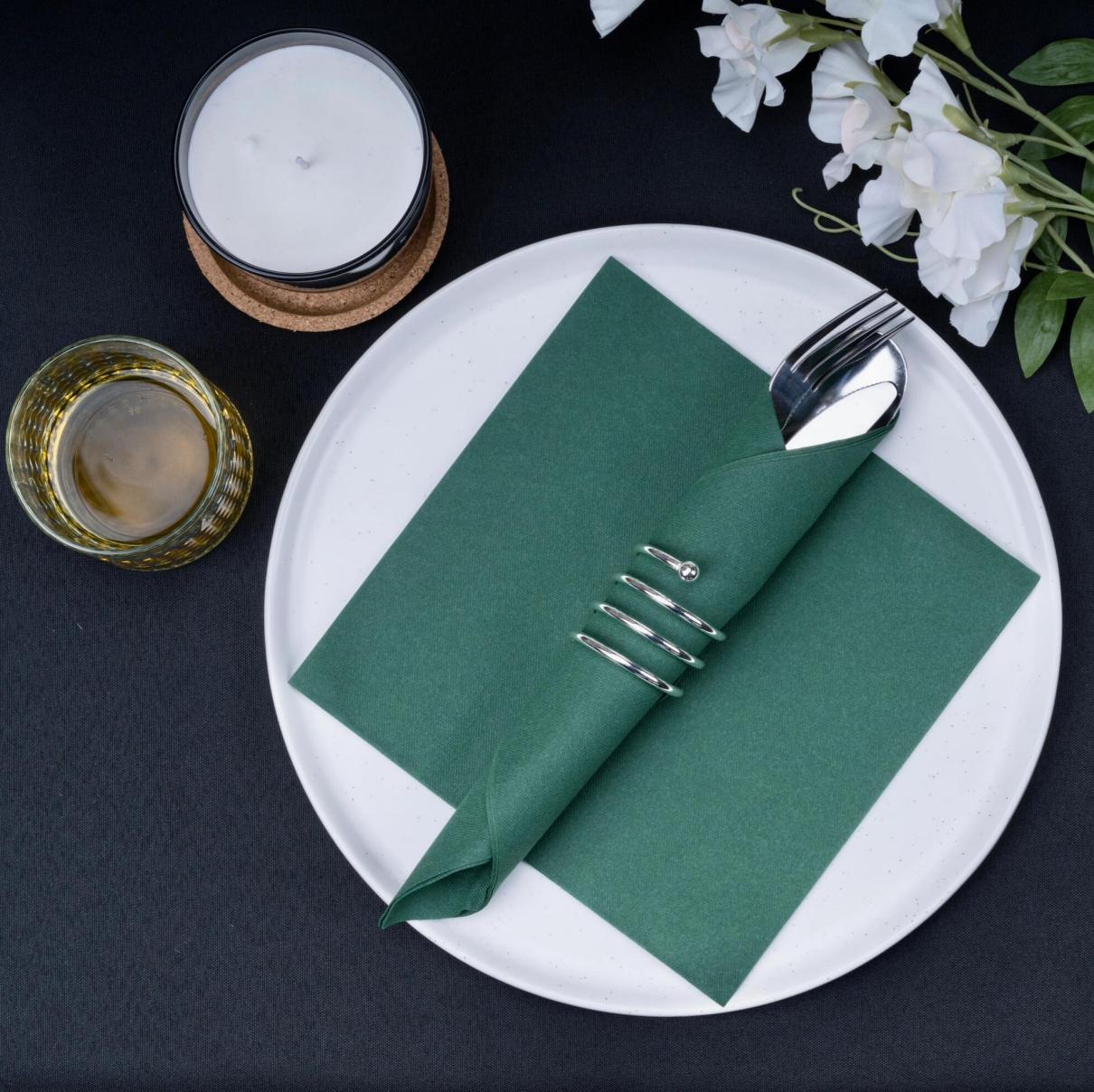
Airlaid napkins are available in a range of specifications that serve different market segments. Understanding the relationship between specifications and applications helps wholesalers and brands build targeted product portfolios.
Key Specification Variables
- Basis weight (GSM): Available from approximately 40 GSM to 80 GSM. Higher weights provide more substance and cloth-like feel, while lower weights offer cost advantages for high-volume applications.
- Fold types: 1/4 fold, 1/6 fold and 1/8 fold are the most common. The fold type affects dispensing, presentation and perceived bulk. 1/8 fold is often preferred for fine dining because it creates more volume when opened.
- Size options: Common dimensions range from 25x25 cm to 43x43 cm, with 33x33 cm and 40x40 cm being standard for dinner service.
- Colors and finishes: White remains the dominant color, but colored airlaid napkins are growing in popularity for events, weddings and brand-specific applications. Embossing patterns such as diamond, dot and waffle add texture and visual interest.
- Printing methods: Flexographic printing for cost-effective runs, hot stamping for metallic effects and full-color digital printing for complex designs and photo-quality reproduction.
Market Segment Recommendations
| Market Segment | Recommended Specs | Key Considerations |
|---|---|---|
| Fine dining restaurants | 60-70 GSM, 1/8 fold, 40x40 cm or larger | Embossing adds perceived quality; color options help brand alignment |
| Hotels and catering | 50-60 GSM, 1/4 or 1/8 fold, 33x33 cm | Balance cost with premium feel for banquet volumes |
| Events and weddings | 50-65 GSM, colored, printed options | Custom printing differentiates; color matching is essential |
| Retail and private label | 45-55 GSM, boxed or wrapped presentation | Shelf-ready packaging and clear product messaging are critical |
The product matrix approach helps wholesale buyers manage inventory efficiently. Starting with a focused range of specifications that serve the target market, then expanding based on customer demand, typically yields better margin performance than carrying many low-volume SKUs.
5. Building a Profitable Airlaid Napkins Program
For wholesalers and brands, airlaid napkins represent an opportunity to move beyond price competition and build value-based offerings. The following strategies can help capture the premium position that airlaid products command.
Position Airlaid as a Distinct Category
Education is central to value capture. Many end-users do not understand the technical differences between airlaid and conventional tissue. Communicating the performance advantages, operational savings and guest experience benefits helps justify premium pricing.
Sales teams equipped with comparisons showing total cost per use rather than unit price are more effective at closing premium hospitality accounts.
Develop Tiered Product Lines
- Entry-level: White airlaid napkins at lower GSM (45-50) for cost-sensitive customers entering the category
- Mid-range: Standard GSM (55-60) with basic embossing for volume hospitality accounts
- Premium: High GSM (65-70+), sophisticated embossing, custom colors and printing for fine dining and brand programs
This tiered approach creates upgrade paths and allows customers to trade up as they experience the product benefits and see the operational savings.
Leverage Customization for Brand Differentiation
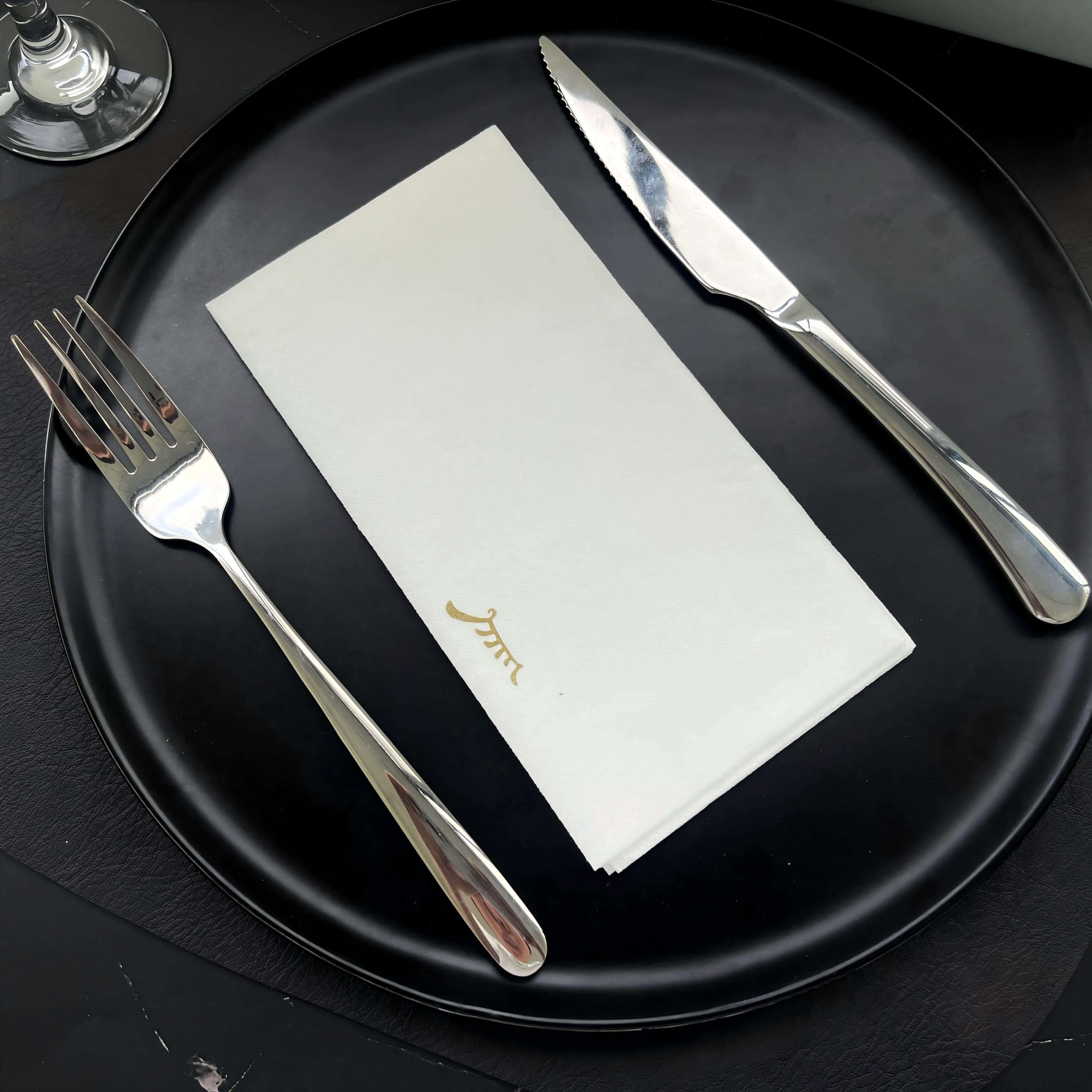
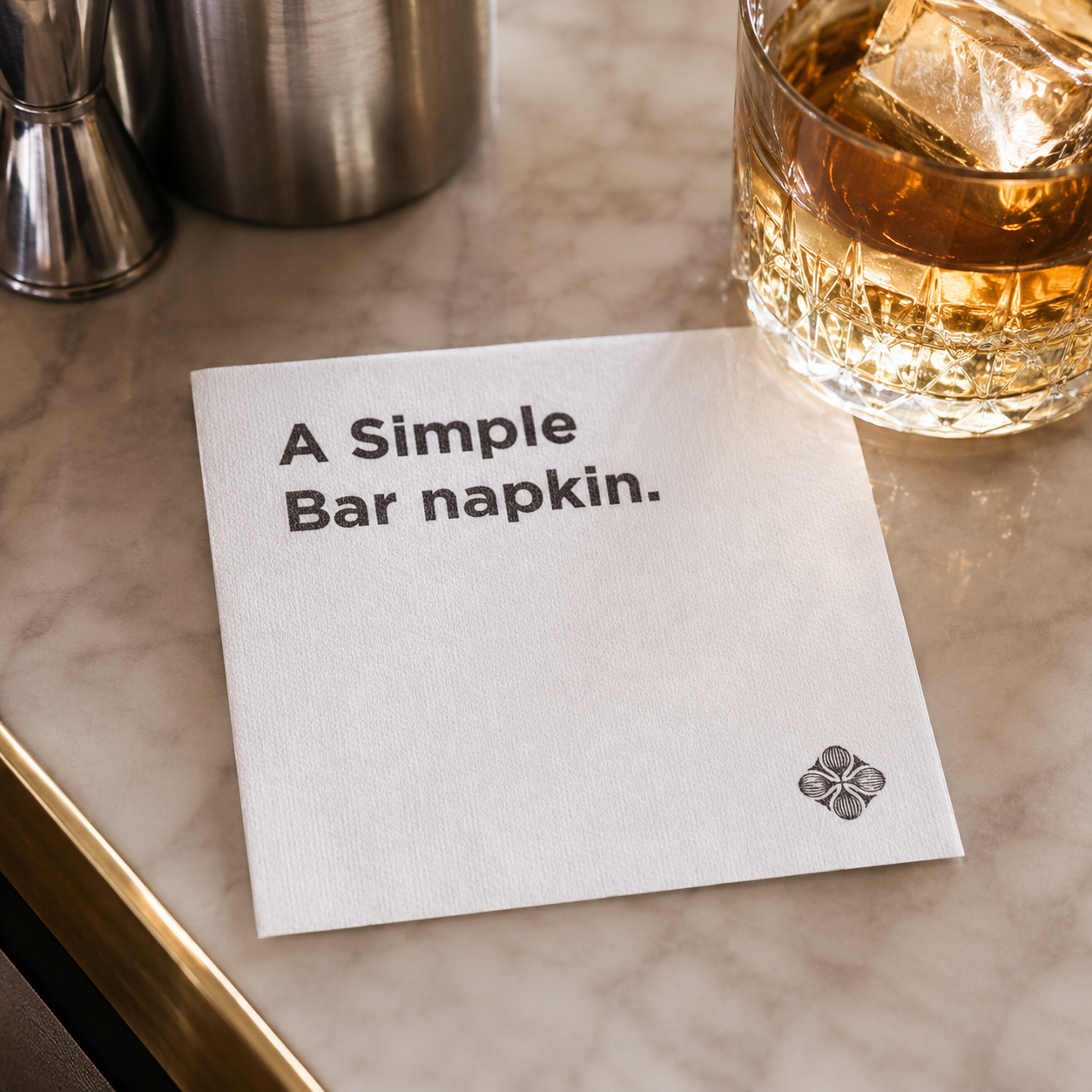
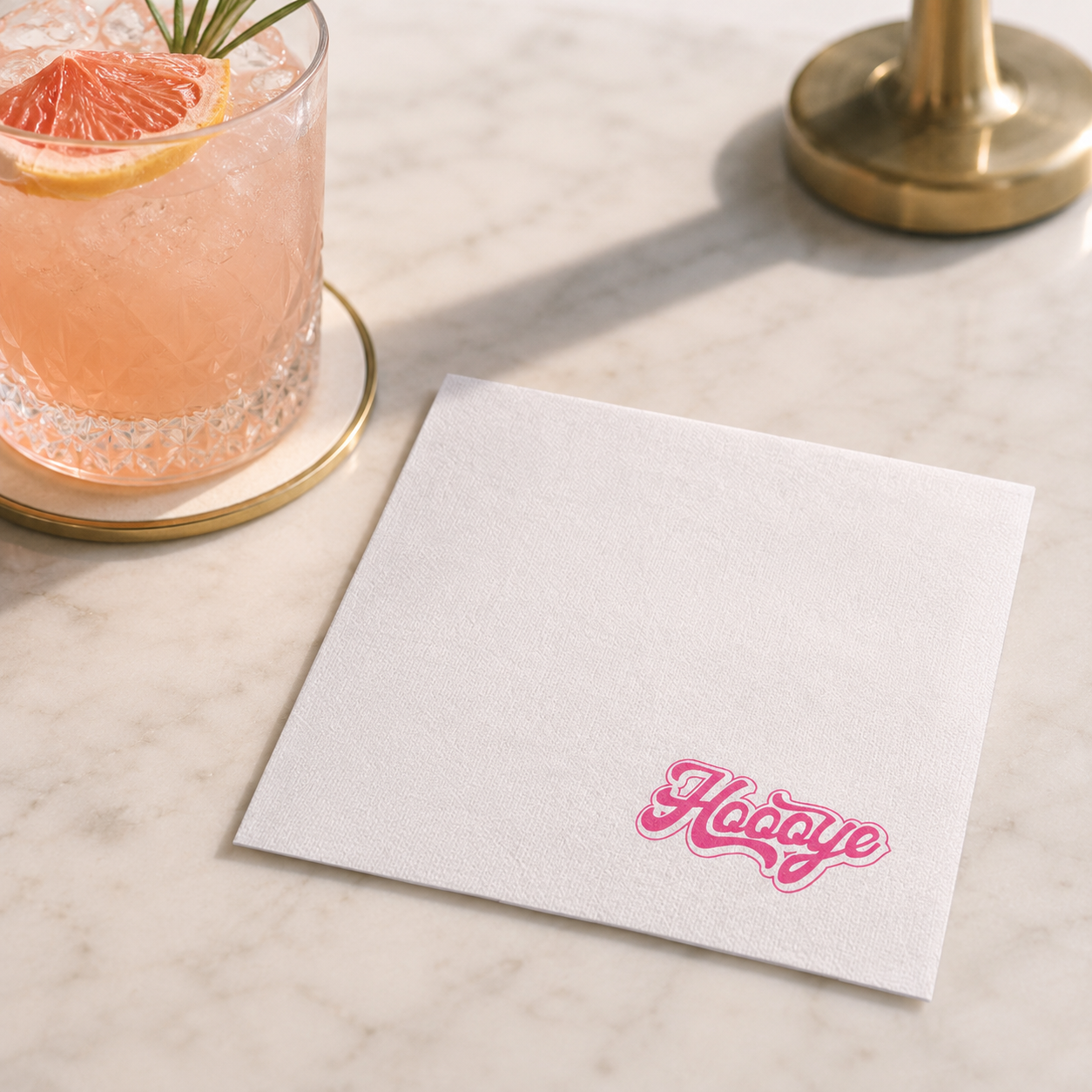
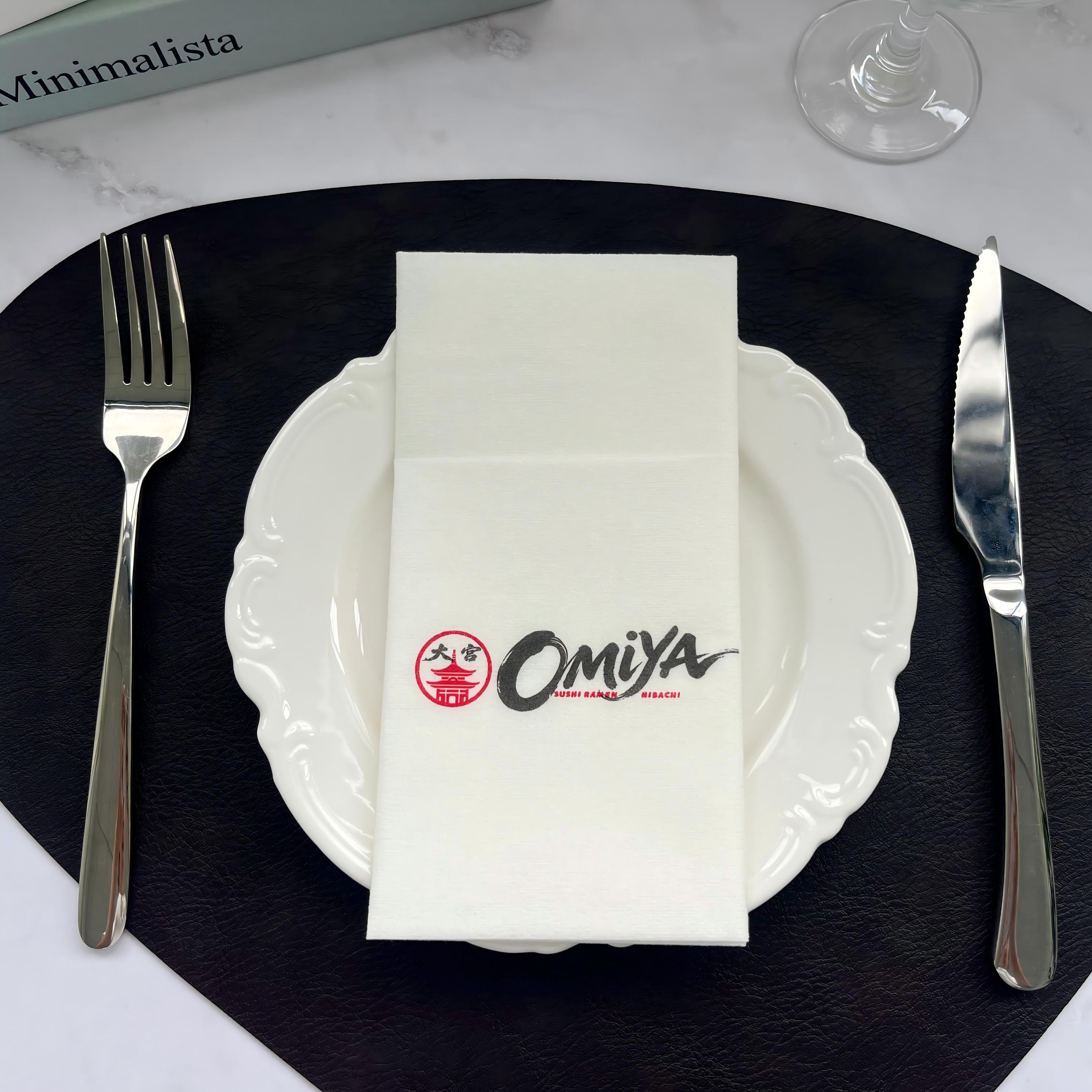
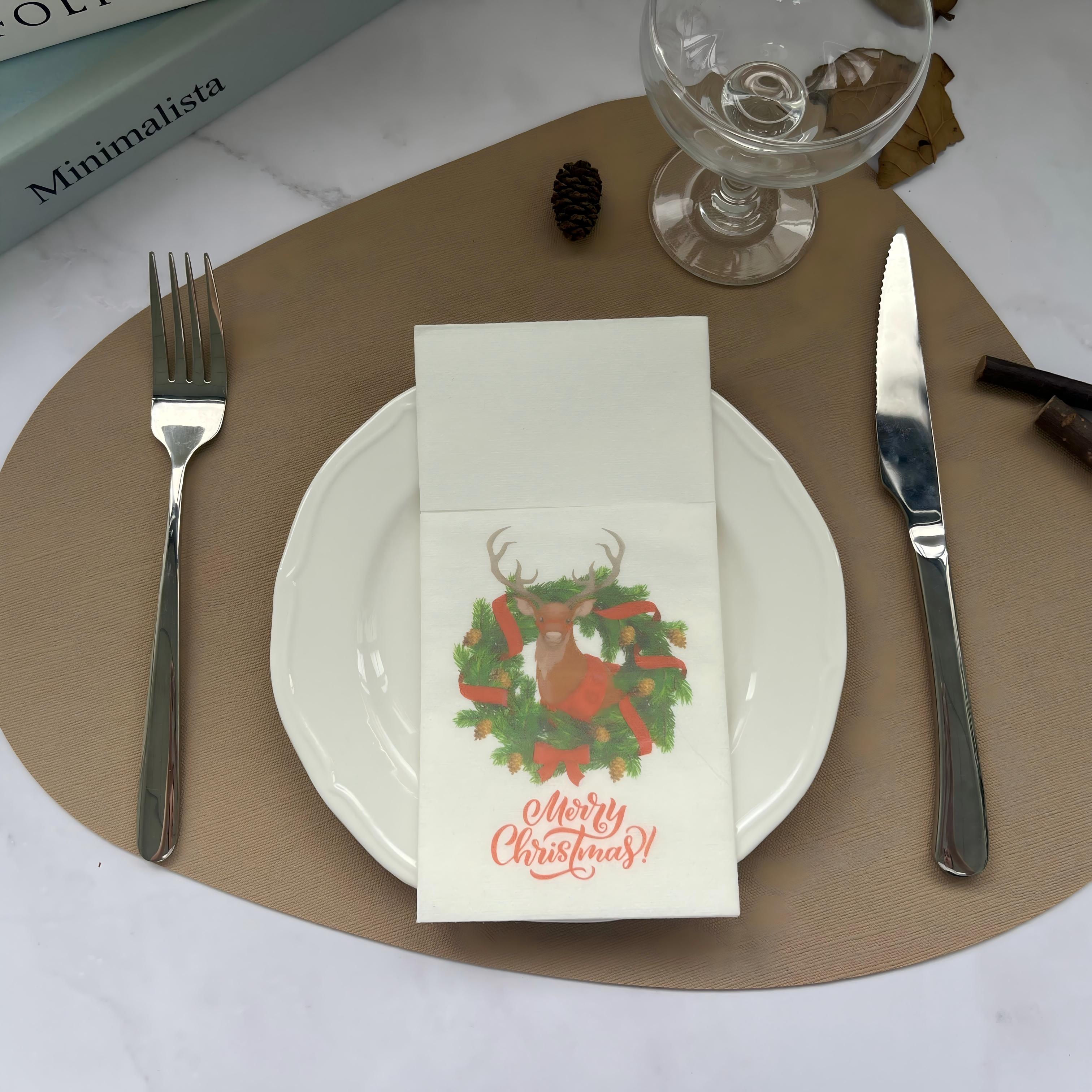
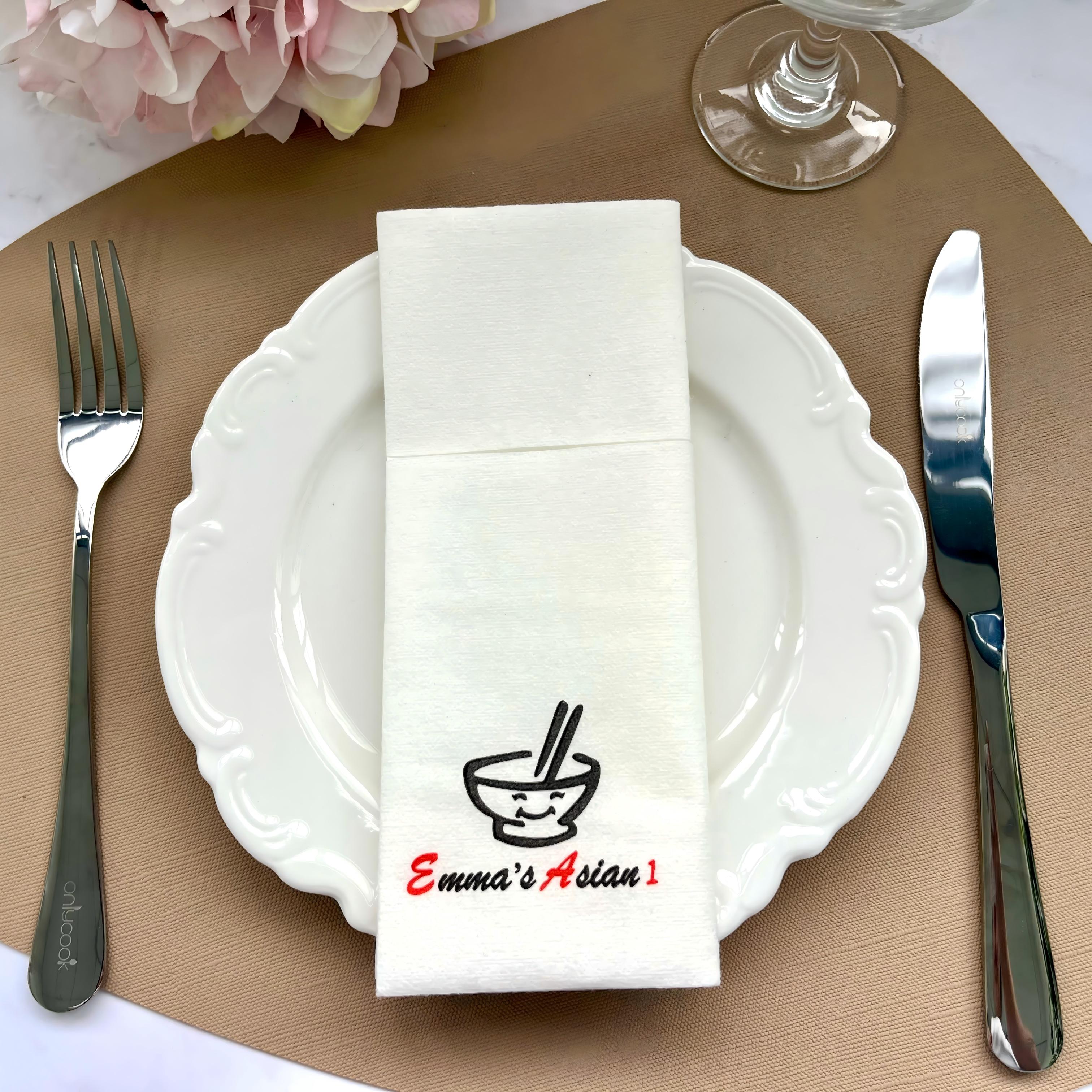
Custom printed airlaid napkins are a powerful brand tool. The nonwoven surface accepts printing with sharp definition and color consistency that is difficult to achieve on conventional tissue. For brand owners and hospitality groups, custom napkins serve as both functional tableware and marketing touchpoint.
Buyers should evaluate supplier capabilities in color matching, print registration and packaging design early in the selection process, as these capabilities differentiate true OEM partners from simple commodity suppliers.
6. Frequently Asked Questions
Q1: What is the difference between airlaid and standard paper napkins?
Airlaid napkins are manufactured through a dry-forming process that disperses fibers in an air stream and bonds them without water. This creates a product with higher bulk, better absorbency, stronger wet strength and a softer, cloth-like feel compared to conventional wet-laid paper napkins of similar basis weight.
Q2: What GSM range should I specify for different applications?
For casual dining and high-volume use, 45-55 GSM provides a good balance of cost and performance. For premium dining and hotels, 55-65 GSM is common. For luxury and fine dining applications, 65-80 GSM delivers the most cloth-like feel and visual presence.
Q3: How do airlaid napkins compare to cloth on guest satisfaction?
Consumer perception studies show that premium airlaid napkins score close to cloth, with some blind panels unable to distinguish between 60+ GSM airlaid with quality embossing and low- to mid-grade cloth napkins. The gap is small enough that presentation and branding are often more important than material for guest satisfaction.
Q4: What customization options are available for airlaid napkins?
Common customization includes custom colors with Pantone matching, embossing patterns, printed logos or designs using flexographic, hot stamping or full-color digital methods, custom sizes and fold types, and branded packaging for retail or private label programs.
Q5: How should I evaluate an airlaid napkins supplier?
Key evaluation criteria include: production capacity and equipment range, quality certifications such as ISO and FDA, consistency metrics including on-time delivery rate and defect ratio, customization capabilities, logistics options such as mixed container loading, and commercial terms including MOQ and payment terms.
Q6: Is airlaid napkin pricing stable compared to wood pulp price fluctuations?
As a cellulose-based product, airlaid napkin pricing is correlated with wood pulp markets. However, the airlaid process has better yield and uses a wider range of fiber sources, which can provide some price stability relative to premium tissue grades. Working with a supplier who provides forward pricing and hedging options helps manage exposure to price volatility.


- Contact
-
+86-18205820793lydia@shuangjiepaper.comPhone
- Get Connected

